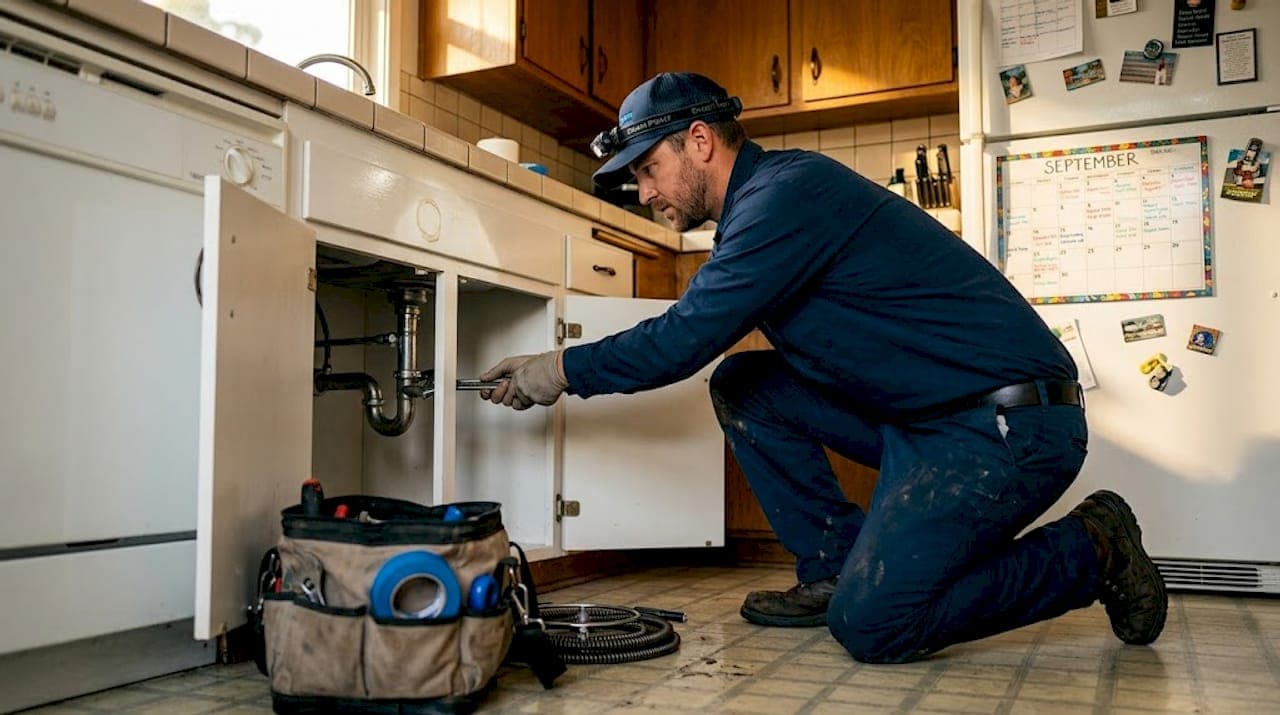
When water stops draining and starts rising, most homeowners assume the worst and reach for the phone immediately. That instinct is sometimes right, but not always. Emergency drain cleaning is specifically defined as urgent, often after-hours drain service called when a delay would cause rapid harm such as sewage contamination, water damage, or personal injury. Understanding that distinction before a crisis hits can save you hundreds of dollars and a lot of unnecessary stress.
Table of Contents
- What is emergency drain cleaning?
- How emergency drain cleaning works: Dispatch to resolution
- Recognizing a drain emergency vs. a routine clog
- What to do while you wait: Minimizing damage
- The real cost of overreacting (and underreacting) to drain issues
- Fast help for Santa Maria emergencies
- Frequently asked questions
Key Takeaways
| Point | Details |
|---|---|
| Emergency = immediate risk | Emergency drain cleaning is for cases where waiting could cause property damage or health risks. |
| Not all clogs are urgent | Slow drains or small blockages rarely require after-hours emergency service. |
| Expect rapid response | A true emergency usually brings a plumber within 2 to 4 hours. |
| Take action before help arrives | Shut off water and clear the area to minimize damage while waiting. |
What is emergency drain cleaning?
Emergency drain cleaning is not simply a faster version of routine service. It is a category of plumbing response triggered by situations where waiting until the next business day creates a real and measurable risk to your property or health. Think sewage backing up into your bathtub, water overflowing from a clogged toilet, or multiple fixtures suddenly refusing to drain at the same time. These scenarios can't wait.
The distinction matters because emergency service costs more. Technicians are dispatched outside of normal hours, response times are compressed, and the urgency of the work commands a premium. That premium is justified when the alternative is raw sewage soaking into your subfloor or contaminated water pooling near electrical outlets. It is not justified for a bathroom sink that drains slowly but poses no immediate overflow risk.
Here's a quick comparison to help you frame the situation clearly:
| Situation | Emergency? | Recommended action |
|---|---|---|
| Sewage backing up in tub or sink | Yes | Call emergency plumber immediately |
| Toilet overflowing and won't stop | Yes | Shut off water, call emergency line |
| Multiple fixtures draining slowly | Yes | Likely main line blockage, call now |
| Single bathroom sink draining slowly | No | Schedule standard appointment |
| Mild gurgling in one drain | No | Monitor, schedule within a few days |
| Kitchen sink clogged but not overflowing | Probably not | Try basic fix, schedule if persistent |
"Slow draining without imminent overflow or contamination is often better handled via standard scheduling to avoid the after-hours premium when risk is low."
That perspective reflects what experienced plumbers see every week. Calls that feel urgent in the moment often turn out to be situations that could have waited until morning. A sewer camera inspection performed during regular hours can diagnose the same slow-moving issue for significantly less money, and property restoration experts can assess any water damage that occurred with more time and resources during business hours.
How emergency drain cleaning works: Dispatch to resolution
With a clear understanding of what an emergency is, it's helpful to know exactly what happens once you call for help. The process is more structured than most homeowners expect, and knowing it in advance helps you give information that speeds up your service.
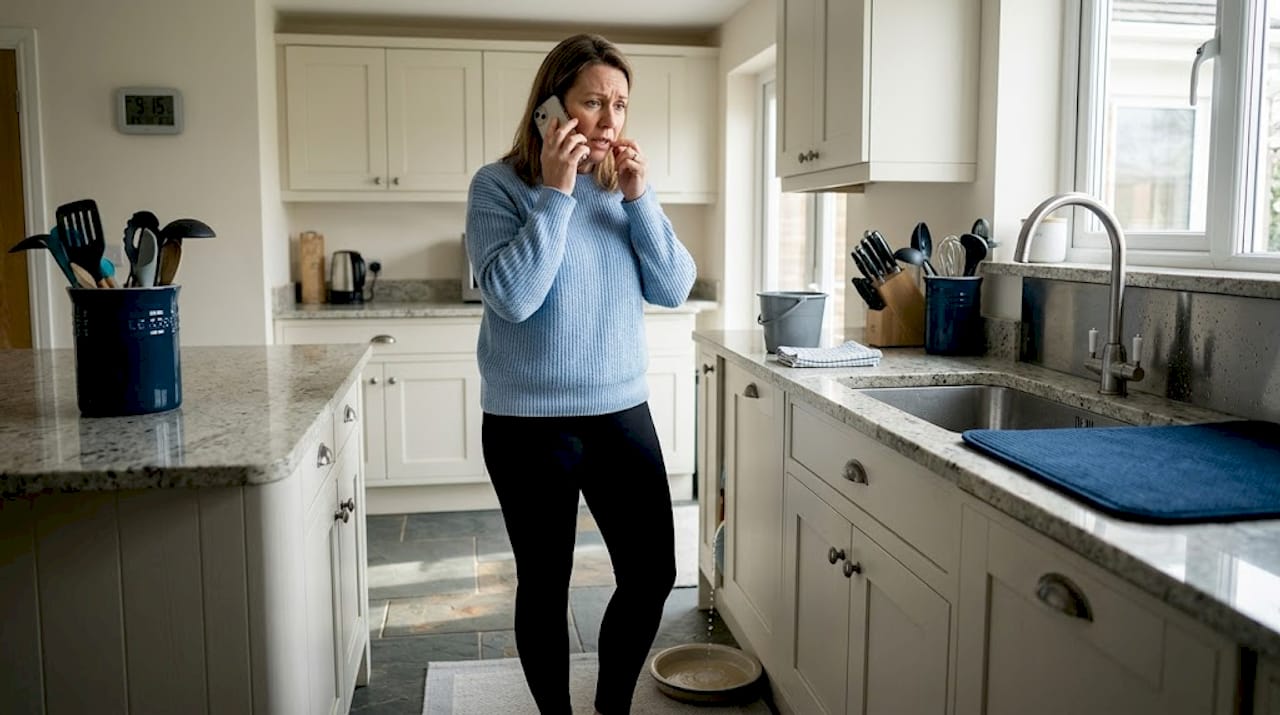
The typical methodology starts with dispatch and triage: the dispatcher will ask you about symptoms, which fixtures are affected, and whether water is actively rising or overflowing. This call is not just routine customer service. The answers help the technician determine whether the blockage is in a branch line (serving just one fixture) or in the main sewer lateral (affecting the entire house). That assessment changes which tools and how many technicians will be sent.
Here is what the process looks like from call to resolution:
- Initial call and triage. You describe the problem clearly. The more specific you are, the faster the technician can prepare. Mention every affected fixture, note whether there are odors or gurgling sounds, and confirm your address and best access points.
- Dispatch window. For true emergencies, expect a technician on-site within 1 to 4 hours in most cases. Availability depends on your location and the time of the call, but Santa Maria is well served by local plumbing companies with rapid response capabilities.
- On-site assessment. The technician inspects the affected drains, checks for signs of main line involvement, and uses diagnostic tools to locate the blockage before starting work.
- Targeted drain cleaning. Depending on the type and location of the blockage, the technician will use a drain auger (also called a snake), hydro jetting (a high-pressure water system that blasts buildup from pipe walls), or camera inspection equipment to confirm the clog is fully cleared.
- Final check and documentation. A thorough technician will run water through all affected fixtures before leaving and document the findings so you have a record for insurance or future reference.
| Tool used | Best for | Notes |
|---|---|---|
| Drain auger (snake) | Simple clogs in branch lines | Fast, affordable, low disruption |
| Hydro jetting | Grease buildup, stubborn blockages | Highly effective, safe for most pipes |
| Camera inspection | Diagnosing location and type of clog | Often done after clearing to confirm |
Pro Tip: When you call for emergency service, have a flashlight ready and know where your main water shutoff valve is located. Telling the dispatcher that information in advance often shaves 15 to 20 minutes off response time because the technician arrives better prepared.
When you request a plumbing quote before a crisis happens, you already have contact information, pricing context, and a relationship with a local plumber. That preparation is surprisingly valuable at 2 a.m. when a toilet is overflowing.
Recognizing a drain emergency vs. a routine clog
But how do you know whether your situation really needs emergency service or can wait until regular business hours? This is the question that most homeowners struggle with because urgency and panic often feel identical in the moment.
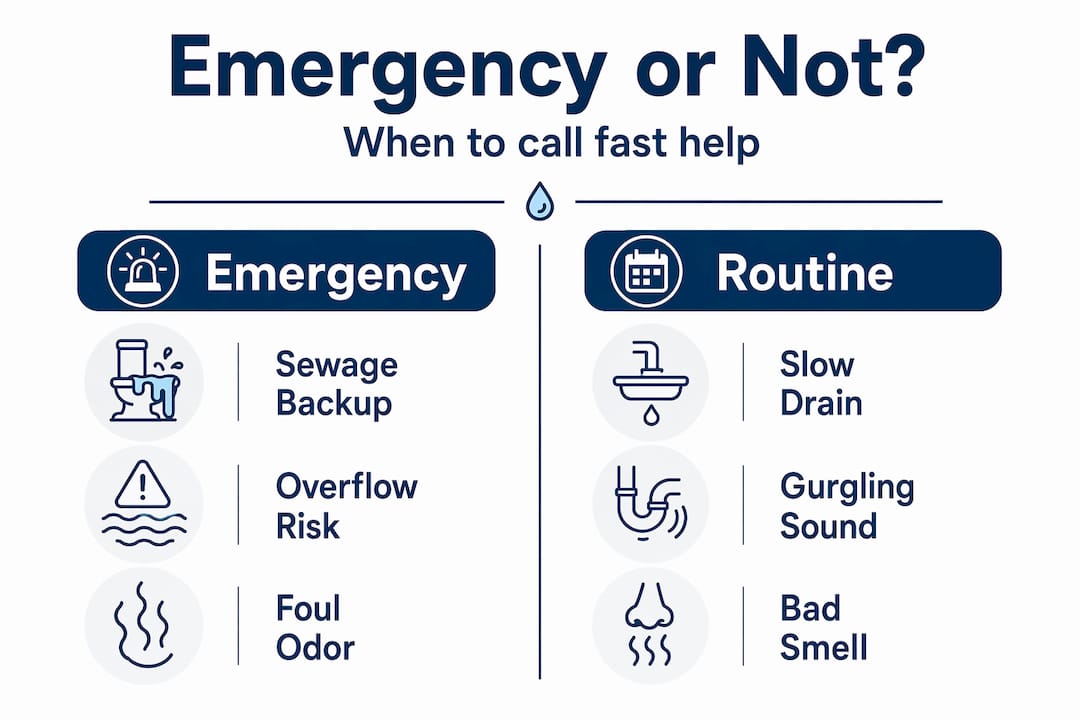
True emergencies almost always share a few characteristics: active overflow or the immediate risk of it, multiple fixtures affected at the same time, or the presence of sewage. If you smell sewage inside your home, that's not a slow drain. That's a main line issue that poses a health hazard and needs same-day attention at minimum.
Signs you are dealing with a true drain emergency:
- Toilet is overflowing or water keeps rising after flushing
- Sewage is backing up into bathtubs, showers, or floor drains
- Two or more fixtures in different rooms are draining slowly or not at all
- Water is pooling near your home's foundation or in the yard above your sewer line
- Gurgling sounds are coming from multiple drains at the same time
Signs your situation can probably wait:
- One bathroom sink drains slowly but the toilet and tub work fine
- Kitchen sink is clogged but water is not overflowing
- Tub drains sluggishly but clears within a minute or two
- Mild gurgling from one fixture with no other symptoms
Calling after hours for non-emergencies costs significantly more and rarely changes the outcome. That money is better spent on a thorough standard service call that gives the technician time to properly diagnose and address the root cause. For isolated clogs and routine residential plumbing repairs, scheduling during business hours puts more resources on your side.
Pro Tip: Keep your nose alert. A faint sewage smell during humid weather near a drain can be a dried-out p-trap (the curved pipe under your sink that holds water and blocks sewer gas), not necessarily a blockage. Pour a cup of water down the drain and see if the smell disappears before making an emergency call.
What to do while you wait: Minimizing damage
If you've determined your situation is an emergency and made the call, your next concern should be minimizing potential damage. The technician is on the way, but there are things you can do right now that will matter.
Follow these steps immediately after calling:
- Shut off the water supply to the affected fixture. Most toilets have a shutoff valve behind or beside the base. Sinks have valves under the cabinet. If you cannot isolate the fixture, shut off the main water supply to the house.
- Remove valuables and electronics from the affected area. Water travels fast and low. Get rugs, electronics, and stored items off the floor before the situation worsens.
- Lay down old towels or use a wet-dry vacuum to contain standing water if you have one available. This reduces the amount of water that soaks into flooring and subfloor material.
- Open windows for ventilation if sewage odor is present. Fresh air dilutes airborne contaminants and makes the space safer for you and any occupants.
- Document the damage with photos or video before the technician arrives. This record is useful if you need to file an insurance claim for water damage.
Things to avoid while you wait:
- Do not use chemical drain cleaners. Products like liquid drain openers can react dangerously with the tools a plumber uses and can damage older pipes. They also often fail to solve the actual problem.
- Do not flush the toilet repeatedly trying to force the clog through. This adds more water to an already compromised system.
- Do not ignore sewage smells. Sewer gas contains hydrogen sulfide, which is hazardous. Keep children and pets away from the affected area.
Technicians dispatched for emergency plumbing services typically arrive within 2 to 4 hours of initial contact, so use that window wisely.
Every minute that water sits on your floor is a minute that moisture is moving into the material below. Acting quickly on these steps while you wait is genuinely protective for your home.
The real cost of overreacting (and underreacting) to drain issues
Here's the view we've formed after 15-plus years of responding to plumbing calls in Santa Barbara County: most overnight emergency calls are for slow drains. Not overflowing toilets. Not sewage backups. Slow drains that the homeowner noticed at 10 p.m. and couldn't stop thinking about.
That's understandable. Nobody sleeps well wondering if a clog is going to get worse. But calling in an emergency for a slow drain means paying an after-hours premium for service that a morning appointment would have handled for less money and with more diagnostic time. That additional cost doesn't buy you a better outcome. It just buys you relief from anxiety.
The real risk runs in both directions. Overreacting is expensive. Underreacting, though, is how a manageable clog becomes a flooded bathroom and a mold problem three weeks later. The homeowners who handle drain problems best are the ones who have learned to read the signals: Is water actively rising? Are multiple fixtures involved? Is there a sewage smell? If yes to any of those, act now. If no, call in the morning.
We've seen property restoration work on homes where a main line backup was ignored for 24 hours because the homeowner wasn't sure it was serious enough. That delay turned a drain cleaning job into a week of restoration work. The financial and personal cost was significant. On the other side, we've also seen homeowners call emergency lines three times in one year for slow kitchen sinks that needed nothing more than a regular auger service during business hours.
Slow draining without imminent overflow is a signal to pay attention and schedule service, not to panic. Sewage backup is a signal to act immediately and aggressively. Train yourself to tell the difference and you'll make better decisions every time.
When in doubt, call and ask for a triage assessment before committing to an emergency dispatch. A reputable company will tell you honestly whether your situation warrants urgent service or whether it can wait. That honesty is worth more than a fast truck roll.
Fast help for Santa Maria emergencies
When the decision is made and action is urgent, reliable local professionals make all the difference. Drain Point Plumbing & Restoration has been serving homeowners and renters across Santa Maria and Santa Barbara County for over 15 years, and our team is available 24/7 for situations that truly cannot wait.
Whether you need emergency response for a sewage backup, a thorough sewer camera inspection to diagnose a recurring blockage, or routine residential plumbing repairs scheduled at your convenience, we are ready to help. We also offer discounts for seniors and military personnel because taking care of our community is part of who we are. Take the first step and request a plumbing quote today. No pressure, no obligation, just clear information from local professionals who know Santa Maria.
Frequently asked questions
How fast does an emergency plumber arrive for drain cleaning?
Most emergency plumbers aim to arrive within 2 to 4 hours of your call, though response times may vary based on location and technician availability at the time.
Is every blocked drain an emergency?
No. Only drains at immediate risk of overflow or sewage contamination qualify as true emergencies. A slow drain in a single fixture without overflow risk is typically a standard service situation.
What can I do before the plumber gets here?
Shut off the water supply to affected fixtures, clear the area of valuables, and avoid using chemical drain cleaners. The dispatch triage process also helps the technician arrive better prepared when you describe symptoms clearly during your initial call.
Are emergency drain cleaning services more expensive than standard ones?
Yes. Emergency service carries a higher cost due to after-hours labor rates and the speed of dispatch required to get a technician to your home quickly. For situations that are not true emergencies, scheduling a standard appointment saves you money without increasing your risk.
Recommended
- Local Plumbing Contractor, Emergency Residential Plumbing Services Santa Maria CA - Drain Point Plumbing & Restoration
- Sewer Repair & Drain Cleaning Services Santa Maria CA - Drain Point Plumbing & Restoration
- Full-Service Residential Plumbing Repairs & Fixture Replacements Santa Maria CA - Drain Point Plumbing & Restoration
- Contact Us - Drain Point Plumbing & Restoration