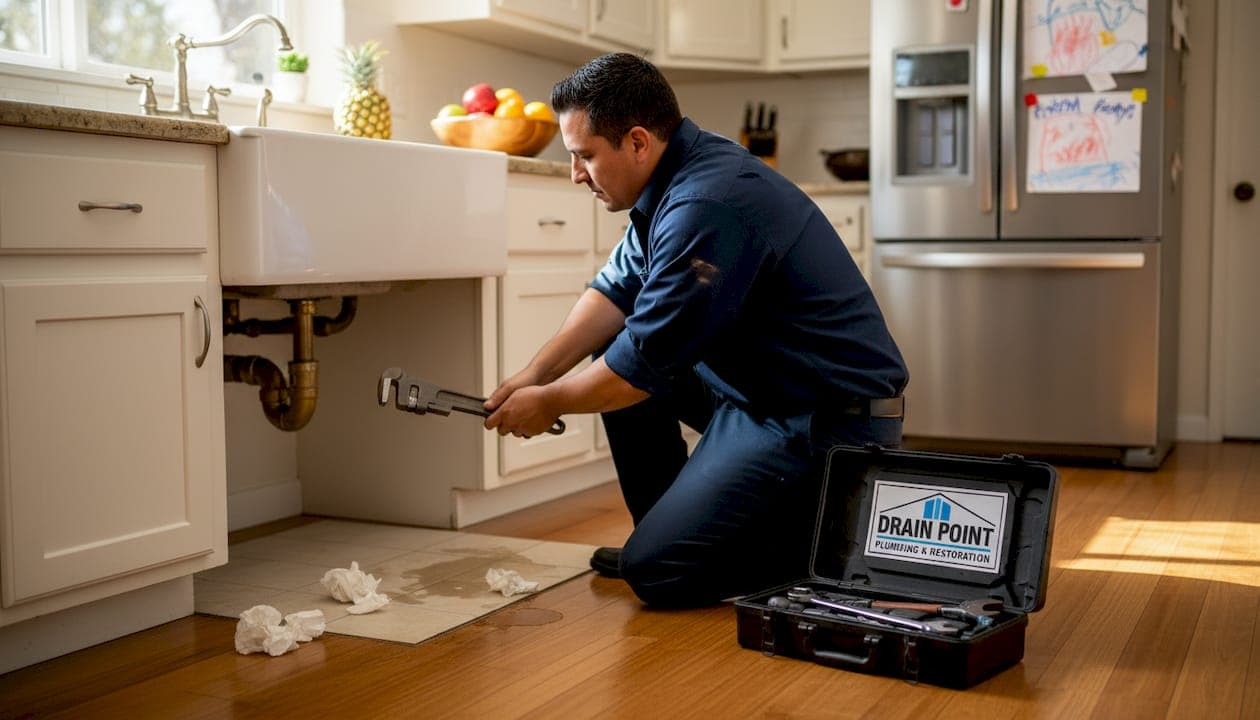
Most homeowners picture a single overworked plumber, phone propped on the nightstand, jolting awake at 2 a.m. when a pipe bursts somewhere across town. The reality of true 24/7 plumbing service is far more structured than that. Behind every reliable emergency response is a layered system of dispatchers, triage protocols, escalation procedures, and prioritized work orders. Understanding how that system works is what separates a confident call from a panicked one when water is spreading across your kitchen floor at midnight.
Table of Contents
- What does 24/7 plumbing really mean?
- Step-by-step: How your emergency call is handled
- Who makes it all work: Roles behind the scenes
- What to expect: Common emergencies and typical outcomes
- The "always on" promise: Why reliable systems matter more than ads
- Need real 24/7 plumbing help in Santa Maria?
- Frequently asked questions
Key Takeaways
| Point | Details |
|---|---|
| 24/7 means reliable systems | True 24/7 plumbing relies on trained dispatchers and advanced call handling, not just plumbers on call. |
| Emergency triage protects homes | Scripts and escalation protocols make sure urgent issues are prioritized instantly and never fall through the cracks. |
| Know your response journey | Homeowners get help through structured steps: call, triage, routing, dispatch, and follow-up. |
| Ask about dispatch layers | Always verify if a provider uses staffed call handling to avoid missed or delayed emergency responses. |
What does 24/7 plumbing really mean?
The phrase "24/7 plumbing" gets thrown around constantly, but it means very different things depending on who's saying it. At the bare minimum, some companies just forward calls to a plumber's cell phone after hours. That's not a system. That's a gamble. True 24/7 service is an operational structure designed so that no urgent call falls through the cracks, regardless of the hour.
Here's what a genuine round-the-clock plumbing service actually involves:
- Live dispatchers or trained answering services who pick up every call, any time of day or night
- Triage scripts that help the call-taker quickly assess whether your situation is a true emergency
- Escalation procedures that automatically move your call up the chain if an on-call technician doesn't respond within a set window
- Priority work orders that flag your job so the right technician gets there fast
- Fallback routing that ensures a backup technician is always available
Behind-the-scenes, 24/7 operations rely on call-handling systems, live dispatchers, answering services, and automation working together alongside triage scripts and escalation procedures so your call reaches an on-call technician even at 3 a.m.
"A 24/7 plumbing service isn't a person waiting by the phone. It's a process designed to get you help before the damage gets worse."
For Santa Maria homeowners, this matters enormously. A slow response to a burst pipe, a backed-up sewer line, or a failed water heater can mean thousands of dollars in property damage. When you're requesting plumbing help in a genuine emergency, you need to reach a system that responds, not just a voicemail box. Understanding the difference helps you choose the right provider before an emergency happens. It's also worth knowing that some advanced tools like hydro jetting may be deployed for urgent clogs, and a good dispatch system ensures these resources are available around the clock. Reviewing your plumbing repair options ahead of time puts you in a much stronger position when urgency strikes.
Step-by-step: How your emergency call is handled
Now that you know what 24/7 plumbing entails, here's exactly what happens once you make that urgent call. The process is more organized than most people expect, and each step exists for a specific reason.
- You call the service number. The line is answered immediately, either by a live dispatcher or an automated system that quickly routes to a human. No voicemail, no long hold music.
- The dispatcher gathers basic information. Name, address, and a brief description of the problem. This takes under two minutes when the dispatcher is using a structured triage script.
- Your situation is classified. Is this a burst pipe flooding a room? A small drip under the sink? The dispatcher uses preset criteria to determine whether this is an emergency requiring immediate dispatch or a scheduled service call.
- Your call is routed to the on-call technician. The dispatcher sends an SMS or push notification directly to the technician's device with your address, the problem type, and any safety notes.
- Escalation kicks in if needed. If the primary on-call technician doesn't confirm within a short window (usually two to five minutes), the system automatically contacts a backup technician. No call slips through.
- A priority work order is created. Triage, classify, route, and dispatch steps with SMS and push notifications, auto-escalation if the primary technician doesn't respond, and priority work order creation all happen in rapid sequence.
- You receive confirmation. You're told who is coming, their estimated arrival, and what to do in the meantime to reduce damage.
Pro Tip: Write down or take a screenshot of any instructions given by the dispatcher. They're trained specifically to help you minimize water damage or safety risks until the technician arrives. Shutting off the main water valve, for example, can save you hundreds of dollars in cleanup costs.
Here's a quick reference showing how call classification typically works:
| Situation | Classification | Typical Response Time |
|---|---|---|
| Burst pipe actively flooding | Emergency | Within 60 minutes |
| Sewer backup with overflow | Emergency | Within 60 minutes |
| Water heater failure (no hot water) | Urgent | Within a few hours |
| Slow drain, no overflow | Routine | Next scheduled slot |
| Dripping faucet | Routine | Next scheduled slot |
| Gas smell near water heater | Emergency | Immediate + safety protocols |
Understanding where your situation falls on this scale helps you communicate clearly when you call. A residential plumbing repair that seems minor to you might actually trigger an emergency classification once a dispatcher hears the details.
Who makes it all work: Roles behind the scenes
Understanding the process brings up a natural next question: who are the people and systems doing all of this? The answer explains why some providers are genuinely reliable while others leave you waiting.
The most important distinction is whether a company uses a dedicated dispatch layer or just has plumbers answer their own phones. These are very different models with very different outcomes.
Some 24/7 models succeed only with a staffed dispatch/triage layer. Without it, calls get lost or misrouted when plumbers are on another job, driving between sites, or simply unavailable.
Here's a comparison of the two common models:
| Feature | Dedicated dispatch model | Plumber answers phone model |
|---|---|---|
| Call answered every time | Yes | Not guaranteed |
| Triage script used | Yes | Rarely |
| Escalation backup | Yes | Usually no |
| Priority work order system | Yes | Rarely |
| Response consistency | High | Variable |
| Best for large emergencies | Yes | Sometimes |
The dedicated dispatch model requires investment from the provider. It means hiring or contracting trained call handlers, building escalation procedures into the workflow, and maintaining technology that connects dispatchers to field technicians in real time. Companies that make this investment consistently outperform those that don't, especially during high-demand times like winter freeze events or after heavy rain when multiple calls come in simultaneously.
Here's what you should ask any provider before you save their number:
- Do you use a live dispatcher or automated system after hours?
- What happens if your on-call technician doesn't answer?
- How long before a technician is on-site for a burst pipe?
- Is there always a backup technician available?
These questions separate real capability from marketing claims. Reliable emergency plumbing contractors will answer these questions clearly and without hesitation. If a company gets vague, that's a signal worth noting.
What to expect: Common emergencies and typical outcomes
Since not every plumbing situation demands an instant response, it helps to know what kinds of issues 24/7 services are typically called for, and what the process looks like from call to resolution.
The most common emergencies that trigger immediate dispatch include:
- Burst or cracked pipes actively releasing water inside the home
- Main sewer line backups causing sewage to overflow into toilets or floor drains
- Overflowing toilets that can't be stopped with basic troubleshooting
- Major water supply leaks near water heaters, washing machines, or under slabs
- Water heater failures especially in households with children or elderly residents
- Flooding from any source that risks structural damage or mold growth
Priority work orders ensure emergencies like burst pipes, sewer backups, and urgent leaks are routed and handled quickly rather than sitting in a general queue.
Once a technician arrives, the process typically follows a predictable path. First, they assess and contain the problem. This might mean shutting off water to a specific fixture or to the entire home. If a full repair isn't possible in a single visit due to part availability or the scope of the damage, a temporary fix is applied to stop active damage while parts are ordered. A follow-up visit completes the permanent repair.
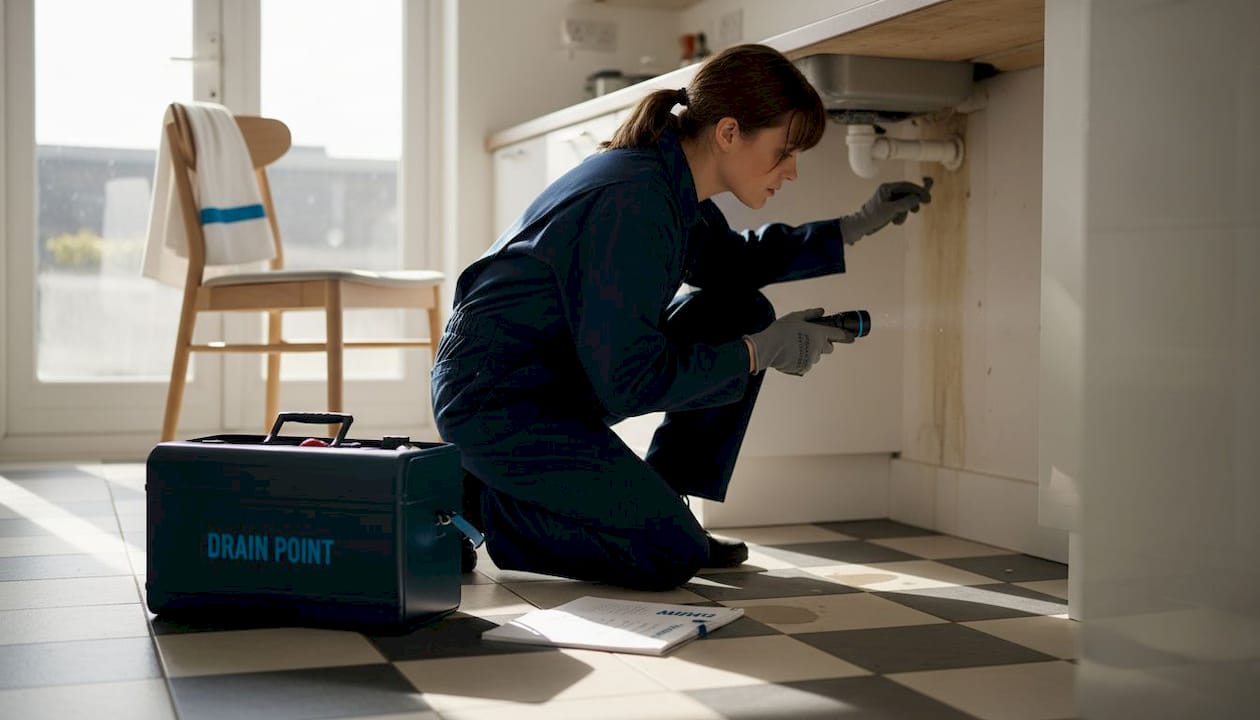
For serious situations like a sewer line failure, a camera inspection is often used to locate the exact problem point inside the pipe before any digging or major repairs begin. This saves time, reduces cost, and prevents unnecessary damage to your yard or flooring. Similarly, a failed water heater might require same-day replacement, and having access to water heater repair specialists at any hour is critical for household comfort and safety.
Pro Tip: Take clear photos of the problem area before the technician touches anything. Document any visible water damage to walls, flooring, or cabinets. These photos are valuable for homeowner's insurance claims and can also support warranty claims on recently installed fixtures or appliances.
The "always on" promise: Why reliable systems matter more than ads
Here's the hard truth about 24/7 plumbing marketing in Santa Maria and everywhere else: the phrase is almost meaningless without asking the right follow-up questions. Plenty of local plumbing companies display "24/7 emergency service" on their websites and trucks. But if you call at 1 a.m. on a Sunday and no one answers until Monday morning, that promise never existed in the first place.
After 15 years in this business, we've seen the same pattern repeat. A homeowner calls a company they found online because the website looked professional and the reviews seemed good. The call goes to voicemail. They call again. Still voicemail. By the time anyone calls back, the water has soaked through the subfloor and reached the electrical panel. The repair job that should have cost a few hundred dollars has turned into a restoration project costing thousands.
That outcome is not a bad-luck story. It's the predictable result of a provider without a real dispatch system behind their 24/7 claim.
Without a staffed dispatch layer with triage scripts and escalation, even genuinely skilled plumbers miss urgent calls. No individual can stay available every single hour of every day without eventually missing something.
What separates providers worth trusting is operational transparency. They tell you exactly what happens when you call after hours. They can describe their escalation protocol. They know their average response time for emergencies and they're honest when it might be longer. They also have a path for what comes after the emergency, including property restoration for water damage that goes beyond a simple repair.
Our recommendation: don't wait until a pipe bursts to research who you'll call. Find a provider, ask the hard questions, and save their number now. The best time to evaluate a 24/7 plumbing service is when you're calm, not when water is climbing up your baseboards.
Need real 24/7 plumbing help in Santa Maria?
When a plumbing emergency hits, the last thing you want to do is spend twenty minutes searching for someone reliable while water is spreading across your floor.
Drain Point Plumbing & Restoration has served Santa Maria and Santa Barbara County homeowners for over 15 years with a genuine 24/7 response system, including live dispatch, trained technicians, and full residential plumbing repairs from burst pipes to clogged drains. We also offer discounts for seniors and military personnel because this community deserves straightforward, honest service. Whether you need to request a 24/7 plumbing quote for an urgent issue or want to schedule a non-emergency inspection, our team is ready. Don't wait for a crisis. Contact our emergency plumbing services team now and know exactly who you'll call when it matters most.
Frequently asked questions
How fast can a 24/7 plumber arrive in Santa Maria?
Most true 24/7 plumbers dispatch a technician within 60 minutes for emergencies, depending on location and time of night. Priority work orders for emergency routing help cut down that response window significantly.
What emergencies are covered by 24/7 plumbing?
Common emergencies include burst pipes, sewer backups, major leaks, clogged drains, and water heater failures. These situations are classified and routed immediately to ensure they receive the fastest possible response.
Will I speak to a tech or a dispatcher when I call?
You'll typically speak to a dispatcher or service agent trained to triage and route your call, not directly to the on-call plumber. 24/7 operations rely on call-handling systems, triage scripts, and dispatch personnel working together behind the scenes.
How do I know a service is truly 24/7?
Ask if they use live dispatch and escalation protocols rather than just forwarding to a plumber's cell phone. Some 24/7 models succeed only with a staffed dispatch layer, so asking directly is the fastest way to know if a company is genuine.
Is it more expensive to call a plumber after hours?
After-hours rates are common, but the best services are upfront about pricing and provide clear estimates before work begins. A reliable provider will never surprise you with inflated fees after the job is done.
Recommended
- Local Plumbing Contractor, Emergency Residential Plumbing Services Santa Maria CA - Drain Point Plumbing & Restoration
- Contact Us - Drain Point Plumbing & Restoration
- Full-Service Residential Plumbing Repairs & Fixture Replacements Santa Maria CA - Drain Point Plumbing & Restoration
- Sewer Repair & Drain Cleaning Services Santa Maria CA - Drain Point Plumbing & Restoration