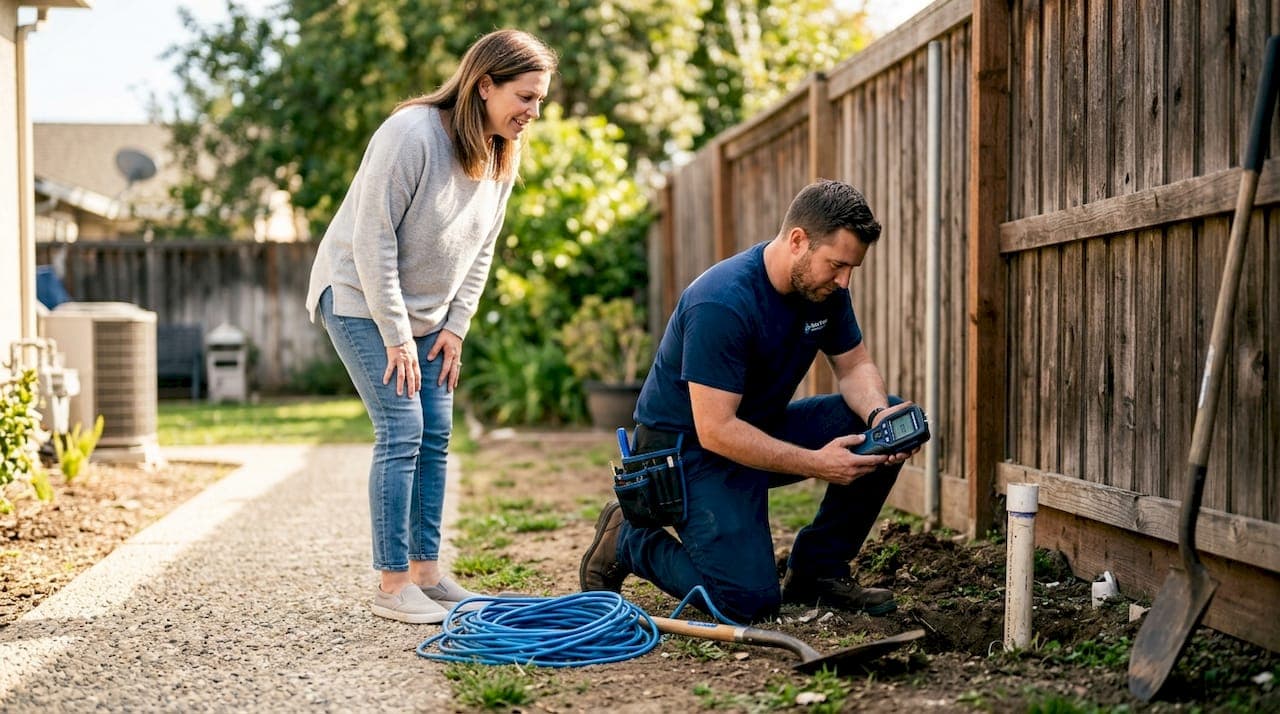
A broken outdoor pipe can feel like a disaster waiting to swallow your yard, your budget, and your weekend. Most homeowners picture excavators tearing up their lawn, weeks of disruption, and a bill that rivals a car payment. That picture is outdated. Modern repair techniques, combined with the right diagnosis and a licensed professional who knows Santa Maria's soil and code requirements, can fix most outdoor pipe breaks with far less mess than you'd expect. This guide walks you through the causes, the repair process, material choices, California code rules, and the steps you should take right now if you suspect a break.
Table of Contents
- What causes outdoor pipe breaks and how to spot them
- Step-by-step: How professionals diagnose and repair outdoor pipe breaks
- Pipe materials and repair methods: What works best for California homes
- California plumbing code, permits, and contractor licensing: What to know before hiring or DIY
- A smarter approach to outdoor pipe repairs: What most people overlook
- Get expert help with outdoor pipe repairs in Santa Maria
- Frequently asked questions
Key Takeaways
| Point | Details |
|---|---|
| Early detection matters | Spotting pipe break signs early minimizes property damage and repair costs. |
| Repair steps vary | The right repair method depends on pipe material, code requirements, and local permits. |
| California requires compliance | Plumbing repairs must follow state code and often need permits or licensed contractors. |
| Documentation protects you | Keeping a record of plumbing work supports insurance claims and future property sales. |
What causes outdoor pipe breaks and how to spot them
Understanding why pipes fail outdoors is the first step toward protecting your property. Santa Maria and the broader Santa Barbara County area have specific conditions that accelerate pipe wear, and knowing what to look for can save you thousands in secondary damage.
Common causes of outdoor pipe breaks include:
- Tree root intrusion. Roots from mature trees naturally seek moisture. They can infiltrate small cracks in older clay or cast iron pipes, gradually widening them until the pipe collapses entirely.
- Soil movement and shifting. California's expansive clay soils swell when wet and shrink when dry. That constant movement puts stress on buried pipes, especially at joints and connection points.
- Corrosion and age. Galvanized steel and older copper pipes corrode over decades. Once corrosion eats through the pipe wall, a break is inevitable.
- Ground freezing. While Santa Maria rarely sees hard freezes, cold snaps do occur, and water expands when it freezes. Even a brief freeze can crack a pipe that's already weakened by corrosion or root pressure.
- Pressure surges. Water hammer (the loud bang when water flow suddenly stops) and pressure spikes from the municipal supply can stress outdoor pipes, particularly at elbows and tees.
Warning signs to watch for:
- Soggy or unusually green patches in your yard with no obvious irrigation cause
- A sudden, unexplained spike in your water bill
- Noticeable drop in water pressure at indoor fixtures
- Hissing or rushing sounds coming from the ground
- Sinkholes or depressions forming near your water main or sewer line
Safety first: shut off power to the affected area before investigating any outdoor pipe break near your home's foundation, crawlspace, or basement. Water and electricity near wiring or appliances create a serious electrocution risk. Cut the breaker for that zone before you or anyone else gets close to standing water.
Acting fast matters. A pipe leaking just a small amount underground can erode soil, undermine a foundation, or feed mold growth inside a wall cavity within days. The sooner you identify the break, the simpler and less expensive the fix tends to be.
With a clear sense of why pipe breaks happen and how to spot them, you're ready to learn what actually goes into a professional repair.
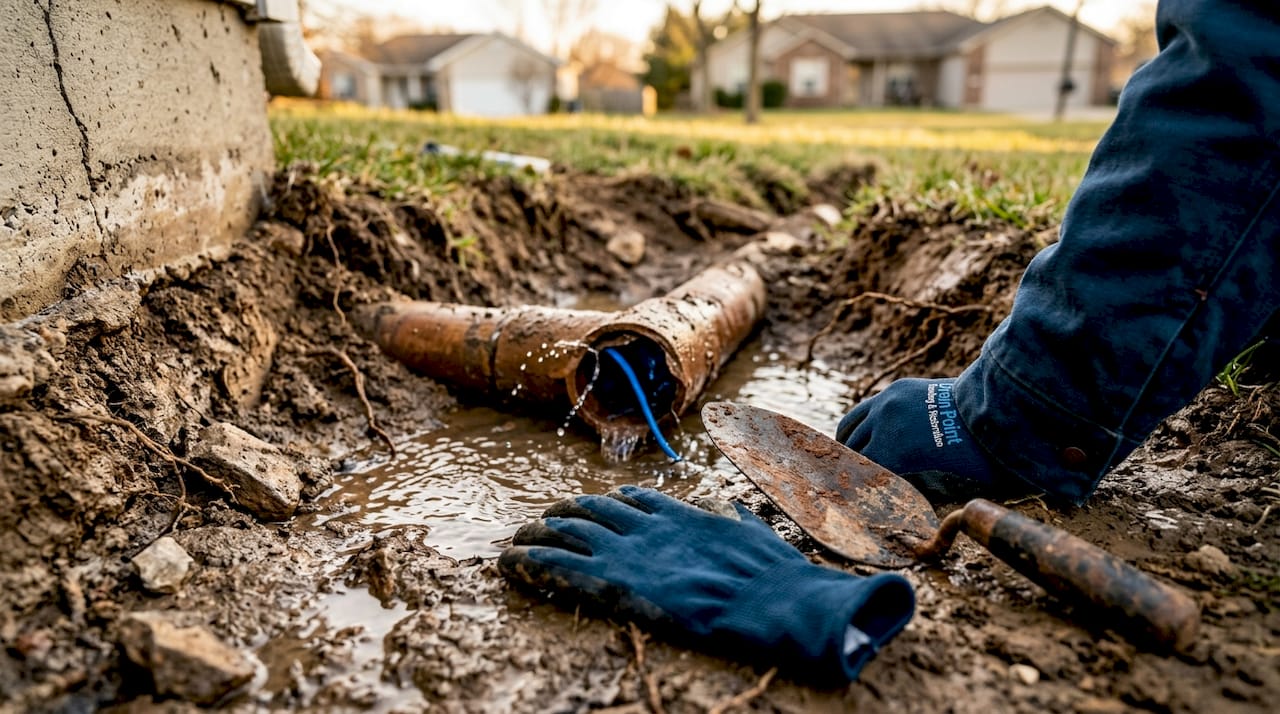
Step-by-step: How professionals diagnose and repair outdoor pipe breaks
The repair process is more methodical than most people realize. Experienced plumbers don't just start digging. They follow a structured sequence that protects your property, keeps the work code-compliant, and ensures the repair actually holds long term.
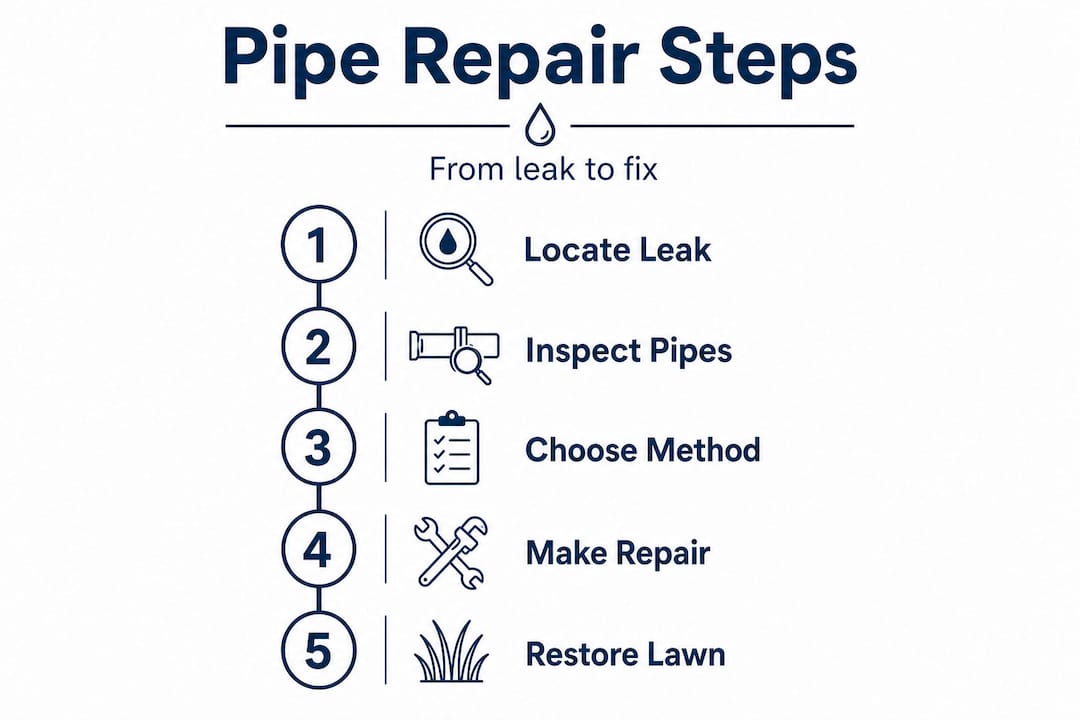
The seven main phases of a professional outdoor pipe repair:
- Inspection and diagnosis. A plumber uses a sewer camera or pressure test to locate the exact break point and assess the surrounding pipe condition. This prevents unnecessary excavation.
- Permit and code review. Depending on the scope of work, permits may be required before any ground is broken. Your contractor checks local requirements with the City of Santa Maria or Santa Barbara County.
- Method selection. Based on pipe material, depth, location, and the nature of the damage, the plumber selects the best repair approach (spot repair, section replacement, or full line replacement).
- Site preparation and isolation. Water is shut off at the main. The work area is marked, and any utilities near the dig zone are located and flagged.
- Repair execution. The damaged section is accessed, removed, and replaced using the correct materials and techniques for the pipe type.
- Post-repair pressure testing. Once the repair is complete, the line is pressurized and checked for leaks before backfilling.
- Site restoration. Soil is compacted and replaced, and any landscaping, concrete, or pavement disturbed during access is restored.
This repair methodology for underground pipes is the professional standard, covering everything from initial documentation through final testing and restoration. Skipping any phase, especially the pressure test, is how repairs fail within months.
Comparing common repair approaches:
| Repair method | Speed | Yard disruption | Best for |
|---|---|---|---|
| Spot repair | Fast (1 day) | Minimal | Localized crack or joint failure |
| Section replacement | Moderate (1-2 days) | Moderate | Root damage or corrosion over 3-10 ft |
| Full line replacement | Slower (2-5 days) | Higher | Severely degraded older pipes |
| Trenchless pipe lining | Moderate (1-2 days) | Very minimal | Structurally sound pipes with cracks |
Pro Tip: Sewer camera inspections can pinpoint the exact break location before a single shovel hits the ground. That precision often cuts excavation time in half and keeps your landscaping largely intact.
Once you know how the repair process works, it's important to understand which repair methods and materials fit different pipe types.
Pipe materials and repair methods: What works best for California homes
Not all outdoor pipes are the same, and the repair approach depends heavily on what material you're working with. Using the wrong method or the wrong fittings for your pipe type is a common DIY mistake that leads to repeat failures.
PVC (polyvinyl chloride): PVC is the most common material in modern residential plumbing. It's lightweight, corrosion-resistant, and relatively easy to work with. Permanent repair for PVC involves cutting out the damaged section and installing new pipe with solvent-cement couplings. The key is using the correct primer and cement for the pipe schedule (Schedule 40 for most residential supply lines, Schedule 80 for higher-pressure applications).
Copper: Copper pipes are durable but vulnerable to pinhole corrosion, especially in areas with aggressive soil chemistry. Repairs typically use push-to-connect fittings (like SharkBite) for quick fixes, or sweat-soldered couplings for permanent work. Push-to-connect fittings are code-approved in California for most applications but should not be buried without proper protection or documentation.
PEX (cross-linked polyethylene): PEX is flexible and freeze-resistant, making it increasingly popular for outdoor supply lines in California. Repairs use crimp rings, clamp rings, or push-to-connect fittings. PEX cannot be glued, so the fitting type matters significantly.
Repair options by material and location:
| Pipe material | Buried repair method | Exposed repair method | Under concrete |
|---|---|---|---|
| PVC | Solvent-cement coupling | Solvent-cement or compression | Spot excavation + coupling |
| Copper | Sweat solder or push-to-connect | Sweat solder or push-to-connect | Spot excavation + solder |
| PEX | Crimp or push-to-connect | Crimp or clamp ring | Spot excavation + crimp |
| Cast iron | No-hub band coupling | No-hub band coupling | Spot excavation + coupling |
Key compliance points to keep in mind:
- All materials and fittings must be listed and approved for the intended use under the California Plumbing Code
- Buried fittings must be accessible or specifically rated for direct burial
- Repairs under concrete slabs typically require a permit regardless of pipe material
- Any repair that changes the pipe size, routing, or material type is considered an alteration and triggers additional code review
For residential plumbing repairs in Santa Maria, working with a contractor who knows local inspection expectations is essential. What passes inspection in one county doesn't always fly in another.
Beyond the physical repairs, compliance with codes and local rules is essential, especially for insurance or resale.
California plumbing code, permits, and contractor licensing: What to know before hiring or DIY
This is the section most homeowners skip, and it's the one that causes the most expensive problems down the road. California has clear rules about what qualifies as a minor repair versus work that requires a permit and a licensed contractor.
The California Plumbing Code is Part 5 of Title 24 and governs all plumbing installation, alteration, and inspection work in the state. It sets the standards for pipe materials, joint methods, testing, and inspection. Local jurisdictions like the City of Santa Maria can adopt amendments, so the local building department is always your final authority.
When a permit is typically required:
- Replacing more than a minor section of pipe (anything beyond a simple patch or coupling repair)
- Any work that changes the routing, size, or material of an existing line
- Repairs to sewer laterals or water service lines
- Work under concrete slabs or within foundation walls
- Any connection to a municipal water or sewer system
When a permit may not be required:
- Replacing a single fitting or short section of pipe with like-for-like material
- Fixing a visible, above-ground leak at a joint or coupling
- Emergency temporary repairs (though permanent work still needs to comply)
Permit and licensing requirements in California also govern who can legally perform the work. Any contractor performing plumbing work for compensation must hold a C-36 Plumbing Contractor license or a General Building Contractor license (B license) with plumbing as a qualifying trade, both issued by the California Contractors State License Board (CSLB). Hiring an unlicensed contractor exposes you to liability if something goes wrong and can void your homeowner's insurance coverage.
Pro Tip: Always document your repairs. Take photos before, during, and after the work. Keep the permit number, the contractor's license number, and all invoices in a folder. This documentation protects you during property insurance claims and is often required when selling your home. Buyers and their inspectors will ask about unpermitted work, and undocumented repairs can kill a sale or force a price reduction.
Hiring a licensed plumbing contractor isn't just about following the rules. It's about protecting your investment and making sure the repair actually lasts.
Now that you know the regulations, let's wrap with our perspective on how to balance DIY, code compliance, and risk.
A smarter approach to outdoor pipe repairs: What most people overlook
Here's what we've seen after 15 years of working on outdoor pipe repairs across Santa Maria and Santa Barbara County: most homeowners get the repair done, but they get the documentation wrong. And that's where the real problems start.
People focus on cost and speed, which is understandable. A broken pipe is stressful and inconvenient. But the homeowners who end up in the worst situations are almost never the ones who paid a little more for a licensed pro. They're the ones who hired someone cheap, skipped the permit, and then tried to sell their house three years later only to discover the unpermitted repair triggered a full re-inspection requirement.
Santa Maria's soil conditions add another layer of complexity that generic online advice simply doesn't account for. The expansive clay soils in parts of Santa Barbara County move significantly with seasonal moisture changes. A repair that's perfectly executed in terms of materials and technique can still fail prematurely if the contractor doesn't account for soil movement at the joint. Local experience matters in a way that's hard to quantify but very easy to feel when a repair holds for 20 years instead of two.
There's also a mindset issue worth addressing. Many homeowners treat an outdoor pipe break as a one-time event to fix and forget. The smarter approach is to treat it as a signal. If one section of your outdoor plumbing failed, the rest of that same vintage pipe is under the same stress. A camera inspection after a repair can reveal whether you're dealing with an isolated problem or a system that's reaching the end of its service life. Knowing that early gives you time to plan and budget instead of reacting to the next emergency.
Keep a record of every plumbing repair you have done, including photos, invoices, and permit numbers. Store them digitally and in a physical file. When you need to file an insurance claim or negotiate a home sale, that folder is worth far more than the cost of a single repair. Reliable repair services should always be willing to provide you with documentation. If a contractor resists giving you a written record of the work, that's a red flag.
Get expert help with outdoor pipe repairs in Santa Maria
When a pipe breaks outdoors, the difference between a smooth repair and a drawn-out nightmare usually comes down to who you call first. At Drain Point Plumbing & Restoration, we handle every phase of the process, from sewer camera diagnosis through permitting, repair execution, pressure testing, and site restoration. We know Santa Maria's soil conditions, local code requirements, and what it takes to get a repair done right the first time.
Don't wait for a slow leak to become a sinkhole or a foundation problem. Small issues caught early are almost always faster and less expensive to fix than emergencies. Whether you need residential plumbing repairs, a sewer camera inspection to locate a suspected break, or just want to know where you stand before a problem gets worse, we're available 24/7 and ready to help. Get a plumbing quote today and find out exactly what your repair will involve before any work begins.
Frequently asked questions
Do I need a permit to repair an outdoor pipe in California?
Permits are typically required for pipe replacement or alteration beyond minor repairs in California, so check with your local building department before starting any significant outdoor plumbing work.
What is the most common material used for outdoor pipe repairs?
For modern homes, PVC is most common for supply and drain lines, but repair methods vary by material, with copper and PEX also widely used depending on the application and pipe age.
Can outdoor pipe repairs be done without digging up my yard?
Yes, targeted inspection and repair methods like CCTV diagnosis and trenchless lining can often minimize or eliminate the need for large-scale excavation, depending on the pipe condition and break location.
Who is responsible for outdoor pipe repairs: the homeowner or the city?
Homeowners are generally responsible for all pipes located on their property, from the home's plumbing system up to the water meter or the point where the sewer lateral connects to the municipal main.
Recommended
- Sewer Repair & Drain Cleaning Services Santa Maria CA - Drain Point Plumbing & Restoration
- Full-Service Residential Plumbing Repairs & Fixture Replacements Santa Maria CA - Drain Point Plumbing & Restoration
- Water Heater Installation And Repair Santa Maria CA - Drain Point Plumbing & Restoration
- Local Plumbing Contractor, Emergency Residential Plumbing Services Santa Maria CA - Drain Point Plumbing & Restoration