Water bills in Santa Maria keep climbing, and California's drought cycles show no sign of letting up for good. If you own a home or manage a rental property here, the pressure to cut water use is both financial and practical. The problem is that the market is flooded with products claiming to save water, and it can be hard to tell what actually works from what just sounds convincing. This guide cuts through the noise by focusing on proven, certified plumbing solutions backed by real data, so you can make smart upgrades that lower your bills and hold up over time.
Table of Contents
- How to evaluate water conservation plumbing options
- WaterSense faucet aerators and accessories
- Water-efficient showerheads and mixing valves
- High-efficiency toilets and leak repairs
- Side-by-side comparison: Water conservation plumbing options
- Our perspective: What homeowners and property managers often overlook
- Take action: Local solutions for water-saving plumbing
- Frequently asked questions
Key Takeaways
| Point | Details |
|---|---|
| WaterSense certification matters | Choosing fixtures with WaterSense labeling guarantees tested water efficiency and performance. |
| Aerators offer easy upgrades | Low-flow faucet aerators and accessories are affordable and simple retrofits that cut household water use. |
| Showers and toilets drive most savings | Replacing showerheads and toilets with WaterSense models delivers dramatic reductions in water bills. |
| Leak repairs outpace fixture upgrades | Fixing running toilets and leaks often yields bigger savings than installing new fixtures. |
| Usage estimates are crucial | Estimating daily water use helps homeowners prioritize the highest impact plumbing upgrades. |
How to evaluate water conservation plumbing options
Before you spend a dollar on any fixture or accessory, you need a framework for deciding what's worth installing. Not all low-flow products perform the same way, and some affordable upgrades deliver far better returns than expensive full replacements.
The most reliable shortcut is the EPA's WaterSense label. WaterSense-labeled products are third-party certified to meet strict efficiency and performance specifications, meaning they've been independently tested rather than just marketed as efficient. That distinction matters because it takes the guesswork out of shopping.
Beyond certification, here are the key factors worth evaluating before any upgrade:
- Flow rate vs. actual usage: A lower flow rate only saves water if people aren't compensating by running the fixture longer. Match the product to real household habits.
- Retrofitting ease: Some upgrades, like aerators, take five minutes with no tools. Others, like full toilet replacements, require more planning. Rank options by complexity relative to your schedule and budget.
- Usage patterns: A family of five uses water very differently than a single adult. Estimate daily usage per fixture before calculating projected savings.
- Occupancy type: Rental properties in Santa Maria often see higher turnover and varied use patterns. Durable, easy-to-maintain products matter more in that context.
- Water rate sensitivity: Santa Maria's tiered water pricing means every extra hundred gallons costs more as you move up tiers. High-use households feel this the most.
Pro Tip: Pull your last three water bills and calculate average daily gallons before shopping. Matching product specs to your real usage patterns will tell you far more than any manufacturer's marketing claim.
When you work with professionals handling residential plumbing repairs, they can assess your current fixtures, identify the weakest points in your system, and recommend upgrades that address your highest-use areas first. That targeted approach almost always beats replacing everything at once without a plan.
WaterSense faucet aerators and accessories
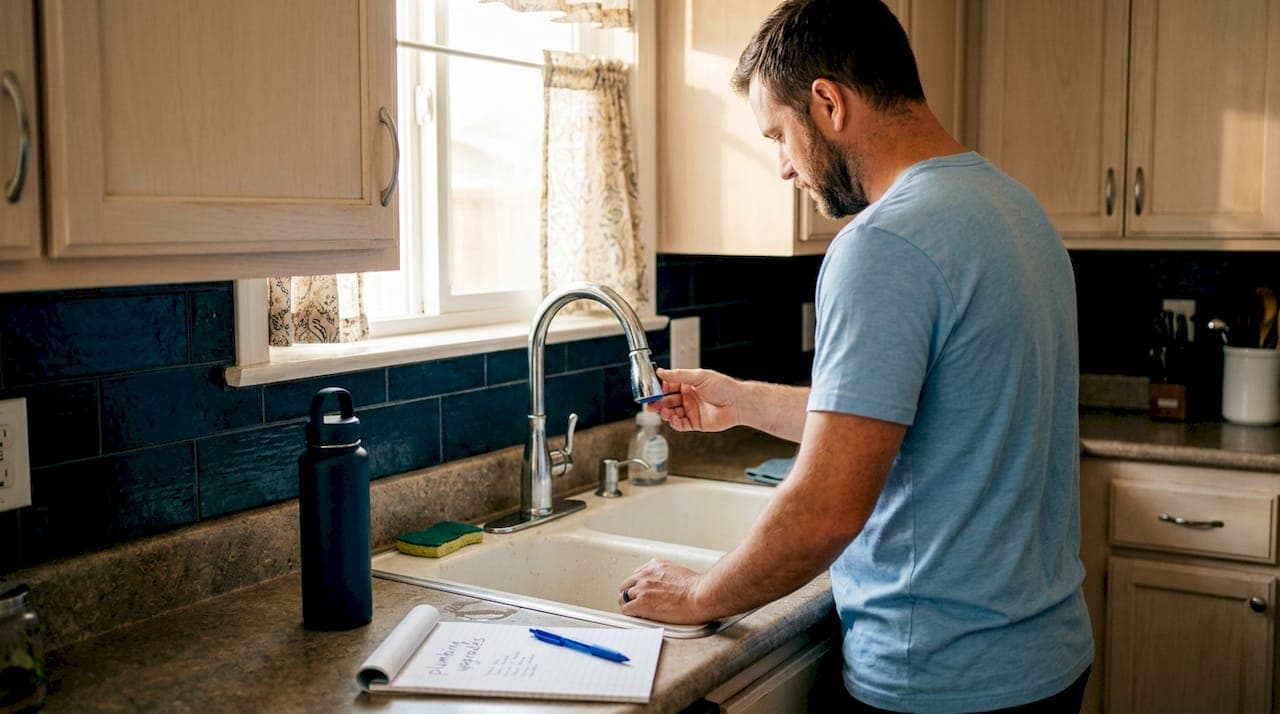
Faucet aerators are one of the most overlooked upgrades in water conservation, yet they are among the cheapest and easiest to install in any home or rental unit. An aerator screws onto the end of your faucet spout and mixes air into the water stream, reducing flow without making the pressure feel weaker.
Residential lavatory faucet accessories, including aerators and laminar flow devices, carry a maximum flow rate of 1.5 gallons per minute (gpm) or less when WaterSense labeled. Compare that to older faucets, which commonly run at 2.2 gpm or higher. On a per-use basis, that difference adds up fast across a full household.
Here's how to select and install the right aerator for your home:
- Check the existing flow rate. Hold a one-gallon container under your faucet, turn it on full, and time how long it takes to fill. If it takes less than 27 seconds, your faucet exceeds 2.2 gpm and is a strong candidate for an aerator upgrade.
- Measure the faucet thread size. Most residential faucets use a standard 15/16-inch male thread or 55/64-inch female thread. Bring the old aerator to the hardware store if you're unsure.
- Choose a WaterSense-labeled model. Look for the blue WaterSense label on the packaging. These products have been independently certified, not just internally tested by the manufacturer.
- Install it yourself. Hand-tighten the new aerator, then snug it with a cloth-wrapped wrench. Turn on the faucet and check for leaks around the threads.
- Test the flow again. Repeat the bucket test. You should see a clear reduction in fill time, confirming the aerator is doing its job.
A household with four bathroom sinks switching from 2.2 gpm aerators to 1.5 gpm models can reduce faucet water use by roughly 30 percent on those fixtures alone. Over a year in Santa Maria, where residential water rates include tiered surcharges, that kind of reduction can translate to meaningful savings on your annual bill.
Pro Tip: When managing a rental, replace aerators between tenants as part of your standard turnover process. It takes minutes, costs under $10 per faucet, and prevents complaints about low pressure because WaterSense aerators are designed to maintain a satisfying flow feel.
If you've noticed your water quality affecting faucet performance, combining aerator upgrades with water filter installation can protect both the fixtures and the water supply throughout your home.
Water-efficient showerheads and mixing valves
Faucets are only one part of the picture. Showers are where many households spend the most water per session, especially in homes with multiple occupants or longer shower habits. Upgrading your showerhead is one of the fastest ways to see a meaningful drop on your water bill.
WaterSense-certified showerheads are designed with a maximum flow rate of 2.0 gpm for shower fixtures, compared to older models that commonly run at 2.5 gpm or more. That half-gallon difference per minute adds up to 5 gallons in a standard 10-minute shower. Multiply that across a household or rental building and the savings become significant.
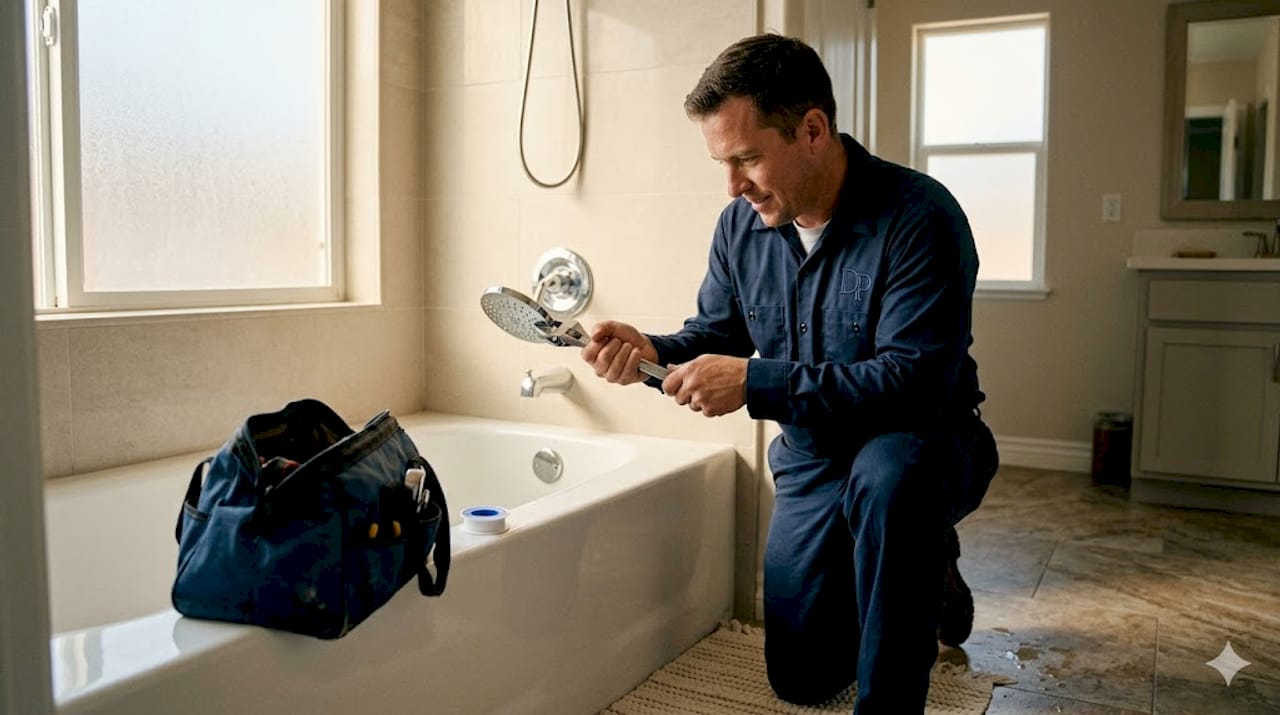
However, there's an important technical detail many homeowners miss: mixing valves. When you install a new low-flow showerhead without checking the mixing valve, you can experience uncomfortable fluctuations in water temperature and pressure. Older mixing valves weren't designed with low-flow systems in mind. An auto-compensating mixing valve corrects for these swings, maintaining steady temperature even when water use elsewhere in the home changes.
| Showerhead type | Flow rate | WaterSense certified | Best for |
|---|---|---|---|
| Standard older model | 2.5+ gpm | No | Not recommended for upgrades |
| Basic low-flow | 2.0 gpm | Sometimes | Budget-focused replacements |
| WaterSense certified | 2.0 gpm or less | Yes | All residential and rental installs |
| High-efficiency spray | 1.5 to 1.8 gpm | Yes | High-use households |
Key advantages of upgrading your showerhead and mixing valve together:
- Water savings without comfort sacrifice: Certified products maintain adequate pressure through improved spray technology.
- Temperature stability: Auto-compensating mixing valves prevent sudden hot or cold spikes that push people to let water run longer.
- Safety benefits: Thermostatic mixing valves cap maximum temperature, reducing scald risk, which is particularly important in rentals with elderly tenants or children.
- Water heater relief: Lower flow means your water heater repair cycles happen less frequently, reducing wear on the unit over time.
"Choose WaterSense-labeled showerheads for fixture replacement and new construction, with flow rates no higher than 2.0 gpm, and verify routing through an auto-compensating mixing valve to prevent pressure and temperature fluctuations." — U.S. Department of Energy, Federal Energy Management Program
High-efficiency toilets and leak repairs
Showers use a lot of water, but toilets often waste the most, especially when they're leaking. This is where many homeowners leave the most savings on the table without even realizing it.
WaterSense-certified toilets are available in both single-flush and dual-flush configurations. Single-flush WaterSense models use 1.28 gallons per flush or less, compared to older toilets that use 3.5 to 7 gallons per flush. Dual-flush models go further, offering a reduced flush for liquid waste and a full flush for solids, putting control directly in the user's hands.
But here's the number that should get your attention: a running toilet can waste 21,600 gallons per month at just 0.5 gpm of continuous flow. A constantly running fill valve can waste up to 4,000 gallons per day. In Santa Maria's tiered rate structure, that kind of hidden leak can add hundreds of dollars to a single billing cycle.
| Source of water loss | Potential waste | Priority level |
|---|---|---|
| Running toilet at 0.5 gpm | Up to 21,600 gal/month | Critical |
| Faulty fill valve (constant) | Up to 4,000 gal/day | Critical |
| Old toilet (3.5 gpf vs 1.28 gpf) | ~400 gal/month per flush cycle | High |
| Unaeratored lavatory faucet | ~150 gal/month | Moderate |
Quick steps for identifying and fixing a running toilet:
- Add food coloring to the tank. If color appears in the bowl within 15 minutes without flushing, the flapper is leaking.
- Listen for cycling. If the toilet refills on its own every 20 to 30 minutes with no flush, the fill valve is failing.
- Check the flapper seal. Mineral deposits common in Santa Maria's water supply can degrade rubber flappers faster than average. Replace flappers annually in older toilets.
- Test the fill valve. Flush and watch the refill cycle. Water should stop completely within 60 seconds of flushing.
- Call for a camera check if needed. If you've fixed the flapper and fill valve but still see high water use, a sewer camera inspection can rule out deeper issues contributing to wasted water.
Pro Tip: Fixing a single running toilet before replacing any other fixture in the home often delivers more immediate savings than upgrading all your faucets and showerheads combined. Always start with leak detection before buying new equipment.
Side-by-side comparison: Water conservation plumbing options
With individual options covered, it helps to see everything together so you can prioritize your budget and plan upgrades in the most logical order.
| Fixture/upgrade | Flow rate (efficient) | Estimated monthly savings | Typical install cost | Priority |
|---|---|---|---|---|
| Faucet aerator | 1.5 gpm or less | 100 to 200 gal | $5 to $15 per faucet | High (quick win) |
| WaterSense showerhead | 2.0 gpm or less | 200 to 500 gal | $25 to $80 | High |
| Mixing valve upgrade | N/A (comfort/safety) | Indirect savings | $150 to $400 | Medium |
| WaterSense toilet (single flush) | 1.28 gpf | 300 to 600 gal | $250 to $600 | High |
| Dual-flush toilet | 0.8/1.28 gpf | 400 to 700 gal | $300 to $700 | High |
| Flapper/fill valve repair | Stops leaks | Up to 21,600 gal/month | $10 to $50 DIY | Critical first |
The most important takeaway from this comparison: a single running toilet can waste more water than all your other fixtures combined. Savings calculations depend on usage assumptions including time, flow rate, and occupancy patterns, not just what fixtures are installed. Before setting a retrofit budget, estimate how many people use each bathroom and how often, then match that to the flow rate reduction you're planning.
If you're managing a multi-unit property, start by auditing every toilet in the building. The residential plumbing repairs needed to fix running toilets are usually fast and inexpensive, and the return on that investment is immediate.
Our perspective: What homeowners and property managers often overlook
Most guides on water conservation focus almost entirely on fixture upgrades: install this showerhead, swap that toilet, add an aerator. That advice isn't wrong, but it misses the bigger picture for a lot of Santa Maria homeowners.
In our experience working across Santa Barbara County, the properties that cut their water bills the most aggressively almost always start with a leak audit, not a trip to the hardware store. Running toilet fill valves and flappers are responsible for some of the most severe indoor water waste we see, and they're often completely silent. You won't hear a leak at 0.5 gpm, but you'll definitely feel it in your water bill.
Here's what we'd tell every homeowner or property manager in Santa Maria right now: your water rates are not getting cheaper. Every gallon wasted to a slow fill valve or a degraded flapper costs you at real money, compounded across tiered billing. Fixing those leaks first, before upgrading a single fixture, will almost always outperform a $600 toilet install for immediate return on investment.
That said, doing both in the right order is the winning strategy. Once leaks are gone, upgrade to WaterSense certified fixtures and start with the highest-use areas. Bathrooms with multiple daily users deserve priority over guest baths that see minimal traffic.
Our practical recommendation: schedule an annual plumbing checkup that specifically includes hidden household leak detection and a review of fixture performance. In Santa Maria's environment, where water rates are high and mineral deposits accelerate wear on rubber components, staying ahead of small leaks is far cheaper than reacting to large bills.
The homeowners who treat water conservation as an ongoing practice rather than a one-time upgrade project consistently see the best long-term results. A five-minute flapper check twice a year costs nothing but pays for itself quickly.
Take action: Local solutions for water-saving plumbing
Ready to stop wasting water and money? You don't need to figure it all out on your own. Drain Point Plumbing & Restoration has been helping homeowners and property managers across Santa Maria and Santa Barbara County identify exactly where their water budgets are leaking and fix it properly.
Whether you need a quick aerator swap, a full toilet replacement, or a thorough leak diagnosis, our team can assess your current setup and prioritize upgrades that deliver the fastest return. We work with both residential homeowners and rental property managers, and we know how to make conservation upgrades practical and budget-conscious. Explore your options for residential plumbing repairs or request a plumbing quote to get started with a free, no-pressure assessment from a local Santa Maria plumbing professional.
Frequently asked questions
What are WaterSense-labeled plumbing fixtures?
WaterSense-labeled fixtures are products independently certified by the EPA to meet strict efficiency and performance standards, helping homeowners reduce water use and lower utility bills without sacrificing comfort.
How much water can a running toilet waste?
According to EPA data, a running toilet can waste up to 21,600 gallons per month at a continuous 0.5 gpm flow, making it one of the most costly plumbing issues a homeowner can overlook.
What is the recommended flow rate for efficient showerheads?
WaterSense-certified showerheads must have a flow rate no greater than 2.0 gpm, which balances meaningful water savings with a comfortable shower experience.
Should homeowners focus more on leak repairs or fixture upgrades?
Both matter, but leak repairs often deliver greater savings immediately, particularly when a toilet fill valve or flapper is leaking silently and wasting thousands of gallons before anyone notices.
Recommended
- Local Plumbing Contractor, Emergency Residential Plumbing Services Santa Maria CA - Drain Point Plumbing & Restoration
- Full-Service Residential Plumbing Repairs & Fixture Replacements Santa Maria CA - Drain Point Plumbing & Restoration
- Water Heater Installation And Repair Santa Maria CA - Drain Point Plumbing & Restoration
- Water Filtration Systems Installation Santa Maria CA - Drain Point Plumbing & Restoration