
Commercial water heater upgrade options are defined as the replacement or retrofit of existing hot water systems with higher-efficiency technologies that meet current energy codes and reduce operating costs. For property managers and business owners, the right upgrade cuts utility bills, satisfies ENERGY STAR and federal FEMP requirements, and prevents the compliance failures that come with aging, non-condensing equipment. The leading technologies in 2026 include condensing gas units from manufacturers like A.O. Smith, tankless systems from Noritz, heat pump water heaters from Colmac, and hybrid configurations that combine storage with on-demand heating.
1. Top water heater upgrade options for commercial properties
The five main categories of commercial hot water system upgrades each serve different facility profiles. Understanding what separates them prevents costly mismatches between equipment and building demand.
Condensing gas water heaters are the most common upgrade path for facilities already on natural gas. These units extract heat from exhaust gases that non-condensing models waste, pushing thermal efficiency above 90%. UK Part L regulations now mandate a minimum of 91% efficiency for natural gas commercial replacements, effectively banning non-condensing units in compliant markets. That regulatory shift is arriving in U.S. commercial codes as well, making condensing technology the safe long-term choice.
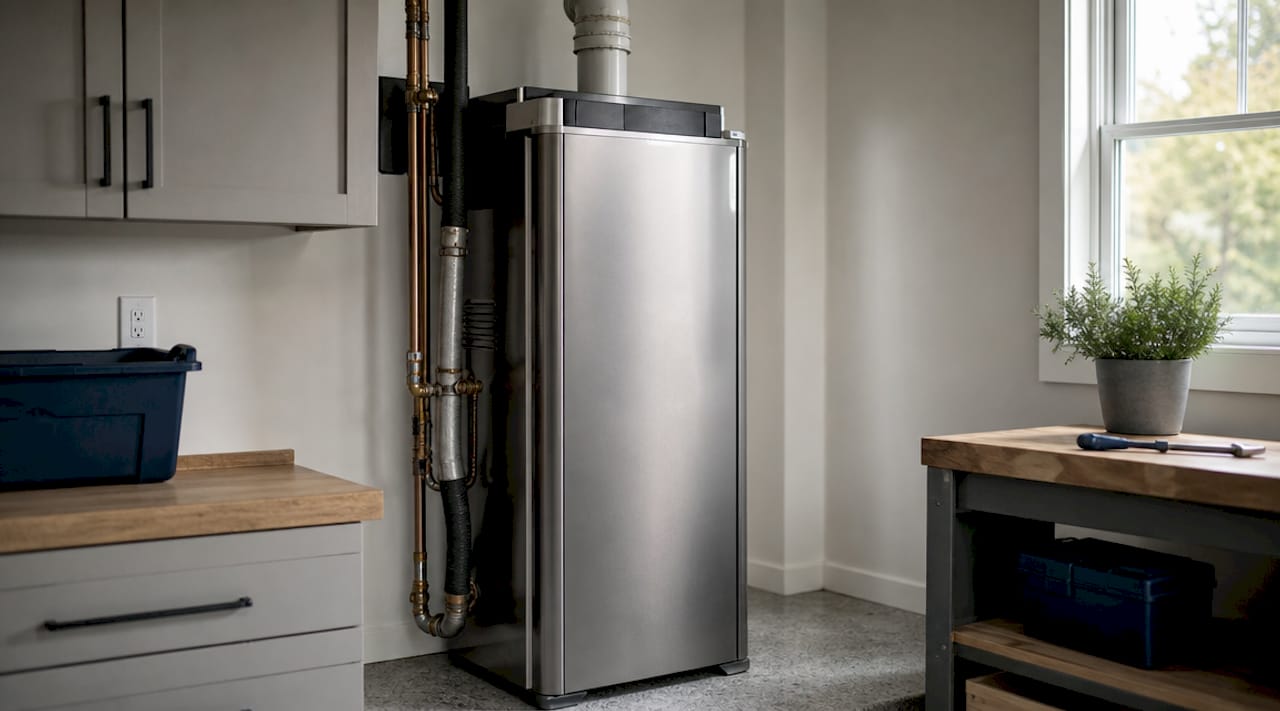
Tankless (instantaneous) water heaters heat water only when a fixture demands it, eliminating standby losses entirely. The tradeoff is peak capacity. A single commercial tankless unit rarely handles a large facility alone. Cascading multiple units is the standard solution, but sizing must account for simultaneous peak draw and available venting space, not just total BTU output. A production bakery case study found that an all-tankless approach would have required 9 to 12 units, creating venting and space challenges that made a hybrid design far more practical.
Electric storage and instantaneous heaters suit facilities without gas service or those in regions where electricity rates favor electric operation. Storage models carry standby heat loss, while instantaneous electric units avoid it but demand robust single-phase or three-phase supply. Electrical supply capacity directly caps element size and recovery rate, making early electrical assessment non-negotiable.
Heat pump water heaters transfer heat from ambient air rather than generating it through combustion or resistance. Colmac systems, for example, achieve water temperatures up to 176°F with energy use roughly one-third that of electric resistance heating. Heat pumps currently represent about 2 to 3% of the commercial water heater market, but that share is growing as electricity rates rise and gas restrictions expand.
Hybrid systems pair tankless units with a storage buffer tank to handle fluctuating demand without over-engineering the tankless bank. The Noritz Hybrid Hot system used in the bakery case study delivered 317 gallons per hour using just three condensing tankless units paired with storage, versus the 9 to 12 standalone tankless units that would have been needed otherwise. This is the upgrade path that makes the most sense for hotels, restaurants, and multifamily properties with sharp morning or evening demand spikes.
Pro Tip: Before specifying any upgrade, map your facility's hourly hot water demand for a full week. Peak draw, not average consumption, determines which technology actually works for your building.
2. How to choose the right commercial water heater upgrade for your facility
Selecting the right system requires a structured assessment of your facility's demand profile, fuel options, and physical constraints. Skipping any of these steps leads to undersized equipment or expensive retrofits after installation.
-
Profile your peak demand. Calculate the maximum gallons per hour your facility draws simultaneously, not just daily totals. A hotel with back-to-back morning checkouts has a very different profile than a medical office with steady low-volume use throughout the day.
-
Evaluate fuel availability and cost. Natural gas remains cheaper per BTU in most of California, including Santa Barbara County, but electric rates and incentives are shifting that math in some zones. Run a 12-month cost comparison before locking in a fuel type.
-
Audit your existing infrastructure. Check electrical panel capacity for electric options, available flue routes for condensing gas units, and mechanical room dimensions. Electrical service limitations discovered late in a project cause redesigns and panel upgrades that inflate costs significantly.
-
Confirm regulatory efficiency minimums. ENERGY STAR certified commercial gas water heaters meet FEMP lifecycle cost thresholds and qualify for utility rebates. Verify that your chosen unit meets the current minimum efficiency rating for your jurisdiction before purchasing.
-
Plan ancillary installation requirements. Condensing gas units need power-vented exhaust systems and acid-resistant condensate drainage. Heat pump units need adequate air volume around the unit. Combination heating and potable water systems require mixing valves and anti-scald controls to meet IRC 2021 code compliance.
-
Consider smart controls and metering. Building management system integration lets you monitor consumption in real time, catch efficiency losses early, and document performance for utility rebate programs. This step is often skipped and almost always regretted.
Pro Tip: Ask your plumbing contractor for a written load calculation before any equipment is specified. A one-page demand profile prevents the most common and expensive upgrade mistakes.
3. Cost-effectiveness and operational savings of advanced water heater upgrades
The FEMP lifecycle cost framework compares upfront equipment cost against discounted lifetime energy savings, rather than simple payback on purchase price alone. This distinction matters because a unit that costs $2,000 more upfront but saves $800 per year over 15 years is clearly the better financial decision, yet many buyers still default to the cheapest sticker price.
ENERGY STAR certified commercial gas water heaters with 96% thermal efficiency carry an annual energy cost of $228, compared to $315 for an 80% efficiency model. That $87 annual difference compounds to $843 in lifetime savings, and ENERGY STAR products can save $464 or more in lifetime energy costs versus less efficient alternatives. These figures assume standard commercial usage patterns and current utility rates.
"FEMP guidance advises comparing upfront cost against discounted lifetime energy savings to determine cost-effectiveness. ENERGY STAR certified commercial gas water heaters consistently meet this lifecycle cost test."
Heat pump and hybrid systems deliver even larger operational savings in high-demand facilities. A heat pump unit consuming one-third the energy of a resistance heater generates savings that typically recover the premium cost within three to five years, depending on local electricity rates. Extended warranties on condensing and heat pump equipment, often 10 to 12 years on commercial-grade units, further reduce total lifecycle cost by deferring replacement cycles.
| Technology | Typical thermal efficiency | Estimated annual energy cost | Key cost driver |
|---|---|---|---|
| Non-condensing gas (80%) | 80% | $315 | Standby and flue losses |
| Condensing gas (96%) | 96% | $228 | Higher upfront cost, lower fuel use |
| Heat pump electric | 300%+ COP | Varies by rate | Electrical supply and install cost |
| Hybrid tankless + storage | 90%+ combined | Varies by load | Reduced unit count vs. all-tankless |
The table above uses Department of Energy data for gas units and general industry benchmarks for heat pump and hybrid configurations. Actual savings depend on local utility rates, usage patterns, and installation quality.
4. Installation considerations and challenges when upgrading commercial water heaters
Installation complexity is where most commercial upgrade budgets go over plan. The equipment cost is predictable. The site conditions are not.
-
Electrical supply upgrades. Electric instantaneous heaters and heat pump units often require panel upgrades or new dedicated circuits. Inadequate supply discovered late causes redesigns that push project costs well beyond initial estimates. Confirm three-phase availability and amperage capacity before specifying any electric system above 30 kW.
-
Venting and condensate drainage. Condensing gas units use power-vented exhaust that can run horizontally up to 60 feet, which opens up mechanical room placement options. However, the condensate produced is acidic and requires either acid-resistant drain materials or a neutralizer kit. Improper vent upgrades cause system failures and code violations that are expensive to correct after installation.
-
Space and mechanical room layout. Heat pump units need clearance for air circulation, typically 1,000 cubic feet of surrounding air volume minimum. Cascaded tankless systems need organized manifold piping and accessible venting runs. A mechanical room that worked for a single storage tank may not accommodate a modern hybrid system without reconfiguration.
-
Building management system integration. Smart controls and metering connections require coordination between the plumbing contractor and the building's electrical or controls contractor. Scheduling this early prevents the common scenario where a high-efficiency unit is installed but never connected to the BMS, leaving performance data uncaptured.
-
Professional assessment before commitment. A site visit from a licensed plumber with commercial water heater experience, like the team at Drainpointplumbing, surfaces infrastructure gaps before they become change orders. The water heater replacement checklist approach works for residential projects but commercial upgrades require a full load calculation and infrastructure audit.
Key takeaways
The most cost-effective commercial water heater upgrade combines ENERGY STAR-certified technology with a full infrastructure audit, lifecycle cost analysis, and smart controls integration from the start.
| Point | Details |
|---|---|
| Condensing gas leads compliance | Units at 96% efficiency meet FEMP and ENERGY STAR standards while cutting annual energy costs by $87 or more. |
| Hybrid systems solve peak demand | Pairing tankless units with storage tanks reduces equipment count and venting complexity for high-demand facilities. |
| Electrical audit is non-negotiable | Discovering supply limitations after specification causes costly redesigns and project delays. |
| Lifecycle cost beats sticker price | ENERGY STAR gas units save up to $843 in lifetime energy costs versus 80% efficiency alternatives. |
| Smart controls multiply savings | BMS integration captures performance data needed for rebate programs and early fault detection. |
Why I always start with the infrastructure, not the equipment
After years of working on commercial water heater projects across Santa Barbara County, the pattern I see most often is this: a property manager picks the equipment first and figures out the installation second. That order is backwards, and it costs money every time.
The technology conversation is genuinely interesting. Heat pump systems from Colmac, hybrid configurations using Noritz tankless units paired with storage, condensing A.O. Smith units with 96% efficiency. These are real improvements over what most commercial buildings are running today. But none of them perform as advertised if the electrical panel is undersized, the flue route is compromised, or the mechanical room has no room for condensate drainage.
What I tell every commercial client is this: spend the first hour of any upgrade conversation on your building, not on equipment brochures. What does your peak demand look like at 7 a.m. on a Monday? What is your current electrical service capacity? Where does your existing flue terminate? Those answers determine which upgrade options are actually viable for your facility.
The other thing I push hard on is lifecycle cost thinking. A condensing gas unit costs more upfront than a standard replacement. A heat pump costs more than a condensing gas unit. But the FEMP lifecycle framework shows clearly that the higher-efficiency option wins on total cost in nearly every commercial scenario. The facilities that resist this logic are the ones calling for emergency replacements five years earlier than necessary.
Hybrid systems deserve more attention than they get. The Noritz bakery case study is not an outlier. Any facility with sharp demand peaks and intermittent low-use periods benefits from the combination of on-demand heating and buffer storage. It is a more forgiving design than a pure tankless bank, and it is far more practical to install and maintain.
— Kirk
Upgrade your commercial water heater with Drainpointplumbing
Drainpointplumbing has served commercial clients across Santa Barbara County for over 15 years, handling everything from single-unit replacements to full commercial hot water system redesigns. The team assesses your facility's demand profile, audits existing infrastructure, and recommends the right technology for your load requirements and budget.
Whether you are evaluating condensing gas units, planning an upgrade to tankless water heater systems, or exploring heat pump options for a multifamily property, Drainpointplumbing provides the load calculations, installation, and post-install support to get the project done right. Contact Drainpointplumbing for a free plumbing quote and a site assessment tailored to your facility.
FAQ
What is the most energy-efficient commercial water heater option?
Heat pump water heaters are the most energy-efficient option, operating at roughly three times the efficiency of electric resistance or standard gas units. For gas-fueled facilities, condensing units at 96% thermal efficiency represent the highest available efficiency tier.
How many tankless units does a commercial building need?
The number depends on peak simultaneous demand, not average daily use. A production bakery requiring 317 gallons per hour needed three condensing tankless units paired with storage tanks. An all-tankless approach for the same load would have required 9 to 12 units.
Do commercial water heater upgrades qualify for rebates?
ENERGY STAR certified commercial gas water heaters meet FEMP lifecycle cost standards and typically qualify for utility rebates. Check with your local utility and California's Energy Upgrade California program for current incentive amounts.
What installation challenges should I plan for?
Condensing gas units require power-vented exhaust and acid-resistant condensate drainage. Electric and heat pump systems may require panel upgrades. Discovering these constraints after equipment selection causes redesigns and cost overruns.
How long do commercial water heaters last after an upgrade?
Commercial-grade condensing and heat pump units typically carry 10 to 12 year warranties and last 15 to 20 years with proper maintenance. This extended service life is a key factor in the lifecycle cost advantage over standard replacement units.