Emergency water heater failure signs are the physical and behavioral symptoms your unit displays before it breaks down completely, floods your home, or creates a safety hazard. Recognizing these warning signs early is the difference between a $200 repair and a $2,000 emergency. Rheem, one of the leading water heater manufacturers, identifies unit age, recurring repair costs, and visible symptoms as the three factors that determine whether your unit is failing or simply needs maintenance. The industry term for what most homeowners call "water heater problems" is water heater malfunction symptoms, and knowing how to read them accurately can protect your home and your wallet.
1. Leaking water at the base or around fittings
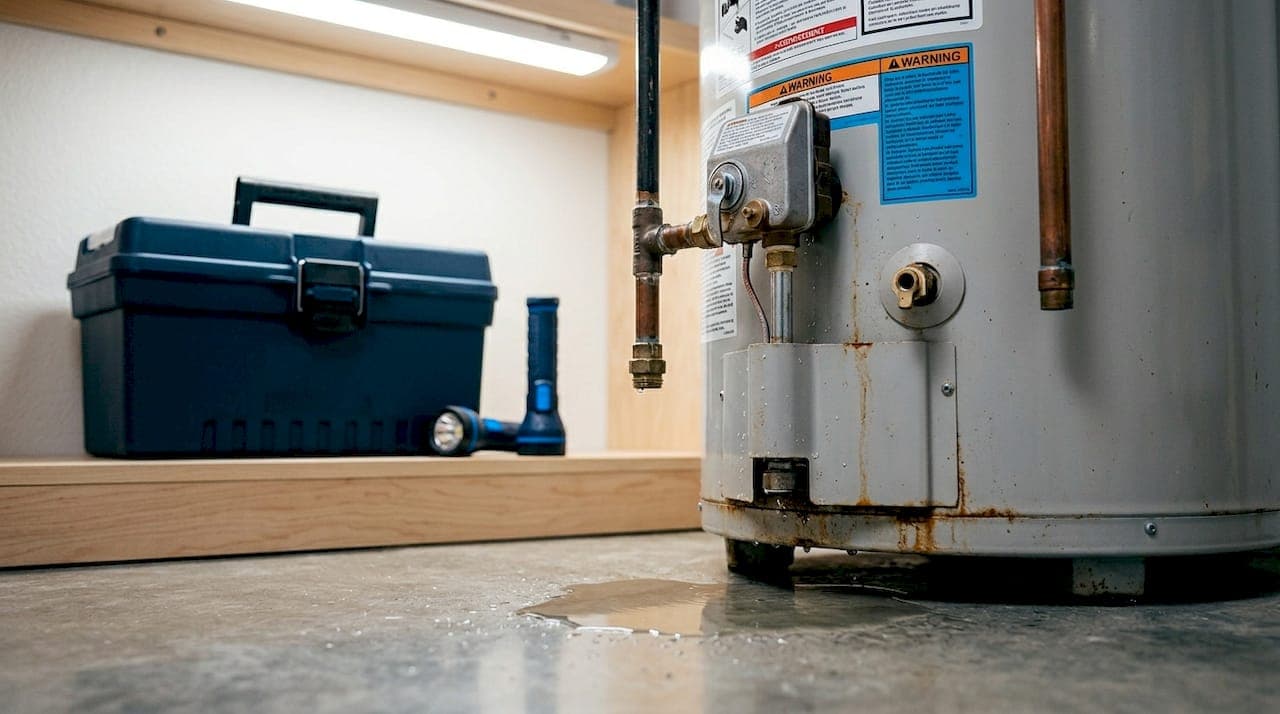
A puddle beneath your water heater is one of the most direct emergency water heater failure signs you will ever see. Water pooling at the base typically means the tank itself has cracked or corroded from the inside out. Leaks around fittings or connections can sometimes be tightened or resealed, but a leaking tank is not repairable. Shut off the water supply and call a licensed plumber immediately, because a failing tank can release dozens of gallons in minutes.
Water heater leak detection starts with checking the cold water inlet, hot water outlet, and the drain valve at the bottom of the unit. If none of those connections are the source, the tank itself is compromised.
2. Strange noises: popping, rumbling, or banging
Loud noises from your water heater are not normal aging sounds. Sediment buildup causes popping and rumbling noises as hardened mineral deposits trap water underneath them and force it to boil through. This reduces heating efficiency, strains the tank walls, and accelerates the path to failure. Left unaddressed, sediment buildup shortens the unit's lifespan significantly.
Banging or knocking sounds, especially during heating cycles, often indicate that the tank is working harder than it should. Annual flushing removes these deposits before they cause permanent damage.
Pro Tip: If your water heater sounds like a coffee percolator, flush the tank immediately. If the noise returns within a few weeks, the sediment layer is likely too thick to flush out and replacement is worth pricing.
3. Inconsistent or lukewarm hot water
Getting lukewarm water when you expect hot is a textbook water heater malfunction symptom. Temperature fluctuations signal a failing heating element in electric units or a malfunctioning thermostat in gas models. Both are repairable in younger units, but in a unit over 10 years old, these component failures often precede broader internal deterioration.
If your hot water runs out faster than it used to, the tank capacity has likely been reduced by sediment accumulation. A unit that once served your household comfortably but now struggles is showing you a clear sign that something has changed internally.
4. Discolored, rusty, or smelly water
Rust-colored water coming from your hot tap is a strong indicator of internal tank corrosion. Rusty or discolored water means the protective lining inside the tank has broken down and the steel is oxidizing directly into your water supply. This is not a cosmetic issue. Corroded tanks leak, and corroded water is unsafe for use.
A rotten egg smell from hot water indicates bacterial growth inside the tank, often caused by a depleted anode rod. The anode rod is a sacrificial metal component that attracts corrosive elements so the tank itself is spared. When it fails, bacteria and corrosion move in fast.
5. Dripping or failing temperature and pressure relief valve
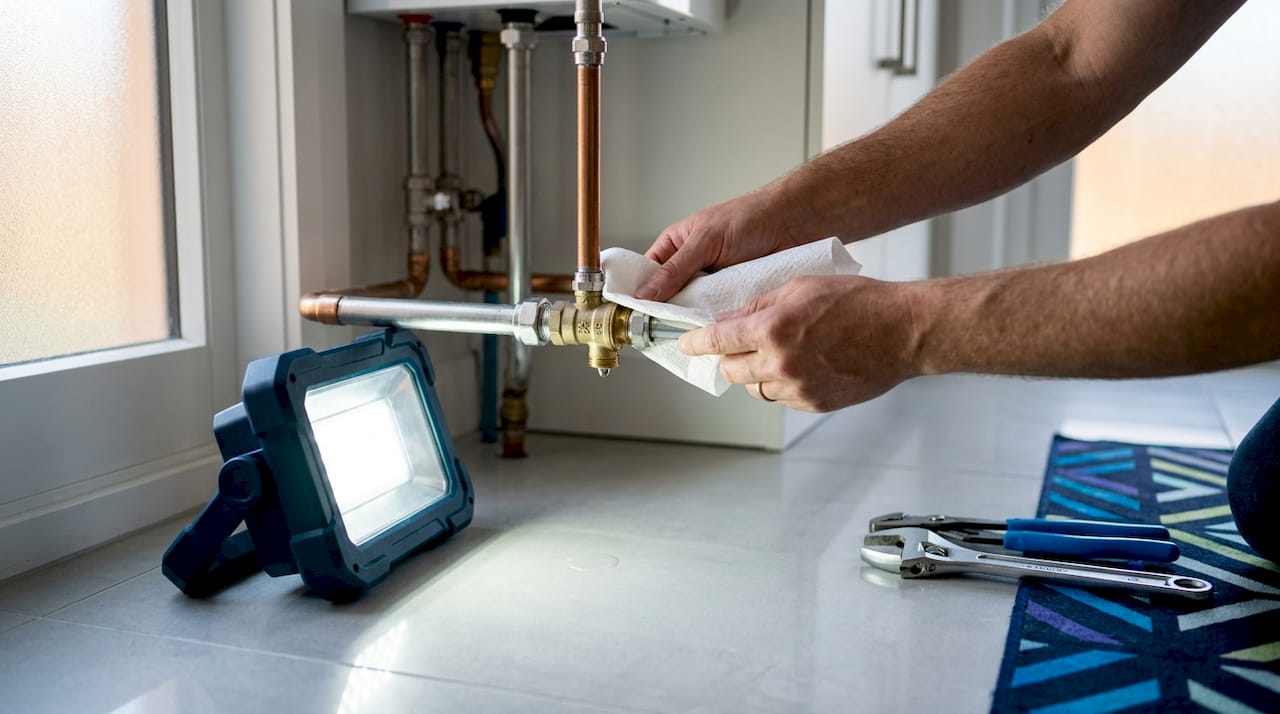
The temperature and pressure (T&P) relief valve is the single most critical safety component on your water heater. The T&P valve opens to prevent tank rupture when water temperature exceeds 210°F or pressure exceeds 150 psi. A dripping T&P valve is not a minor annoyance. It signals that your system is regularly hitting dangerous pressure or temperature thresholds.
Capping the discharge pipe to stop the drip is prohibited under IRC 2024 and removes the only protection preventing a catastrophic tank rupture. If your T&P valve is dripping, call a licensed plumber to diagnose the root cause, whether it is thermal expansion, excessive system pressure, or a faulty valve.
A dripping T&P valve is your water heater telling you it is under stress. Never silence it by capping the pipe. Diagnose the cause first.
6. Reduced hot water pressure
Noticeably lower pressure from your hot water taps, while cold water pressure remains normal, points directly to your water heater. Sediment and mineral scale build up inside the tank and connecting pipes, restricting flow over time. This is a common water heater failure sign that homeowners often misattribute to their plumbing system at large.
Check whether the pressure drop affects only hot water or both hot and cold. If it is isolated to hot water, the problem lives inside the heater or the hot water supply lines connected to it.
7. Frequent repairs in a short period
One repair in five years is normal. Two or three repairs in 18 months is a pattern that tells you the unit is deteriorating across multiple components simultaneously. Recurring repairs on aging units indicate broader internal wear that isolated fixes cannot resolve. Each repair buys less time than the last.
Track your repair history. If you have replaced a heating element, a thermostat, and a valve within the same year, you are spending money on a unit that is already failing.
8. Unexplained increase in energy bills
A sudden spike in your gas or electric bill without a change in household usage is a sign your water heater is working harder than it should. Higher energy bills indicate that sediment buildup or a failing component is forcing the unit to run longer cycles to reach the set temperature. This inefficiency compounds over time and adds up to real money.
Compare your utility bills month over month. A water heater that once cost $30 a month to run but now costs $50 is consuming 67% more energy for the same output.
When to repair vs. when to replace your water heater
Understanding when to replace a water heater is as important as spotting the failure signs. The decision comes down to three factors: unit age, repair cost relative to replacement cost, and symptom frequency.
Repair costs exceeding 50% of a new unit's price signal that replacement is the smarter investment, especially for units 10 to 15 years old with recurring problems. This is known as the "50% rule" and is the standard benchmark used by Rheem and most licensed plumbers.
| Scenario | Recommended action |
|---|---|
| Unit under 8 years, single repair needed | Repair: heating elements, thermostats, and anode rods are cost-effective fixes |
| Unit 10 to 15 years, multiple symptoms | Replace: age-plus-symptom clustering predicts imminent broader failure |
| Tank is leaking at the base | Replace immediately: tank leaks are not repairable |
| Repair cost exceeds 50% of new unit price | Replace: the math favors a new unit with a full warranty |
| Visible external corrosion or rust staining | Replace: corrosion has likely compromised the tank structure |
Pro Tip: Check the serial number on your unit. Most manufacturers, including Rheem and A.O. Smith, encode the manufacture date in the first four characters. Knowing your unit's exact age changes the entire repair-versus-replace calculation.
Symptom clustering with age is the most reliable predictor of imminent failure. One symptom on a 5-year-old unit is a repair call. Three symptoms on a 12-year-old unit is a replacement conversation.
Safety aspects you should never ignore
Beyond the visible signs of water heater issues, there are safety hazards that require immediate professional attention.
- T&P valve dripping: Indicates the system is regularly exceeding safe pressure or temperature limits. Requires professional diagnosis, not a DIY fix.
- Burning smell near the unit: Could indicate a gas leak, faulty wiring, or overheating components. Shut off the unit and call a plumber immediately.
- Rotten egg odor: Signals hydrogen sulfide gas from bacterial growth or, in gas heaters, a potential gas leak. Do not ignore this.
- Discharge pipe blocked or capped: Per IRC 2024, the T&P discharge pipe must terminate within 6 to 24 inches of the floor and must never be capped or redirected into a closed container.
- Missing or damaged warning labels: Landlords must inspect safety labels and T&P valve compliance to meet code requirements and protect tenants.
If you are a renter and notice any of these conditions, document them and notify your landlord in writing. These are not cosmetic issues. They are code compliance and safety failures.
Preventative maintenance that extends water heater life
Most emergency water heater problems are preventable with a consistent maintenance schedule. These steps apply to both traditional tank units and tankless water heaters.
- Flush the tank annually. Connect a garden hose to the drain valve and flush until the water runs clear. This removes sediment that causes noise, reduces efficiency, and accelerates corrosion.
- Replace the anode rod every 3 to 4 years. This is the most underperformed maintenance task on residential water heaters. A depleted anode rod leads directly to tank corrosion and smelly water.
- Test the T&P relief valve once a year. Lift the lever briefly to confirm it opens and reseats properly. A valve that does not reseat or that leaks after testing needs replacement.
- Check water pressure at the inlet. Residential water pressure should stay between 40 and 80 psi. Pressure above 80 psi stresses the tank and accelerates component wear.
- Inspect for leaks and corrosion every six months. Look at the base, fittings, and the area around the T&P valve. Catching a small drip early prevents a flooded utility room later.
- Schedule a professional inspection every two years. A licensed plumber can spot internal wear, check gas connections, and verify code compliance in ways a visual inspection cannot.
Regular flushing, anode rod replacement, and pressure monitoring are the three maintenance steps Rheem identifies as most effective for extending unit lifespan and preventing emergency failures.
Pro Tip: Set a calendar reminder for the same month every year to flush your tank and test the T&P valve. Pairing it with another annual task, like changing smoke detector batteries, makes it easier to remember.
Key takeaways
Catching emergency water heater failure signs early requires knowing which symptoms indicate minor repairs and which ones mean the unit is past saving.
| Point | Details |
|---|---|
| Leaks at the base mean replacement | A leaking tank cannot be repaired; shut off water and call a plumber immediately. |
| The 50% rule guides repair decisions | If repair costs exceed half the price of a new unit, replacement is the better investment. |
| T&P valve drips are safety emergencies | Never cap the discharge pipe; diagnose the root cause with a licensed professional. |
| Age plus symptoms predicts failure | Multiple symptoms on a unit over 10 years old signal imminent broader failure. |
| Annual maintenance prevents most emergencies | Flushing, anode rod replacement, and pressure checks stop the majority of failures before they start. |
What 15 years of water heater calls taught me
The homeowners who call us in a panic almost always say the same thing: "It had been making that noise for months, but I figured it was fine." That noise was sediment. That drip from the T&P valve was thermal expansion. That lukewarm shower was a heating element on its last legs. None of these signs appeared overnight, and none of them were subtle.
The conventional wisdom is to wait until something stops working before replacing it. With water heaters, that approach costs you more every time. A tank that fails completely can flood a utility room, damage flooring, and destroy stored belongings in under an hour. The repair bill for the water heater is often the smallest invoice in that scenario.
What I have found after years of inspections is that most homeowners do not ignore these signs out of carelessness. They ignore them because they do not know what they mean. A popping noise sounds like a quirk, not a sediment crisis. A slightly lower water temperature sounds like a seasonal fluctuation, not a failing element. That is the knowledge gap this article is meant to close.
My honest recommendation: if your unit is over 10 years old and showing two or more of the signs listed here, price out a replacement before the next repair. You will almost always find that the math favors moving on. And if you are unsure, a professional inspection costs far less than the emergency call you are trying to avoid.
— Kirk
Get a professional water heater inspection before it becomes an emergency
Drainpointplumbing has served Santa Maria and Santa Barbara County homeowners for over 15 years, handling everything from routine water heater inspections to full emergency replacements. If you have spotted any of the warning signs covered in this article, the right move is a professional assessment before the situation escalates.
The team at Drainpointplumbing specializes in water heater repair and replacement, including safety inspections for T&P valves, discharge pipe compliance, and sediment buildup. For homeowners who need a broader look at their plumbing system, residential plumbing repairs are available 24/7 with free quotes. Senior and military discounts apply. Do not wait for a flooded utility room to make the call.
FAQ
What are the most urgent emergency water heater failure signs?
Leaking water at the base of the tank, a dripping T&P relief valve, and burning or rotten egg odors are the most urgent signs requiring immediate professional attention. These symptoms indicate structural failure, dangerous pressure buildup, or gas and bacterial hazards.
How do I know if my water heater needs repair or replacement?
Apply the 50% rule: if the repair cost exceeds half the price of a new unit, replacement is the better investment, especially for units 10 years or older. Multiple symptoms appearing at the same time on an older unit strongly favor replacement over repair.
Why is my hot water rusty or discolored?
Rust-colored hot water indicates internal tank corrosion, meaning the steel tank wall is oxidizing directly into your water supply. This is not repairable and signals that the tank needs replacement before it leaks or fails completely.
Can I cap the T&P relief valve discharge pipe to stop it dripping?
No. Capping or blocking the T&P discharge pipe is prohibited under IRC 2024 and removes the only protection preventing a catastrophic tank rupture. A dripping valve requires professional diagnosis to identify whether the cause is thermal expansion, excessive pressure, or a faulty valve.
How often should a water heater be professionally inspected?
A professional inspection every two years is the standard recommendation for residential units. Homeowners should also perform their own visual checks every six months, looking for leaks, corrosion, and T&P valve condition.