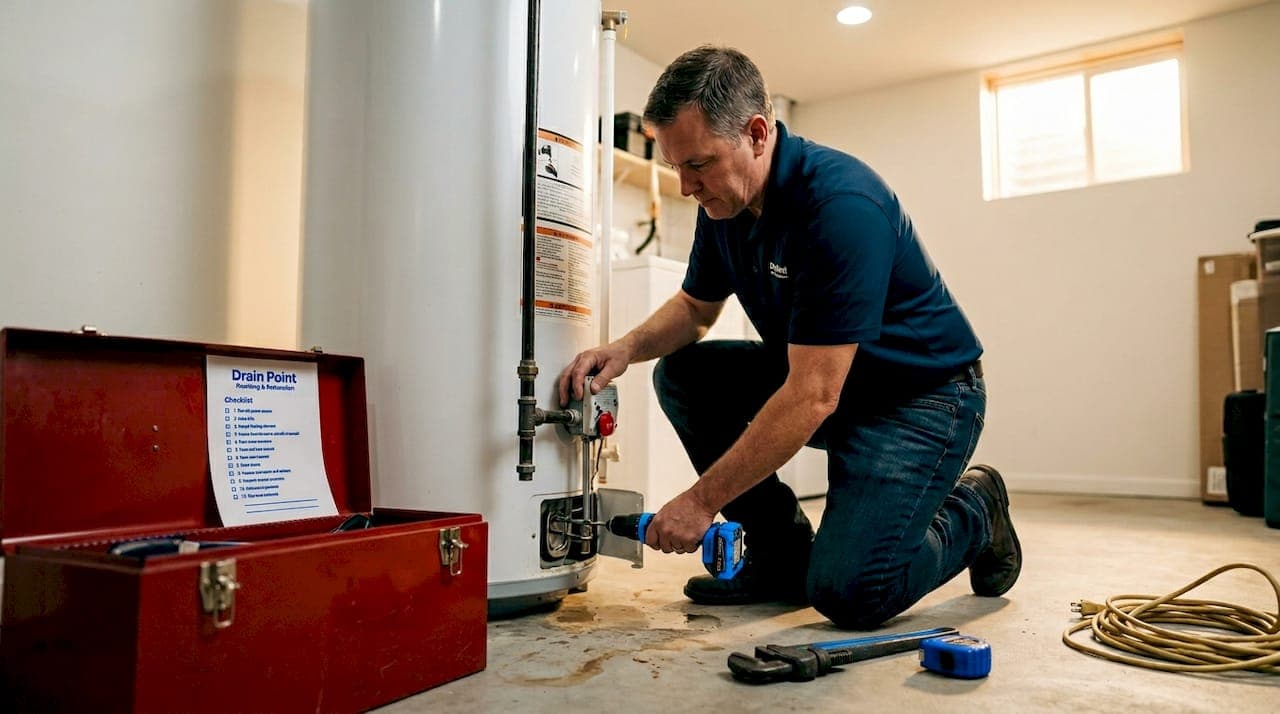
One morning you have hot water. The next, you don't. Understanding why water heater fails unexpectedly is more useful than most people realize, because the failure rarely comes from nowhere. It just looks that way. Most homeowners assume water heaters give plenty of warning before quitting, but that assumption leads to costly surprises. This guide breaks down the real causes of water heater failure, the warning signs most people miss, what you can do to prevent it, and how to decide whether repair or replacement makes more sense for your situation.
Table of Contents
- Key takeaways
- Why water heater fails unexpectedly: the real causes
- Signs of water heater failure you shouldn't ignore
- Preventive maintenance that actually works
- Repair vs. replacement after an unexpected failure
- Troubleshooting sudden loss of hot water
- What 15 years of plumbing calls taught me about water heater failures
- Get professional help with your water heater today
- FAQ
Key takeaways
| Point | Details |
|---|---|
| Failures aren't truly random | Most sudden failures trace back to neglected maintenance, sediment, or electrical faults that built up silently. |
| Warning signs exist but get ignored | Popping sounds, fluctuating temperatures, and rusty water all signal trouble before the unit quits. |
| Annual maintenance cuts your risk | Flushing the tank, checking the anode rod, and testing valves can prevent the majority of unexpected breakdowns. |
| The 50% rule guides replacement | If repair costs exceed half the price of a new unit, replacement is almost always the smarter financial call. |
| Leak source matters before you panic | Not every leak means a dead tank. Many leak sources trace to valves or fittings, which are far cheaper to fix. |
Why water heater fails unexpectedly: the real causes
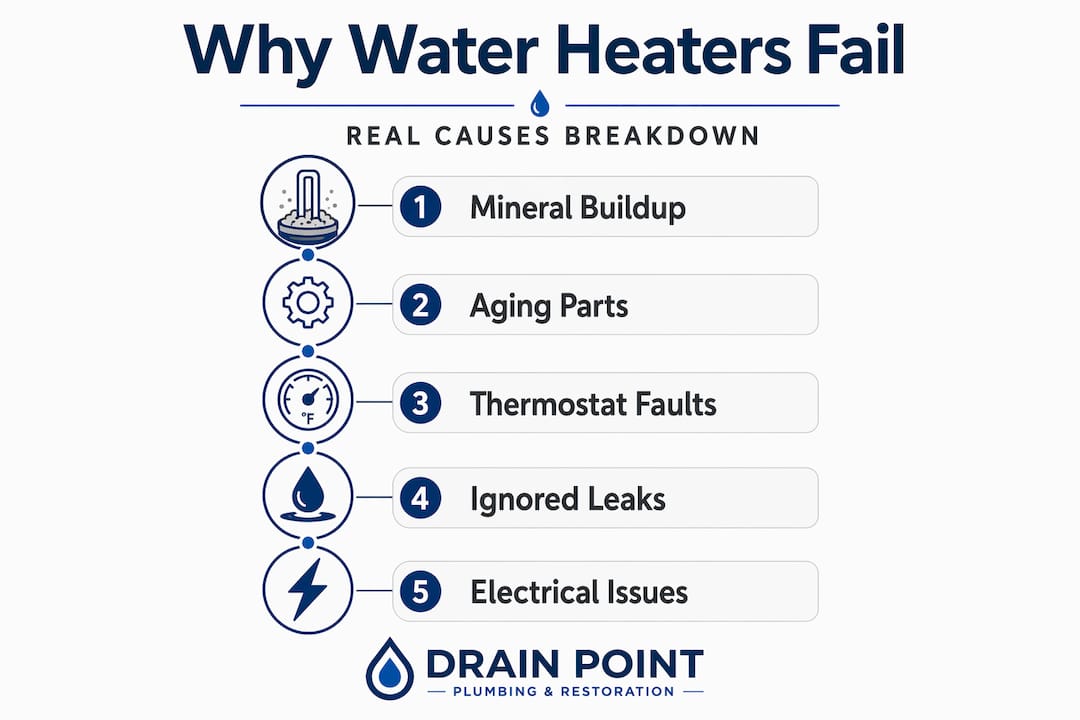
Most people picture a water heater as a simple, nearly indestructible appliance. That's the first misconception worth clearing up. Water heaters deal with constant heat cycling, mineral-heavy water, and electrical or gas systems that all have their own failure points. When one of those points gives out, the loss of hot water can feel completely sudden.
Power issues and failed components are among the most common root causes of sudden water heater failure, and they are often misdiagnosed. Here's what's actually happening inside the unit:
- Tripped breakers or blown fuses. An electric water heater draws significant amperage. A power surge or aging wiring can trip the breaker or blow a fuse, cutting power entirely without any visible damage to the heater itself.
- Burnt-out heating elements. Electric heaters rely on one or two submerged elements to heat the water. These elements fail over time from mineral deposits, age, or power fluctuations. When an element burns out, you get cold water fast.
- Stuck or failed thermostat. A thermostat that sticks in the off position stops calling for heat. One stuck in the on position triggers the high-limit safety switch, which then shuts down the unit.
- High-limit switch trips. This safety cutoff activates when water temperature climbs above roughly 180°F. High-limit trips signal thermostat problems, not just a minor reset situation.
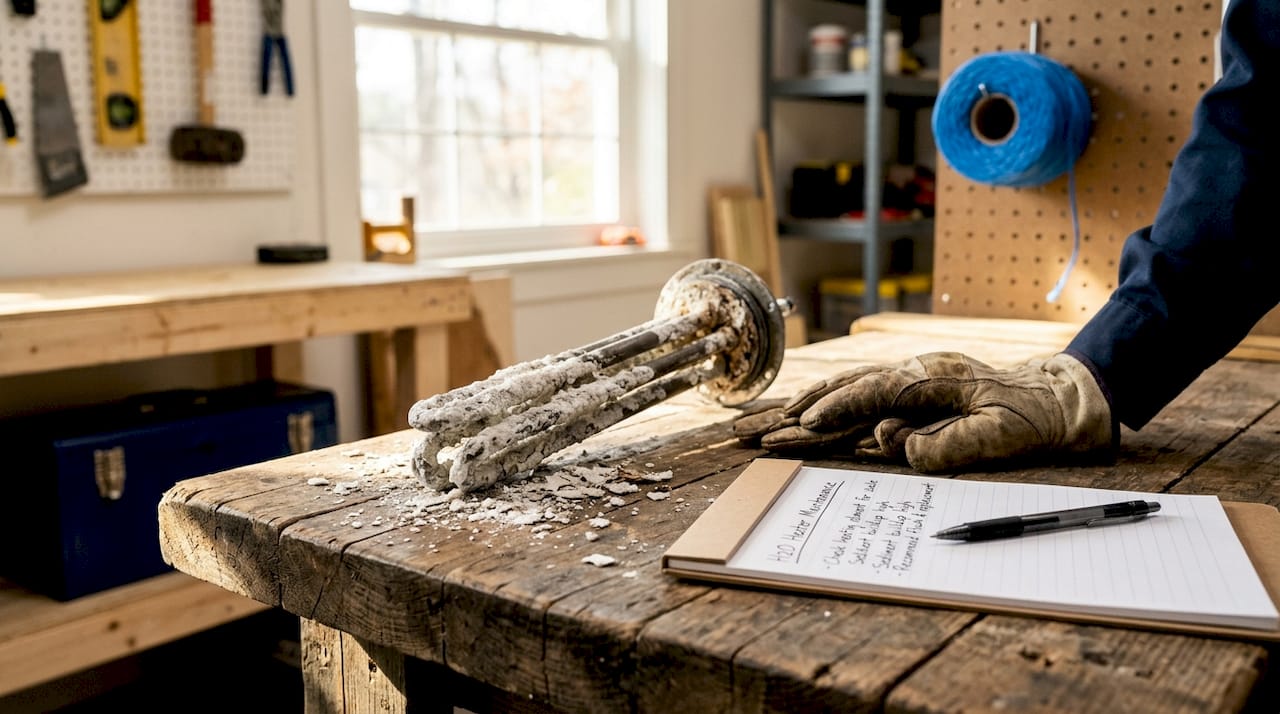
- Sediment overheating the tank. Hard water leaves calcium and magnesium deposits at the bottom of the tank. Sediment traps heat, causing repeated overheating that stresses the metal until cracks or leaks appear.
- Gas-specific failures. On gas heaters, a blown-out pilot light, a faulty thermocouple, or a gas supply interruption will shut down heating immediately. These are often simpler fixes, but they still leave you without hot water.
- Corrosion and internal rust. Once the anode rod is depleted, the tank steel starts corroding from the inside out. By the time a leak shows up, the damage has been building for months or years.
Pro Tip: If your water heater trips the reset button more than once in a week, don't just keep resetting it. That pattern almost always means a thermostat or element problem that needs professional diagnosis, not a quick button push.
Signs of water heater failure you shouldn't ignore
The idea that water heaters fail without warning is partly true and partly a myth. Technically, the mechanical failure can happen fast. But the conditions that cause it usually develop slowly and send signals most homeowners miss or dismiss.
Knowing the signs of water heater failure puts you ahead of the problem. Routine maintenance reveals early indicators like unusual sounds, minor leaks, and energy waste long before the unit dies completely.
Here's what to watch for:
- Popping or rumbling sounds. That noise isn't harmless. It's the sound of water boiling under a layer of hardened sediment at the tank's base. It means the element is overworking to push heat through the buildup.
- Lukewarm or inconsistent hot water. If your shower goes from hot to cold without warning, a failing heating element or a partially tripped breaker could be the reason.
- Visible moisture or pooling water near the base. Any water on the floor near your heater deserves immediate attention. It might be condensation or a loose valve, but it could also mean the tank shell is compromised. For emergency pipe leak situations, knowing fast fixes for urgent leaks can help while you wait for a plumber.
- Rusty or discolored water. Brown or reddish water from your hot tap is a strong indicator of internal corrosion. Once the tank starts rusting from the inside, the clock is ticking.
- Repeated tripping of the high-limit reset switch. As noted above, this is a system warning, not a glitch to reset and forget.
- Unexpectedly high energy bills. A water heater working harder than normal to compensate for sediment or a failing element will show up on your utility bill before it shows up as a breakdown.
Scale buildup from hard water is a leading contributor to decreased efficiency and element failure, which is especially common in areas like Santa Barbara County where water hardness can accelerate the problem.
Preventive maintenance that actually works
The single best thing most homeowners can do is stop treating the water heater as a set-it-and-forget-it appliance. Annual maintenance significantly reduces sudden failure risk and extends the unit's life by years. Here's a practical maintenance routine worth following:
- Flush the tank every year. Connect a hose to the drain valve, shut off the cold water supply, and drain several gallons until the water runs clear. This removes sediment before it hardens. Note that early annual flushes are far more effective than trying to flush after years of buildup, when sediment has hardened and won't clear easily.
- Inspect and replace the anode rod every 3 to 4 years. The anode rod is a sacrificial metal rod that corrodes instead of your tank. When it's depleted, the tank becomes vulnerable to rust. Most homeowners have never heard of it, yet it's one of the most important components in the unit.
- Test the temperature and pressure relief (TPR) valve annually. Lift the lever briefly to make sure it opens and water flows. A stuck TPR valve is a safety hazard, not just a maintenance issue.
- Check for leaks at connections and valves. Look at the cold water inlet, hot water outlet, and the drain valve. Early detection of drips prevents bigger water damage problems down the road.
- Monitor water pressure. Consistent pressure above 80 PSI stresses tank fittings and valves. A pressure-reducing valve is inexpensive insurance.
- Schedule professional inspections every 2 years. A plumber can test the heating elements, thermostat accuracy, and safety controls in ways you can't do safely on your own.
Pro Tip: If you live in a hard water area, consider installing a whole-home water softener. It dramatically slows mineral buildup inside the tank and can add several years to your water heater's life.
Repair vs. replacement after an unexpected failure
When your water heater dies without warning, you face a decision fast. The good news is that the right choice usually becomes clear once you know a few key factors.
Repair costs over 50% of a new unit's price is the most widely cited threshold for recommending replacement. It's a practical rule because a heater old enough to need that level of repair is likely to need more repairs soon. Pair that with a water heater replacement checklist to make sure you're covering all the bases.
| Situation | Recommended action |
|---|---|
| Unit is under 8 years old, single component failure | Repair: likely cost-effective |
| Unit is 10 to 15 years old, recurring failures | Replace: cost of repairs will compound |
| Tank body is leaking or visibly corroded | Replace immediately |
| Leak from valve, drain fitting, or connection | Repair: often a straightforward fix |
| Repair estimate exceeds 50% of new unit cost | Replace: better long-term value |
| Frequent resets or thermostat failures | Diagnose first; replace if pattern continues |
A few additional factors worth weighing:
- Tank vs. tankless consideration. If you're replacing anyway, this is a good time to evaluate whether a tankless system makes sense. Tankless water heaters last significantly longer than tank models, typically 20 years or more.
- Leak source identification matters. Many leaks are not from the tank itself but from drain valves or fittings, which can be repaired without replacing the unit. Don't let someone sell you a full replacement when a valve swap will do.
- Water damage risk. A slow tank leak left unaddressed can cause thousands of dollars in floor and wall damage. When in doubt, get a professional diagnosis before the problem escalates.
Troubleshooting sudden loss of hot water
Before you call a plumber, a few quick checks can help narrow down what's wrong and save time. Work through these steps in order:
- Check the breaker panel. Look for a tripped breaker labeled for the water heater and reset it if needed. If it trips again immediately, stop and call a professional.
- Test for partial power loss. A breaker can look fine while only delivering half the voltage it should. Partial power loss causes lukewarm water and leads to misdiagnosed repairs. A multimeter test at the heater terminals, not just the breaker panel, is the only reliable check.
- Press the reset button on the high-limit switch. Locate it on the upper thermostat behind the access panel. Press the red button firmly. If the heater restores heat and stays on, a one-time trip may have been a fluke. If it trips again, there's an underlying issue.
- Relight the pilot light (gas heaters only). Follow the instructions on the unit's label. If the pilot won't stay lit, the thermocouple likely needs replacing, which is an inexpensive repair.
- Listen for activity after reset. A functioning electric heater should begin heating within 30 to 60 minutes. No sound, no heat, and no warmth means a heating element or thermostat has failed.
- Stop DIY work and call a plumber if you have repeated breaker trips after repairs, water on the floor, gas smell, or any uncertainty about the wiring. These are not DIY scenarios.
What 15 years of plumbing calls taught me about water heater failures
I've walked into hundreds of homes where the homeowner said the same thing: "It just stopped working out of nowhere." And almost every single time, once we looked at the unit, the signs had been there for months. A faint rust stain on the floor. A rumbling sound they thought was normal. A high-limit reset button they had pressed three times that year.
The most common mistake I see isn't a lack of knowledge. It's the assumption that if the water is still hot, everything is fine. Water heaters are patient failures. They keep limping along until the one day they can't anymore.
My honest take on repair versus replacement: most people wait too long on both ends. They delay maintenance until there's a problem, then delay replacement because they don't want the expense. What they don't account for is that a failing water heater often causes water damage that costs far more than the heater itself. Act when you see the first sign, not after the floor is soaked.
If you're on the fence about whether your unit needs attention, schedule an inspection rather than guessing. The cost of a professional look is almost always less than the cost of a surprise failure on a Sunday morning.
— Kirk
Get professional help with your water heater today
If your water heater has failed or you've noticed any of the warning signs above, the team at Drainpointplumbing is ready to help.
Drainpointplumbing has served homeowners across Santa Maria and Santa Barbara County for over 15 years, handling everything from heating element replacements to full water heater repair and installation. Whether you need a fast diagnosis, a reliable repair, or a complete replacement of your gas or electric unit, the team provides honest assessments so you only pay for what you actually need. For residential plumbing repairs of any scope, including emergency response and preventive maintenance plans, you can request a free quote and get a licensed plumber on the job fast.
FAQ
Why does my water heater stop working suddenly?
Sudden water heater failure typically traces to tripped breakers, burnt-out heating elements, a triggered high-limit switch, or gas supply interruptions. The failure feels sudden because the underlying cause, often sediment buildup or a failing component, developed gradually.
Why does my water heater leak without warning?
Not every leak signals tank failure. Many water heater leaks come from the drain valve, pressure relief valve, or supply connections rather than the tank shell itself. A corroded tank body, however, usually requires full replacement.
How long should a water heater last before failure?
Most traditional tank water heaters last 8 to 12 years, while tankless systems can exceed 20 years with proper maintenance. Units older than 10 to 15 years that need repairs are generally better candidates for replacement than repeated servicing.
Can I reset my water heater's high-limit switch myself?
You can press the reset button once to restore operation, but recurring high-limit trips are a sign of a stuck thermostat or failed element that needs professional repair. Resetting repeatedly without diagnosing the cause is unsafe.
What maintenance prevents unexpected water heater breakdowns?
Annual tank flushing, anode rod replacement every 3 to 4 years, and regular TPR valve testing eliminate the most common causes of water heater failure. Routine maintenance catches problems early and can add years to the unit's life.