Commercial repiping is defined as the complete replacement of all hot and cold water supply pipes in a commercial building with new piping systems. The process improves water quality, extends plumbing infrastructure life, and directly affects property value. Understanding how the commercial repiping process works helps property owners and managers make smarter capital planning decisions, avoid emergency repairs, and negotiate better lease terms. Key materials used include copper, PVC, and PEX, each with distinct cost and performance profiles.
How does the commercial repiping process work, step by step?
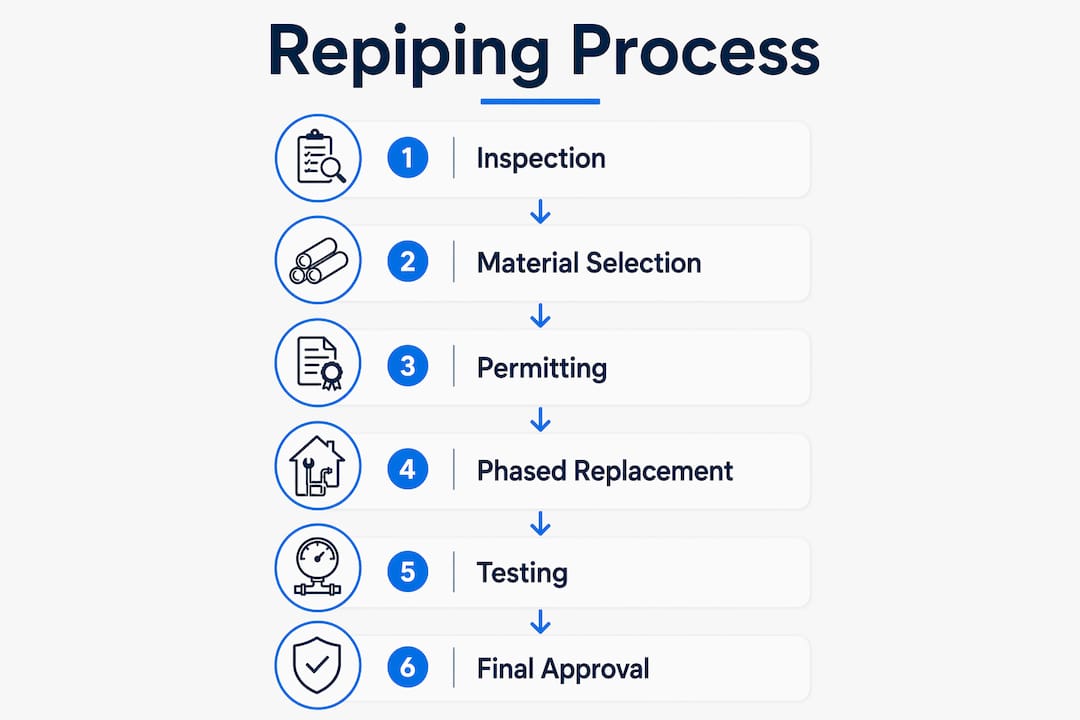
The commercial repiping process follows a structured sequence that minimizes disruption while replacing the entire water supply network. Each phase builds on the last, and skipping steps creates costly problems down the line.
-
Initial inspection and system assessment. A licensed plumber inspects all accessible piping for visible corrosion and leaks, water discoloration, and pressure inconsistencies. Camera inspection tools allow technicians to assess pipe interiors without demolition. This phase produces a condition report that drives every decision that follows.
-
Material selection and project planning. Based on the inspection findings, the contractor recommends copper, PVC, or PEX piping. The choice depends on building age, water chemistry, budget, and local code requirements. A detailed scope document is produced, covering pipe routing, access points, and a phased work schedule.
-
Permitting and compliance. Commercial repiping requires permits in virtually every jurisdiction. The contractor submits drawings and specifications to the local building department. Work cannot begin until permits are approved, and inspections are scheduled at key milestones.
-
Phased pipe removal and replacement. Rather than shutting down the entire building at once, experienced contractors work in sections. Phased repiping during off-hours or partial system shutdowns keeps operations running and maintains tenant satisfaction. Each section is isolated, old pipe removed, and new pipe installed and connected.
-
System pressurization and leak testing. Once new pipe runs are complete, the system is pressurized with water or air to verify integrity. Any flaw shows up immediately under pressure. This step is non-negotiable before walls are closed or ceilings restored.
-
Site cleanup, restoration, and final inspection. Drywall, ceilings, and finishes disturbed during pipe access are repaired. The building department conducts a final inspection to confirm code compliance. The contractor provides documentation of all work completed.
Pro Tip: Request a written phasing plan from your contractor before work begins. A clear schedule showing which sections go offline and when protects your tenants and gives you a paper trail if disputes arise.
How do pipe materials compare for commercial repiping?
Material selection is the single biggest variable in a commercial repiping project. Cost, lifespan, and installation complexity differ significantly across the three dominant options.
| Material | Lifespan | Corrosion resistance | Relative cost | Best use case |
|---|---|---|---|---|
| Type L Copper | 80+ years | Excellent | High | High-traffic commercial buildings |
| PEX | 40-50 years | Very good | Low to medium | Retrofit and tight-access spaces |
| PVC/CPVC | 25-40 years | Good | Low | Cold water lines, low-pressure systems |
Copper is the gold standard for commercial applications. Type L copper exceeds 80 years under proper management, making it a long-term infrastructure solution. The critical caveat: proper grounding prevents electrolysis, which is the primary cause of premature copper pipe failure. A contractor who skips this step is cutting corners that will cost you later.
PEX (cross-linked polyethylene) has become the preferred choice for retrofit projects. Its flexibility allows installation through walls and ceilings with fewer access cuts, which directly reduces labor costs. Advanced modular fittings and PEX systems speed up repiping and lower the total project cost compared to rigid pipe systems.
PVC and CPVC work well for cold water lines and lower-pressure applications. They are the most affordable option but carry the shortest lifespan and are not suitable for high-temperature water lines in most commercial settings.
- Copper delivers the best long-term value for buildings with a 20-plus year hold horizon
- PEX is the practical choice when minimizing disruption and labor cost is the priority
- PVC fits budget-constrained projects where hot water lines are not involved
- Water chemistry matters: highly acidic water accelerates copper corrosion, making PEX a smarter call in those cases
What are the real benefits of commercial repiping?
The benefits of commercial repiping go well beyond fixing leaks. For property owners and managers, a completed repiping project delivers measurable financial and operational returns.
Modernizing a building's plumbing can boost property sale prices by 2-5% and may lower insurance premiums or improve coverage terms. That is a direct return on capital that shows up on your balance sheet, not just in reduced maintenance calls. For a building valued at $2 million, a 2% increase represents $40,000 in added value.
Additional benefits include:
- Improved water pressure and flow. Corroded or scaled pipes restrict flow. New pipe runs restore full pressure to every fixture in the building.
- Reduced emergency repair costs. Aging galvanized or original copper systems generate recurring leak calls. A full replacement eliminates that pattern.
- Better water quality. Corroded pipes leach metals into the water supply. New piping removes that contamination source entirely.
- Competitive leasing position. Retrofit and adaptive reuse strategies are leading commercial plumbing trends because modernized buildings attract and retain quality tenants.
- Insurance and financing leverage. Updated plumbing systems are viewed favorably by insurers and lenders, which can translate to better policy terms and loan conditions.
A plumbing system upgrade of this scale also supports compliance with current building codes, which matters when you refinance, sell, or bring in new commercial tenants.
What signs indicate your commercial property needs repiping?
Most commercial buildings do not fail suddenly. The warning signs accumulate over months or years before a major failure forces the issue.
- Visible corrosion or rust stains around pipe connections, under sinks, or on ceiling tiles below upper-floor bathrooms
- Water discoloration or foul odors from taps, which signal pipe degradation or bacterial buildup inside aging lines
- Frequent pipe bursts or recurring leaks in the same sections of the building, indicating systemic pipe wall failure rather than isolated incidents
- Low water pressure across multiple fixtures, which points to internal scaling or corrosion narrowing the pipe bore
- Galvanized steel or original cast iron piping in buildings constructed before 1970, which have almost certainly exceeded their service life
- Upcoming renovations that trigger code upgrades, since many jurisdictions require plumbing to meet current standards when significant work is permitted
Pro Tip: Schedule a sewer camera inspection before any major renovation bid. The inspection report gives you hard data on pipe condition, which protects you from contractor overestimates and underestimates alike.
If your building shows three or more of these signs, you are past the point of patch repairs. The cost of continued reactive maintenance will exceed a planned repiping project within a few years.
How to plan and manage a commercial repiping project
Planning separates a smooth repiping project from a disruptive, over-budget one. Property owners who treat this as a capital project from day one get better outcomes than those who treat it as a repair call.
A Property Condition Assessment (PCA) transforms repiping from an unexpected expense into a line item in your capital plan. The PCA documents current pipe condition, projects remaining lifespan, and produces cost forecasts that support budgeting and financing conversations. Integrating cost opinions and lifespan projections into your planning also strengthens your position in lease negotiations and asset valuations.
Key steps for effective project management:
- Choose a contractor with documented commercial repiping experience. Residential plumbers and commercial plumbers operate in different regulatory and logistical environments. Verify references from comparable commercial projects.
- Require a phased work schedule in writing. Each phase should identify which areas go offline, for how long, and what temporary water access arrangements are in place.
- Communicate with tenants and building occupants early. Surprises create complaints and lease disputes. A written notice schedule with clear timelines builds goodwill.
- Confirm all permits before work starts. Unpermitted work creates title problems and insurance gaps that surface at the worst possible time.
- Set up a reliable plumbing service contract post-completion. Ongoing maintenance agreements protect the new system and give you a documented service history that supports future financing or sale.
Repiping costs for businesses vary widely based on building size, material choice, and access complexity. A rough industry range runs from $3 to $8 per linear foot for materials alone, with total project costs for mid-size commercial buildings commonly falling between $15,000 and $100,000. Get at least three itemized bids before committing.
Key takeaways
Commercial repiping is a capital investment that replaces aging pipe infrastructure with modern materials, delivering measurable gains in property value, water quality, and operational reliability.
| Point | Details |
|---|---|
| Process follows six phases | Inspection, material selection, permitting, phased replacement, pressure testing, and final restoration. |
| Material choice drives long-term value | Type L copper exceeds 80 years; PEX suits retrofit projects; PVC fits low-cost cold water applications. |
| Financial returns are documented | Repiping can increase property value by 2-5% and reduce insurance premiums. |
| Warning signs demand action | Three or more signs of pipe failure indicate a full replacement is more cost-effective than continued repairs. |
| PCA enables smarter planning | A Property Condition Assessment converts repiping into a capital line item with cost forecasting and lifespan data. |
What I've learned after 15 years of commercial repiping projects
The most expensive mistake I see property owners make is treating repiping as a repair expense rather than a capital asset decision. That framing leads to deferred action, which turns a planned $40,000 project into a $90,000 emergency after a major pipe failure floods two floors.
The second mistake is choosing a contractor based on the lowest bid without asking for a phased work plan. I have seen buildings where the contractor shut down all water service for three days because no one planned the sequencing. Tenants left. Leases were disputed. The "savings" from the low bid evaporated in legal fees.
What actually works is starting with a PCA, getting the condition data in writing, and using that report to build a capital reserve schedule. Treating repiping as strategic modernization that supports higher occupancy and building adaptability changes the entire financial conversation. You are not spending money on pipes. You are protecting an asset and positioning it for better lease rates and financing terms.
One more thing: material selection matters more than most owners realize. PEX is excellent for retrofit work, but if you are holding a building for 30-plus years, the labor savings from PEX do not outweigh the longevity advantage of copper. Run the numbers over your actual hold period, not just the upfront cost.
— Kirk
Get expert commercial repiping support from Drainpointplumbing
Drainpointplumbing has served commercial property owners across Santa Barbara County for over 15 years, handling everything from initial pipe inspections to full phased repiping installations. The team brings documented experience with material selection, permitting, and phased scheduling that keeps your building operational throughout the project.
Whether you need a condition assessment to start your capital planning or a full commercial plumbing repair and repiping quote, Drainpointplumbing delivers clear scopes, honest timelines, and work that passes final inspection the first time. Contact the team today to request a free quote and get a straight answer on what your building actually needs.
FAQ
What is commercial repiping?
Commercial repiping is the full replacement of all water supply pipes in a commercial building with new piping materials such as copper, PEX, or PVC. The goal is to restore water quality, pressure, and system reliability while extending infrastructure lifespan.
How long does a commercial repiping project take?
Project timelines vary by building size and complexity, but most mid-size commercial repiping projects run between one and four weeks when phased work schedules are used. Phased installation during off-hours minimizes disruption to building operations and tenants.
What does commercial repiping cost for businesses?
Repiping costs for businesses typically range from $3 to $8 per linear foot for materials, with total project costs for mid-size commercial buildings commonly falling between $15,000 and $100,000 depending on pipe material, building size, and access conditions.
How do I know if my building needs repiping?
Signs you need repiping include visible corrosion, recurring leaks, water discoloration, low pressure across multiple fixtures, and galvanized steel piping in buildings built before 1970. Three or more of these signs indicate a full replacement is more cost-effective than continued repairs.
Does repiping increase commercial property value?
Yes. Modernizing plumbing can increase property sale prices by 2-5% and may lower insurance premiums or improve coverage terms, making repiping a measurable capital investment rather than a pure maintenance expense.