
If you've noticed rusty water, chronic low pressure, or a string of leaks showing up in different spots, you may be facing a question that trips up a lot of homeowners: what is repiping a house, and does your situation actually call for it? Repiping, which plumbers also call a whole house repipe or supply line replacement, means removing your existing water supply pipes and installing new ones throughout the home. It's a bigger project than most people expect, and the cost surprises are real. This guide covers the full process, the best materials, realistic pricing, and exactly how to prepare so nothing catches you off guard.
Table of Contents
- Key takeaways
- What repiping a house actually means
- Choosing the right pipe material
- How much repiping a home actually costs
- Preparing for the project and what comes after
- My honest take after 15 years of watching repipes go sideways
- How Drainpointplumbing can help with your repipe
- FAQ
Key takeaways
| Point | Details |
|---|---|
| Repiping replaces supply lines | Standard repiping covers supply pipes to all fixtures but typically excludes drain lines and sewer work. |
| PEX saves money upfront | PEX piping can cut material and labor costs by 40 to 60% compared to copper for the same job. |
| Permits protect you legally | Unpermitted work can void home insurance and create serious complications when you sell the home. |
| Scope review is non-negotiable | Wall repair and drywall patching are often excluded from bids, adding $1,500 to $4,000 to your total. |
| Material choice drives durability | Installation quality matters as much as the pipe itself; a well-installed system lasts decades. |
What repiping a house actually means
The industry term you'll hear professionals use is "whole house repipe," and it's more specific than it sounds. Standard repiping covers supply lines to every fixture in the home, including kitchen faucets, bathroom sinks, showers, toilets, laundry connections, and the main shutoff. What it does not include, unless your contract specifically says otherwise, is drain lines, waste and vent pipes, your water heater, or any underground work outside the foundation.
Understanding that distinction matters because many homeowners confuse repiping with replumbing. Replumbing is a broader term that can include drain and sewer work. Repiping refers strictly to pressurized supply lines. When you're getting quotes, make sure you and your contractor are talking about the same scope.
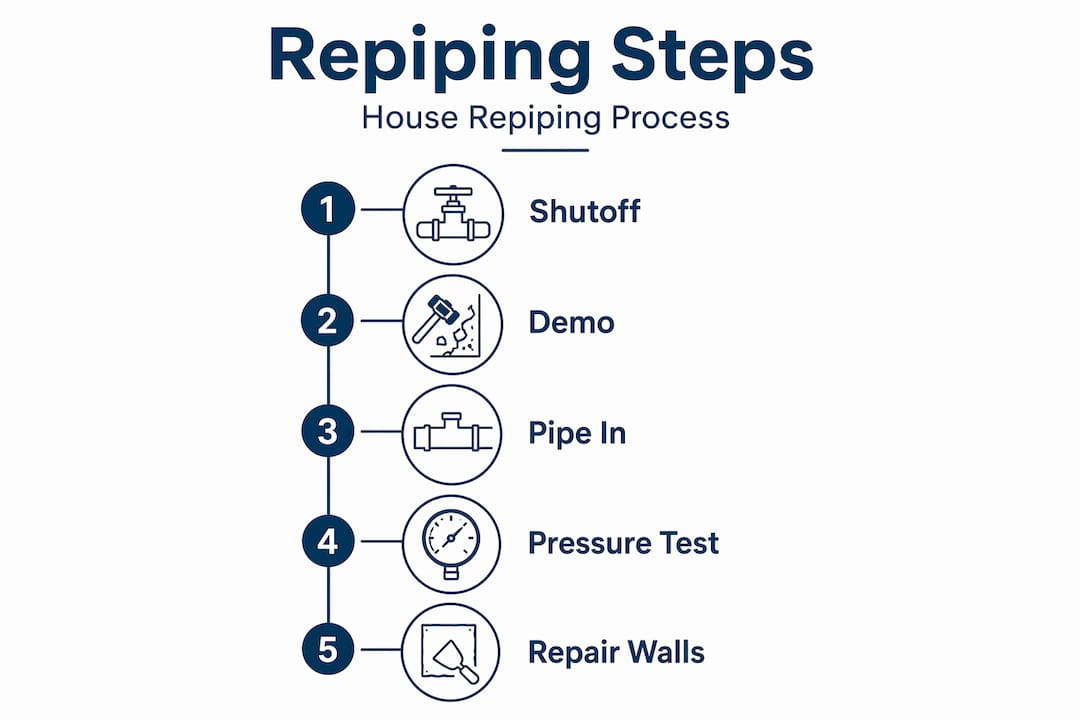
Here's how the house repiping process typically unfolds from start to finish:
- Initial inspection and assessment. A licensed plumber evaluates your current pipe material, condition, and layout before any work begins.
- Permit application. Your contractor pulls the required permits before touching a pipe. This is not optional with a reputable crew.
- Water shutoff and access. The main water supply is turned off, and plumbers cut access holes in walls and ceilings to reach existing pipes.
- Pipe removal. Old pipes are carefully pulled out, and the routing for new lines is planned.
- New pipe installation. Fresh supply lines are run throughout the home, connected to each fixture, and secured properly.
- Pressure testing. Before any walls close up, the new system is pressurized and tested for leaks.
- Wall patching and cleanup. Access holes are patched, though whether the contractor handles this or you arrange it separately depends entirely on your contract.
PEX repipes typically take 3 to 4 days for an average home, while copper jobs run longer because of the additional labor involved in soldering joints. Expect some disruption to your daily routine, especially around water access.
Pro Tip: Ask your contractor to photograph pipe locations before closing up the walls. That documentation becomes invaluable if you ever renovate or need repairs later.
Choosing the right pipe material
Not every pipe is right for every job, and material selection depends on application type, local building codes, your existing system, and installer experience. There is no universal answer here, but there are clear trade-offs.
The three materials you'll see most often in residential repiping are PEX, copper, and CPVC.
PEX (cross-linked polyethylene) has become the go-to choice for most residential repipes in recent years. It's flexible, which means fewer fittings and faster installation. It resists corrosion and handles freezing temperatures better than rigid pipe. The cost savings are significant. PEX can reduce your total project cost by 40 to 60% compared to copper.
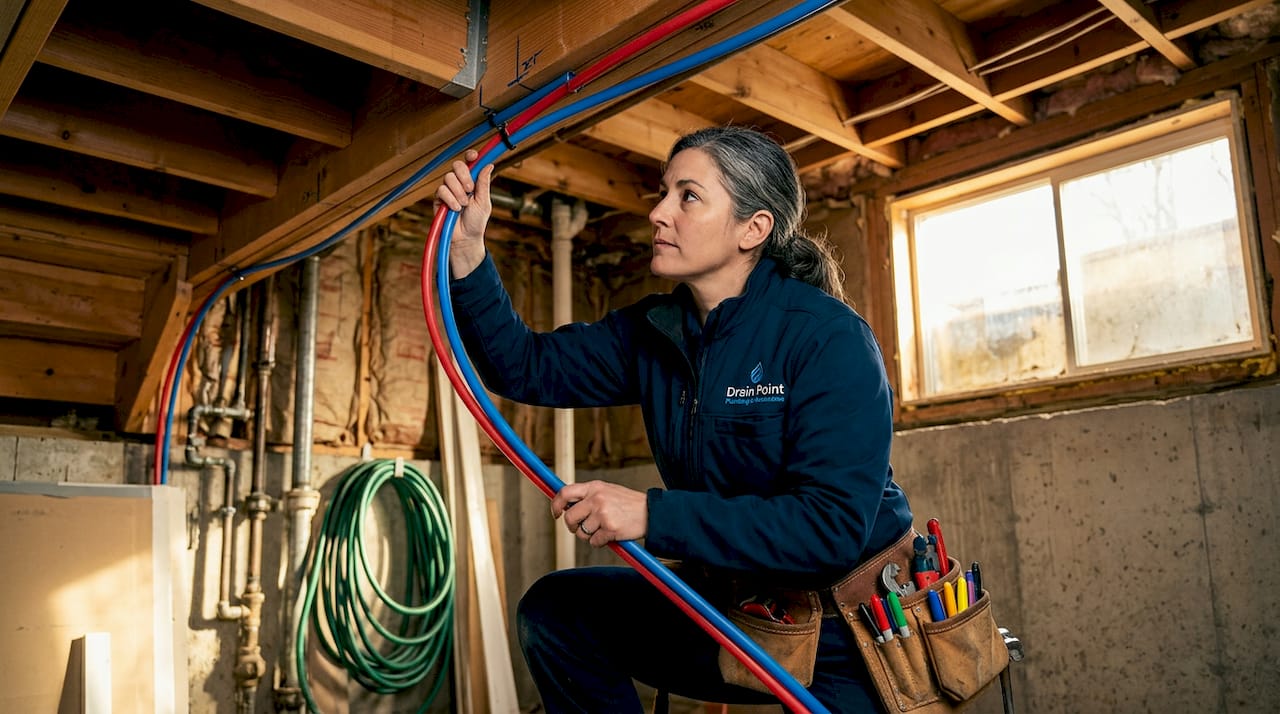
Copper is the traditional standard and still preferred in some markets. It's durable, has a long track record, and some homeowners prefer it for drinking water quality reasons. The downsides are higher material cost, longer installation time, and sensitivity to acidic water, which can cause pinhole leaks over time.
CPVC is a rigid plastic that costs less than copper and more than PEX. It works well for hot and cold supply lines, but it can become brittle with age and doesn't handle physical stress as gracefully as PEX.
| Material | Avg. cost per foot | Lifespan | Best for |
|---|---|---|---|
| PEX | $0.50 to $2.00 | 25 to 50 years | Budget-conscious full repipes |
| Copper | $3.00 to $8.00 | 50 to 70 years | Premium installs, high resale value |
| CPVC | $1.00 to $3.50 | 25 to 40 years | Mid-range budget, simpler layouts |
A few additional points worth knowing before you decide:
- PEX cannot be used outdoors because UV exposure degrades it over time.
- Copper is not suitable where water pH runs below 7.0 without treatment.
- Durability depends heavily on installation quality, not just material choice. Proper fittings, support brackets, and protection from physical impact matter just as much as what the pipe is made of.
Pro Tip: If you're planning a water filtration system alongside your repipe, discuss it with your plumber before installation starts. Adding filtration is much easier when the system is already open.
How much repiping a home actually costs
The cost of repiping a home varies widely based on home size, pipe material, labor rates in your area, and what's included in the bid. For a typical 1,500 to 2,000 square foot home, expect to pay anywhere from $4,000 to $10,000 for a PEX repipe and $8,000 to $20,000 or more for copper. Larger homes or those with complex layouts push costs higher.
What surprises most homeowners is not the pipe cost. It's everything else.
- Drywall repair and patching. Wall access and patching can add $1,500 to $4,000 to your total, and many contractors do not include this in their standard bid. Get this clarified in writing before signing anything.
- Permit fees. Permits typically run $200 to $800 depending on your municipality. Higher permit costs apply in larger metro areas.
- Fixture work. If angle stops under sinks or supply valves need replacing during the repipe, that adds to the scope.
- Water heater connection. Some contractors charge separately to reconnect or upgrade your water heater after the repipe.
One insight that applies consistently: the biggest surprises come from contract exclusions, not from the pipe work itself. Before you sign a quote, ask specifically what is not included. A clear plumbing service contract should spell out who handles wall repair, painting, fixture reconnection, and permit costs.
Skipping permits to save money is one of the worst decisions a homeowner can make. Unpermitted repiping work can void home insurance and create serious problems when you go to sell the property. Responsible contractors include permit costs in their quote as a standard practice.
Preparing for the project and what comes after
The more organized you are going in, the smoother the project runs. Here's what you should do before work begins:
- Clear access paths. Move furniture, personal items, and stored goods away from walls and under-sink areas in every room being worked on.
- Arrange for water outage. You'll be without water for at least part of each workday. Stock up on drinking water and plan around your household routine accordingly.
- Confirm permits are pulled. Ask to see proof of permit before the first hole goes in the wall. This protects you if there's ever a dispute.
- Get scope in writing. Request clear contract language that specifies whether wall repair and painting are included. Ambiguity here is where cost overruns hide.
- Plan for a final inspection. Most jurisdictions require a plumbing inspection after repiping is complete. Your contractor should coordinate this.
After the work is done, your plumber should walk you through a pressure test before they leave. Ask about any warranty on labor and materials. Many reputable contractors offer a one to two year warranty on workmanship. If you notice any discoloration in the water during the first few days after a copper repipe, that's normal as the system flushes out. Run each fixture for a few minutes to clear it.
Pro Tip: Schedule the project during a period when you can easily leave the house during work hours, especially if you have young children. The noise and dust from wall access cuts are more disruptive than most families anticipate.
Repiping older homes sometimes reveals issues that weren't visible before, like galvanized pipes that have corroded internally, or old shutoff valves that fail once touched. Build a 10 to 15 percent contingency into your budget for exactly this reason. A plumbing system upgrade guide can help you understand what else to look at while the walls are open.
My honest take after 15 years of watching repipes go sideways
I've seen more repiping projects than I can count, and the pattern that shows up over and over is this: homeowners who did their homework had a fine experience, and homeowners who focused only on the lowest bid ended up paying more in the end. Not because plumbers are trying to take advantage of anyone, but because cheap bids almost always leave out the things you'll eventually need to pay for anyway.
What I've learned is that material choice matters less than contractor quality. A perfectly specified copper repipe with a sloppy installer will fail years before a well-installed PEX system in a similar home. The pipe is only part of the story. Fittings, support, and care taken with each connection are what actually determine whether you're calling someone back in two years or twenty.
I've also seen people delay a repipe for years because it felt too disruptive or too expensive, only to have a pipe burst inside a wall and turn a $7,000 project into a $25,000 water damage restoration. The comparison isn't whether repiping is expensive. It's whether repiping is less expensive than the alternative you're drifting toward by waiting. If you're weighing a temporary fix against a full replacement, read up on urgent pipe repairs to understand exactly what you're managing and for how long.
Get three quotes. Read each one carefully, line by line. Ask what's excluded. Check the license and insurance. That process takes a few extra hours and saves thousands.
— Kirk
How Drainpointplumbing can help with your repipe
If you're in Santa Maria or anywhere across Santa Barbara County, Drainpointplumbing has been handling residential repiping and plumbing repairs for over 15 years. The team is licensed, insured, and pulls permits on every job because your protection matters long after the work is done.
Whether you need a full repipe or fixture replacements, Drainpointplumbing handles the complete scope, including drywall coordination and final inspection. The company also offers water heater service, water filtration installation, and 24/7 emergency response, so you're covered if something urgent comes up. Seniors and military personnel receive discounts because the team is genuinely community-focused. Request a free quote to get a detailed, written estimate that spells out exactly what's included.
FAQ
What does repiping a house include?
Standard whole house repiping replaces all pressurized supply lines to every fixture, including the main shutoff and angle stops. It does not typically cover drain lines, sewer pipes, water heaters, or underground work unless those items are written into the contract.
How long does a whole house repipe take?
A PEX repipe on an average home typically takes 3 to 4 days. Copper repipes take longer due to the labor involved in soldering each joint. Larger homes or complex layouts can extend either timeline.
Is repiping worth the cost?
Yes, in most cases. Repiping eliminates recurring leaks, restores water pressure, improves water quality, and protects the home from water damage. The upfront cost is almost always lower than the cumulative cost of repeated repairs and potential water damage remediation.
Do I need a permit to repipe my house?
Yes. Permits are legally required for whole house repiping in virtually every jurisdiction. Skipping them can void your homeowner's insurance and create serious issues when selling the property.
What is the cheapest material for repiping a house?
PEX is the most cost-effective option for most homes. It installs faster than copper, costs less per linear foot, and can reduce total project costs by 40 to 60% compared to a copper repipe of the same scope.