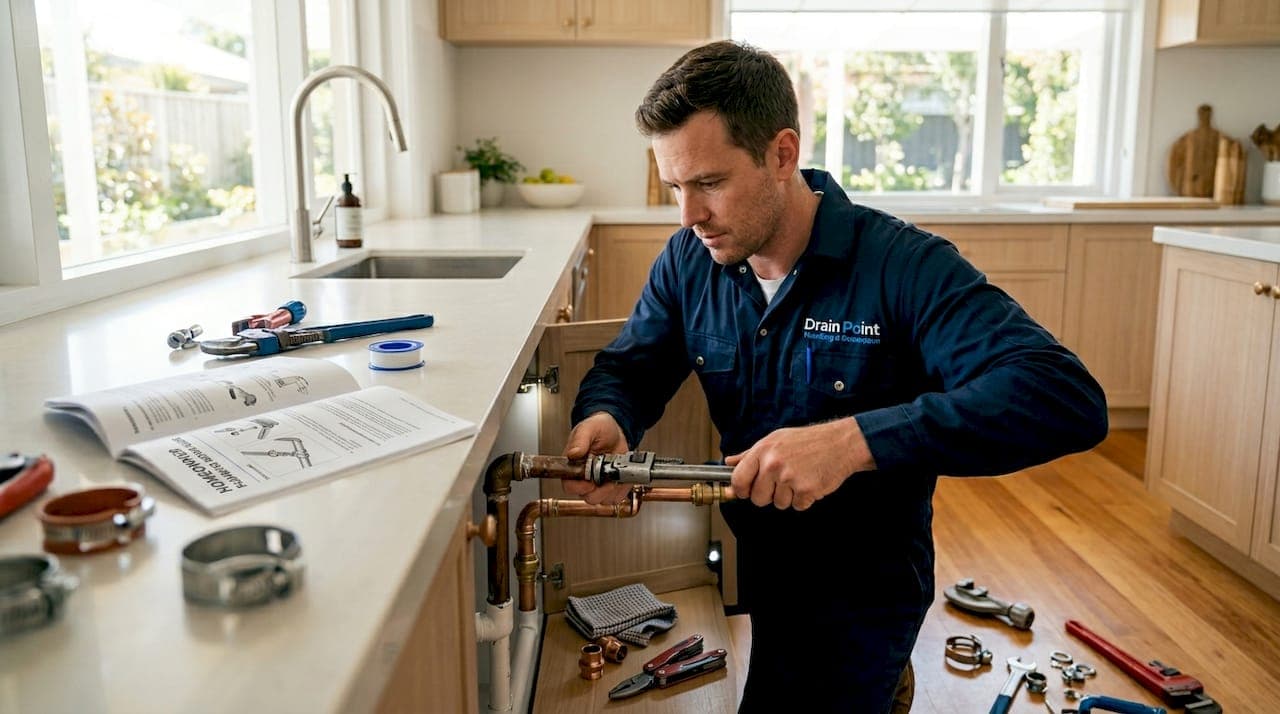
Emergency pipe repair is the immediate, structured response to active plumbing failures that pose urgent risks including water damage, structural harm, or health hazards. Unlike a slow drip you can schedule for next week, a burst pipe or sewage backup demands action within minutes. The standard repair sequence follows a clear path: isolate the leak, relieve pressure, assess the damage, apply temporary stabilization, then complete a permanent, code-compliant fix. Knowing what emergency pipe repair involves before a crisis hits is the difference between a $300 repair call and a $15,000 restoration project.
What is emergency pipe repair and when does it apply?
Emergency pipe repair is a distinct process from routine plumbing work because of the pressure to act fast and the unpredictable access conditions involved. A scheduled repair gives a plumber time to plan, order parts, and work methodically. An emergency repair process compresses all of that into minutes, often with water actively spraying or pooling. The core tools involved include isolation valves, epoxy putty, pipe clamps, rubber connectors, and professional-grade replacement materials rated to ASTM standards.
Not every leak qualifies as an emergency. A dripping faucet or a slow drain is a nuisance, not a crisis. True emergencies involve active water loss you cannot control, sewage backing up into living spaces, or water contacting electrical systems. If you cannot stop the flow by closing a fixture shutoff valve, you are dealing with an emergency.
The key homeowner decision is distinguishing immediate risk situations from problems that can wait a few hours for a scheduled call. Getting that distinction right saves money and prevents panic-driven mistakes.
What are the signs of pipe failure requiring urgent action?
Recognizing the signs of pipe failure early gives you a critical head start. The following situations all qualify as plumbing emergencies requiring immediate pipe repair response:
- Burst or split pipe: Visible cracking with water spraying or gushing, often accompanied by a sudden pressure drop at fixtures
- Frozen pipe with no flow: A frozen pipe section creates a blockage that can release a large volume of water on thawing, making DIY fixes unreliable and dangerous
- Water stains spreading rapidly: New wet patches on walls or ceilings that grow within minutes indicate an active leak inside the structure
- Sewage backup: Waste water rising in floor drains, toilets, or tubs signals a blocked or broken sewer line requiring immediate professional attention
- No water pressure house-wide: A sudden total loss of pressure often means a main line failure or a major burst somewhere in the system
- Hissing or rushing water sounds: Audible water movement inside walls when all fixtures are off is a reliable sign of a pressurized leak
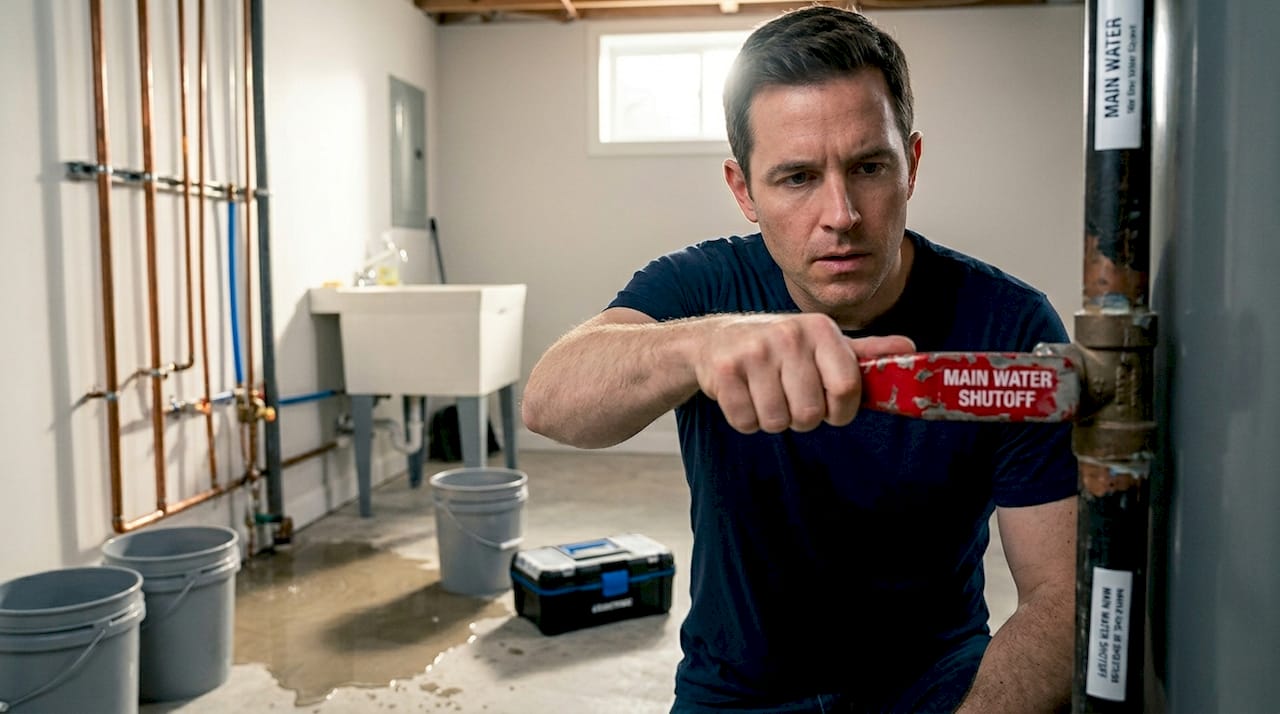
Shutting off the main water supply immediately during a burst pipe is critical to prevent structural damage to walls, ceilings, and framing. Every minute of uncontrolled flow multiplies the repair cost. Locate your main shutoff valve now, before you ever need it.
Pro Tip: Label your main shutoff valve and every fixture shutoff in your home with a waterproof marker. Photograph their locations and save the image to your phone. In a real emergency, you will not have time to search.
What are the best temporary fixes before your plumber arrives?
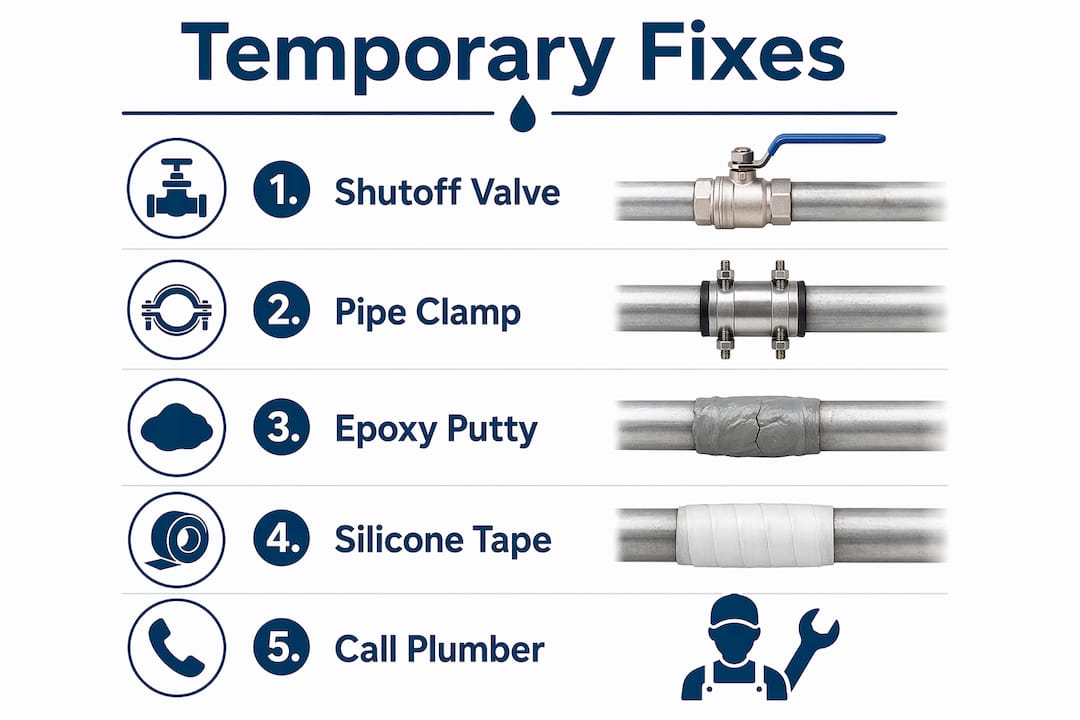
Temporary emergency pipe repair methods buy you time. They are not permanent solutions, and treating them as such is one of the most common and costly homeowner mistakes. The right fix depends on pipe material, leak size, and operating pressure.
Comparing common temporary repair options
| Method | Best for | Limitation |
|---|---|---|
| Pipe clamp with rubber gasket | Small to medium splits on straight pipe runs | Requires dry surface; not rated for high-pressure joints |
| Epoxy putty | Pinholes and hairline cracks on copper or PVC | Needs 30-minute cure time; fails on active high-flow leaks |
| Self-fusing silicone tape | Slow drips on accessible pipes | High-pressure leaks cause bond failure; not a structural fix |
| Slip coupling | Larger split sections on accessible pipe | Requires cutting the pipe; needs basic tools and skill |
| Rubber connector with hose clamps | Emergency bridging on burst sections | Temporary only; must be replaced with code-compliant fittings |
Temporary fixes like epoxy putty and pipe clamps reduce immediate damage but require follow-up professional repairs. They are stopgap measures, not repair validation. A clamp that holds for two days under low pressure can fail instantly when full system pressure returns.
One detail most homeowners miss: temporary repair materials must be rated for the pipe's operating pressure and temperature. A clamp rated for 60 PSI on a system running 80 PSI will fail. Check the product label before applying anything.
Locating fixture shutoff valves allows you to isolate a leak with far less disruption than shutting off the entire house. Close the valve under the sink or behind the toilet first. Confirm the leak slows by checking flow at a nearby faucet. Only shut off the main supply if the fixture valve does not control the problem.
Pro Tip: Keep a basic emergency plumbing kit in your utility closet: one pipe clamp set, a stick of epoxy putty, a roll of self-fusing silicone tape, and a small adjustable wrench. This kit costs under $40 and can prevent thousands in water damage while you wait for a plumber.
For a deeper look at fast fixes you can apply safely, the Drainpointplumbing guide on urgent leak fixes covers each method with step-by-step instructions.
How do professional emergency pipe repair services handle the job?
Professional pipe repair emergency services follow a structured process that goes well beyond slapping a clamp on a pipe. Here is how a licensed plumber handles an emergency call from start to finish:
- Isolation at the nearest valve: The plumber confirms the leak source and closes the closest zone or fixture valve rather than defaulting to a full house shutoff. Isolating at the nearest valve is safer and reduces disruption to the rest of the property.
- Pressure relief: Opening a downstream faucet releases residual pressure in the affected line, making the repair safer and preventing water hammer damage when flow resumes.
- Damage assessment: The plumber inspects the pipe run, checks for secondary damage to insulation or framing, and determines whether a spot repair or full section replacement is needed.
- Temporary stabilization: If permanent parts are not immediately available, a professional-grade temporary fix holds the system stable while materials are sourced.
- Permanent repair or replacement: Permanent repairs involve cutting out the damaged section and replacing it with materials meeting ASTM standards. Joints are completed using soldering, solvent welding, or push-fit fittings appropriate to the pipe type.
- Final inspection and pressure test: The repaired section is tested at operating pressure before the plumber leaves. Any secondary issues found during the job are documented and communicated to you.
All US states require licensed plumbers for pressurized system repairs, and permits typically must follow emergency work within 24 to 72 hours. Regulatory bodies allow emergency work to begin before permits are pulled, but the permit application must happen promptly. A licensed plumber handles this automatically. An unlicensed handyman does not, which can create legal and insurance complications when you file a water damage claim.
Camera inspections, like those used by Drainpointplumbing for sewer line diagnostics, also play a role in emergency diagnosis when the leak source is not immediately visible. Pinpointing a slab leak or a hidden pipe failure without camera technology means tearing out walls or flooring unnecessarily.
What does emergency pipe repair cost?
Emergency plumbing solutions come with a price range wide enough to surprise most homeowners. Emergency plumbing services typically cost between $150 and $5,000 depending on severity, with after-hours premiums adding roughly $75 to $300 on top of the base rate.
The factors that push costs higher include:
- Time of call: Nights, weekends, and holidays carry surcharges. A 2 a.m. burst pipe call costs more than the same repair at 10 a.m. on a Tuesday.
- Leak location: A pipe under a kitchen sink is straightforward. A slab leak or after-hours service costs significantly more due to access difficulty and excavation requirements.
- Pipe type and material: Copper and cast iron repairs cost more in labor and materials than PVC or PEX repairs.
- Extent of damage: A single split section is a contained repair. A pipe that has been leaking inside a wall for hours may require drywall removal, mold treatment, and insulation replacement.
- Water damage restoration: Restoration services for water, fire, and mold damage are often the largest expense after a major pipe failure, frequently exceeding the plumbing repair cost itself.
Most emergency plumbing calls fall in the $150 to $500 range for straightforward repairs. That number climbs fast when structural damage or slab access is involved. Getting a clear quote before work begins and asking specifically whether the after-hours surcharge is included protects you from billing surprises.
Key takeaways
Emergency pipe repair requires immediate isolation, temporary stabilization, and permanent code-compliant replacement to stop damage and restore safe system function.
| Point | Details |
|---|---|
| Define the emergency first | Not every leak is urgent. Uncontrolled flow, sewage backup, or water near electrical systems qualifies as a true emergency. |
| Shut off water immediately | Closing the nearest fixture or zone valve stops damage fast and buys time for a safe assessment. |
| Temporary fixes have limits | Pipe clamps, epoxy putty, and silicone tape are stopgaps. High-pressure leaks will defeat most DIY methods. |
| Licensed plumbers are required | All US states mandate licensed plumbers for pressurized repairs. Permits must follow emergency work within 24 to 72 hours. |
| Cost varies widely | Expect $150 to $500 for most calls, with after-hours surcharges and water damage restoration adding significantly more. |
What 15 years of emergency calls taught me about pipe failures
The homeowners who come out of a pipe emergency with the least damage are almost never the ones with the fanciest homes or the biggest budgets. They are the ones who knew where their shutoff valve was and turned it off within the first two minutes.
I have seen a $200 repair turn into a $12,000 restoration job because a homeowner spent 20 minutes searching for the main shutoff while water soaked into the subfloor. That is not a plumbing failure. That is a preparation failure.
The second thing I have learned: people dramatically overestimate what a temporary fix can hold. A roll of silicone tape on a 90 PSI copper line is not a repair. It is a delay. I have walked into jobs where a homeowner was proud of the clamp they installed, not realizing the pipe had been weeping behind the wall for three days. The clamp held. The drywall did not.
My honest advice is to keep a basic kit on hand, know your shutoff locations, and call a licensed plumber the moment you cannot control the flow yourself. Do not wait to see if the clamp holds overnight. The cost of a 24/7 plumbing call is always less than the cost of a mold remediation job.
One more thing: when you call, describe the emergency clearly to the dispatcher. Tell them whether the water is controlled, what type of pipe it appears to be, and whether there is visible structural damage. That information gets the right technician to your door faster.
— Kirk
Drainpointplumbing is ready when your pipes are not
When a pipe fails at midnight or on a holiday weekend, you need a licensed team that picks up the phone and shows up fast. Drainpointplumbing provides 24/7 emergency plumbing assistance across Santa Maria and Santa Barbara County, with over 15 years of experience handling burst pipes, slab leaks, and sewage emergencies for residential and commercial clients.
Every repair Drainpointplumbing completes meets California code requirements and uses ASTM-rated materials for permanent, inspection-ready results. From a single cracked fitting to a full residential pipe repair involving repiping or sewer line work, the team handles the entire job. Senior and military discounts are available. Request a free quote now and have a trusted local plumber's number saved before you ever need it.
FAQ
What is emergency pipe repair exactly?
Emergency pipe repair is the immediate professional response to active plumbing failures that cause uncontrolled water loss, property damage, or safety hazards. The process includes isolating the leak, applying temporary stabilization, and completing a permanent code-compliant repair.
How do I stop a pipe leak before the plumber arrives?
Close the nearest fixture shutoff valve or the main supply valve, then apply a pipe clamp or epoxy putty to slow the leak. These are temporary measures only and require follow-up professional repair.
How much does emergency pipe repair cost?
Most emergency plumbing calls cost between $150 and $500, with after-hours surcharges adding $75 to $300 on top. Severe cases involving slab leaks or water damage restoration can push total costs to $5,000 or more.
Do I need a licensed plumber for emergency pipe repairs?
Yes. All US states require licensed plumbers for pressurized system repairs, and permits must be filed within 24 to 72 hours of emergency work. Using an unlicensed contractor can void your homeowner's insurance claim.
Can I use pipe tape as a permanent fix?
No. Self-fusing silicone tape and similar products are rated for temporary use only. High-pressure leaks cause bond failure, and no tape product meets the ASTM material standards required for permanent residential plumbing repairs.