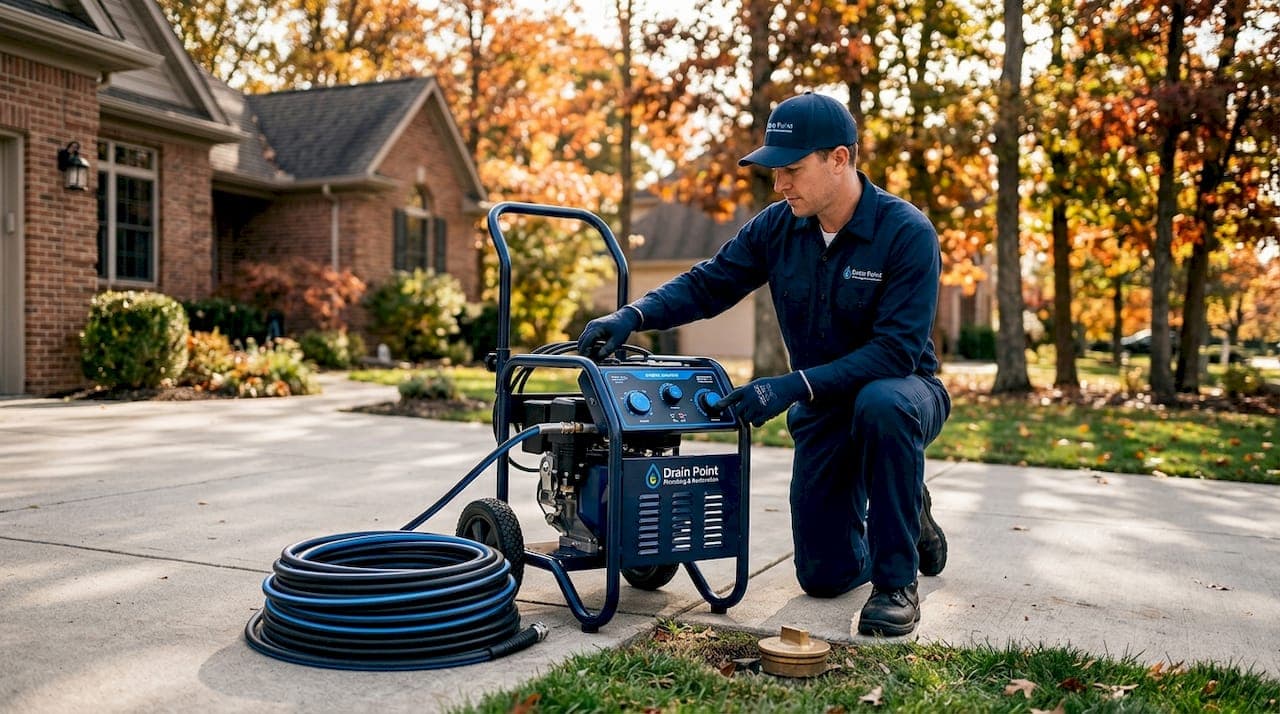
Hydro jetting is a professional plumbing technique that blasts pressurized water through pipes at up to 4,000 PSI to scour the entire interior surface clean, removing grease, mineral scale, tree roots, and debris completely. Unlike drain snaking, which punches a hole through a clog and leaves residue behind, hydro jetting restores pipes closer to their original flow capacity. Homeowners and property managers in Santa Barbara County increasingly rely on it for both emergency clogs and scheduled maintenance. If your drains are slow, recurring, or simply overdue for a real cleaning, this guide explains exactly what you need to know before calling a professional.
What is hydro jetting and how does it clean pipes?
Hydro jetting is defined as a pipe-cleaning method that uses a high-pressure water stream, delivered through a specialized nozzle inserted into the drain, to strip buildup from the full circumference of the pipe wall. The industry also refers to this process as high-pressure water jetting or sewer jetting. Both terms describe the same technology, though hydro jetting has become the common term homeowners encounter when searching for plumbing help.
The process works because water under extreme pressure behaves more like a cutting tool than a liquid. At 1,500 to 4,000 PSI, the stream does not simply push debris downstream. It shears grease off pipe walls, fractures mineral scale, and flushes everything toward the sewer main. That distinction matters because most clogs are not isolated plugs. They are layers of buildup that have accumulated over months or years across a long stretch of pipe.
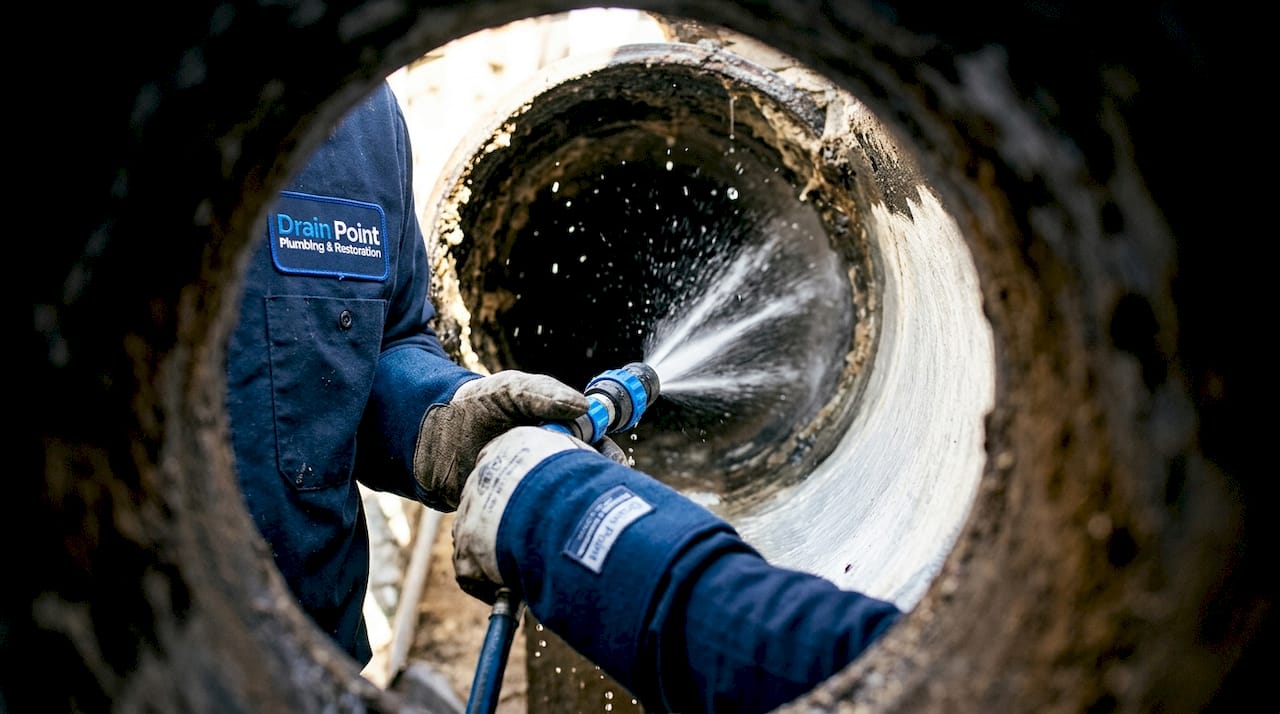
Hydro jetting removes grease, sludge, roots, and mineral deposits without introducing any chemicals into your plumbing system. That makes it safe for your pipes, your household, and the municipal sewer system downstream. For property managers overseeing multiple units, this chemical-free approach also eliminates liability concerns tied to caustic drain cleaners.
How does hydro jetting work step by step?
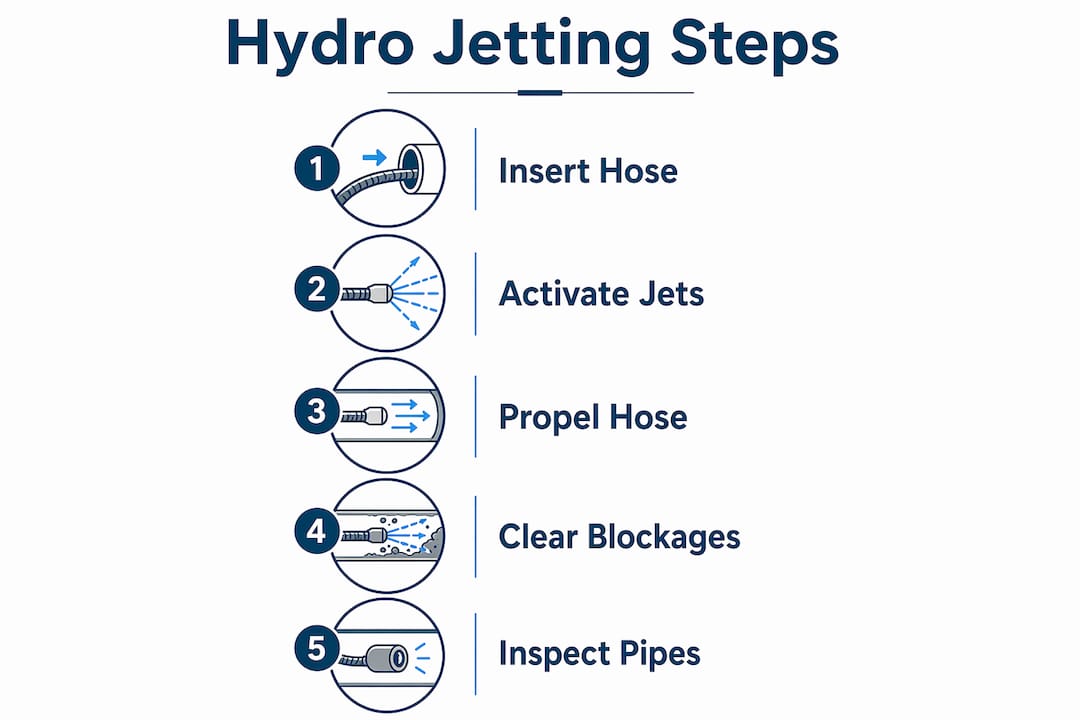
A licensed plumber begins by inserting a flexible, high-pressure hose into a cleanout access point in your drain or sewer line. The hose connects to a machine that pressurizes water from a tank, generating the force needed to clean the pipe. The real engineering is in the nozzle at the hose's tip.
Forward-facing jets break obstructions while rear-facing jets create thrust that propels the hose deeper into the pipe and simultaneously scrubs the pipe walls as the hose advances. This dual-direction design is what separates hydro jetting from a simple pressure washer. The rear jets clean a 360-degree arc of the pipe interior as the hose moves forward, leaving no residue on the walls.
Nozzle selection and pressure settings are not one-size-fits-all decisions. Matching PSI and GPM to pipe diameter and clog type is a technical skill. For example, cutting through tree roots in a 4- to 8-inch sewer pipe typically requires 8 or more gallons per minute at 3,000 to 4,000 PSI. A lighter residential grease clog in a 2-inch kitchen drain needs far less pressure to avoid pipe stress. Getting this wrong does not just reduce effectiveness. It can damage older pipes.
Proper hose deployment technique also determines whether the job succeeds. The operator must control the hose's advance and retreat speed so the rear jets have time to clean the walls rather than simply dragging the nozzle through the pipe. Rushing this step leaves untouched buildup behind, which is why operator skill matters as much as equipment quality.
Pro Tip: Ask your plumber whether they perform a camera inspection before jetting. Professionals who skip this step risk jetting a pipe that has structural cracks or joint separations, which can worsen under high pressure.
What are the benefits of hydro jetting vs traditional methods?
The most direct comparison is hydro jetting versus mechanical snaking, which is still the most common drain-clearing method used in residential plumbing. Snaking works by rotating a metal cable through the pipe to break up or hook a clog. It is fast and inexpensive for a single blockage. The problem is what it leaves behind.
Snaking creates a temporary channel but leaves residual buildup coating the pipe walls, which causes recurring clogs within weeks or months. Hydro jetting removes that wall coating entirely, which is why the results last significantly longer. For a homeowner who has called a plumber three times in one year for the same drain, switching to hydro jetting often breaks the cycle entirely.
Here is how the three main methods compare:
| Method | Cleaning depth | Chemical use | Recurrence risk | Best for |
|---|---|---|---|---|
| Hydro jetting | Full pipe wall | None | Low | Deep buildup, recurring clogs, maintenance |
| Mechanical snaking | Clog only | None | High | Single, accessible blockages |
| Chemical cleaners | Partial | Yes | Moderate | Light grease, minor slow drains |
Beyond the comparison with snaking, hydro jetting delivers several advantages worth knowing:
- No chemicals. The process uses only water, making it safe for septic systems, older clay pipes, and homes with children or pets.
- Versatility. It handles grease accumulation in kitchen lines, soap scum in bathroom drains, mineral scale from hard water, and even small tree root intrusions.
- Reduced emergency calls. Hydro jetting reduces recurrence by cleaning the full pipe interior, which means fewer middle-of-the-night plumbing emergencies for property managers.
- Sewer line restoration. For main sewer lines serving multiple units, hydro jetting can restore flow capacity without excavation.
For a broader look at how hydro jetting fits alongside other options, the residential drain cleaning guide from Drainpointplumbing covers each method's appropriate use cases in detail.
When should you consider hydro jetting for your home?
Hydro jetting is best suited for recurring plumbing problems or deep buildup rather than a single, minor clog. Knowing when to call for it saves you money and prevents unnecessary service calls.
Here are the situations that most commonly warrant hydro jetting:
- Recurring slow drains. If the same drain clogs every few months despite snaking, buildup on the pipe walls is the cause, not a one-time blockage.
- Multiple slow drains at once. When several fixtures drain slowly simultaneously, the problem is likely in the main sewer line, not individual branch lines.
- Foul odors from drains. Grease and organic matter trapped on pipe walls decompose and produce persistent odors that snaking alone will not eliminate.
- Pre-purchase plumbing inspection. Property managers and buyers use hydro jetting to clean and inspect sewer lines before finalizing a real estate transaction.
- Preventive annual maintenance. Commercial kitchens, rental properties, and older homes benefit from scheduled jetting to prevent buildup before it causes a failure.
Pro Tip: Pair hydro jetting with a sewer camera inspection before and after the service. Pre-jetting camera work confirms the pipe can handle the pressure. Post-jetting camera work verifies the cleaning was complete and catches any structural issues the jetting may have revealed.
Regarding pipe suitability, hydro jetting works well in PVC, ABS, cast iron, and clay pipes in good condition. The key phrase is "in good condition." Pipes with significant corrosion, cracks, or root damage may not tolerate the pressure without worsening.
What are the limitations and precautions homeowners should know?
Hydro jetting is not the right tool for every situation. Understanding its limits protects you from paying for a service that could cause more harm than good.
- Fragile or deteriorated pipes. Pipes with advanced corrosion, hairline cracks, or failing joints can rupture under high pressure. A camera inspection before jetting is the only reliable way to rule this out.
- Severely root-damaged lines. While hydro jetting can cut small roots, a pipe with significant root intrusion may need mechanical root cutting or pipe lining first. Jetting alone will not solve a structural root problem.
- Belly pipes. A pipe section that has sagged and holds standing water will not drain properly after jetting because the geometry of the pipe, not just the debris, is the problem.
- DIY is not an option. Consumer-grade pressure washers do not generate the flow rates or nozzle configurations needed for effective pipe cleaning. Attempting DIY jetting with inadequate equipment leaves debris behind and risks injury from high-pressure water.
Operator skill in hose deployment and nozzle control directly determines whether the job succeeds. Improper technique can leave debris behind even at high pressure. This is why choosing a licensed plumber with documented hydro jetting experience matters more than choosing the lowest quote. For guidance on vetting a provider, Drainpointplumbing's article on selecting a jetting service outlines the questions worth asking before you book.
How hydro jetting fits into regular plumbing maintenance
Hydro jetting functions as a comprehensive pipe maintenance method, not just an emergency fix. Many homeowners only discover it after facing repeated blockages, which means they have already paid for multiple snaking calls that a single jetting service could have prevented.
Video camera inspections before and after jetting give you a documented record of your pipe condition, which is useful for insurance claims, property sales, and tracking the pace of pipe aging. Think of it as the plumbing equivalent of a dental X-ray. You get a clear picture of what is actually happening inside.
The table below outlines a practical maintenance schedule based on property type:
| Property type | Recommended frequency | Primary reason |
|---|---|---|
| Single-family home | Every 2 to 3 years | Grease and mineral buildup prevention |
| Multi-unit rental | Annually | Higher usage volume accelerates buildup |
| Commercial kitchen | Every 6 to 12 months | Grease accumulation is rapid and severe |
| Older home (pre-1980) | Every 1 to 2 years | Aging pipes accumulate scale faster |
Integrating hydro jetting into a maintenance schedule also extends the lifespan of your pipes. Buildup creates friction, reduces flow, and increases pressure inside the line. Removing it regularly keeps the system operating within its designed parameters and delays the need for costly repiping.
Key takeaways
Hydro jetting is the most thorough pipe-cleaning method available to homeowners, using pressurized water at up to 4,000 PSI to remove all buildup from the full pipe wall, delivering longer-lasting results than snaking or chemical cleaners.
| Point | Details |
|---|---|
| Full-wall cleaning | Hydro jetting scours the entire pipe interior, not just a path through the clog. |
| No chemicals required | Water-only process is safe for pipes, septic systems, and household occupants. |
| Operator skill matters | Nozzle selection, PSI, and hose technique determine whether the job fully succeeds. |
| Camera inspection is critical | Pre- and post-jetting camera work confirms pipe condition and cleaning completeness. |
| Maintenance scheduling pays off | Regular jetting every one to three years prevents emergency calls and extends pipe life. |
Why I think most homeowners wait too long to use hydro jetting
After years of working with homeowners across Santa Barbara County, the pattern I see most often is this: someone calls after their third or fourth snaking in 18 months, frustrated that the problem keeps coming back. When we run a camera, the pipe walls look like the inside of a clogged artery. The snaking cleared a path each time, but the grease and scale stayed put.
The misconception I hear most is that hydro jetting is only for serious emergencies or commercial properties. It is not. A single jetting service on a kitchen drain line that has been slow for two years often costs less than two emergency snaking calls combined, and the results last years instead of weeks.
The other thing I want homeowners to understand is that not all jetting is equal. The right nozzle and correct water pressure are what separate a thorough cleaning from a high-pressure rinse that moves debris around without removing it. When you hire a provider, ask specifically what PSI and GPM they use for your pipe size and what nozzle type they plan to deploy. A qualified plumber will answer that question without hesitation.
— Kirk
See what Drainpointplumbing can do for your pipes
Drainpointplumbing has served homeowners and property managers across Santa Maria and Santa Barbara County for over 15 years, using professional-grade hydro jetting equipment alongside sewer camera technology to deliver cleanings that actually last. Whether you are dealing with a recurring kitchen drain clog, a slow main sewer line, or simply want a baseline inspection before winter, the team at Drainpointplumbing handles it all under one roof. Explore the full range of residential plumbing repairs available, or request a plumbing quote to get a personalized assessment for your home or property.
FAQ
What is hydro jetting used for in residential plumbing?
Hydro jetting is used to clear recurring clogs, remove grease and mineral buildup from pipe walls, cut small tree roots, and restore flow in main sewer lines. It is also used as preventive maintenance to keep pipes clean before blockages develop.
How long does hydro jetting last compared to snaking?
Hydro jetting results last significantly longer than snaking because it removes wall buildup entirely rather than just punching through a clog. Snaking typically leaves residue that causes recurring blockages within weeks or months, while jetting can keep pipes clear for one to three years depending on usage.
Is hydro jetting safe for all pipe types?
Hydro jetting is safe for PVC, ABS, cast iron, and clay pipes in good structural condition. It is not recommended for pipes with advanced corrosion, cracks, or significant root damage, which is why a camera inspection before jetting is standard professional practice.
Can I rent equipment and do hydro jetting myself?
DIY hydro jetting is not recommended. Consumer pressure washers lack the flow rates and specialized nozzle configurations required for effective pipe cleaning, and improper technique can leave debris behind or cause injury from high-pressure water.
How much does hydro jetting cost compared to snaking?
Hydro jetting costs more per service than mechanical snaking, but the longer-lasting results typically make it less expensive over time for homeowners with recurring drain problems. The exact cost depends on pipe length, clog severity, and whether a camera inspection is included.