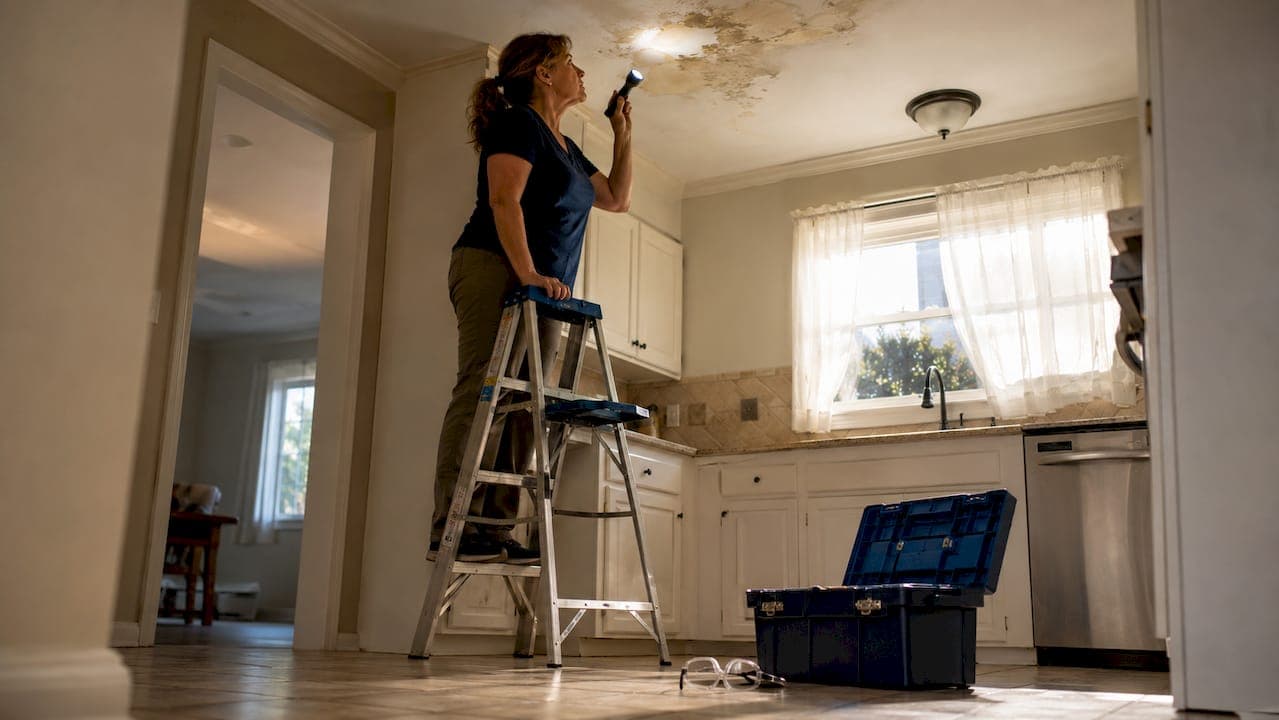
A ceiling leak is a plumbing emergency the moment water becomes visible, because damage is already spreading through insulation, framing, and drywall before a single drop hits your floor. Most homeowners see a stain and assume it is cosmetic. It is not. Water infiltrating your ceiling cavity threatens structural integrity, creates electrical fire hazards, and triggers mold growth within 24 to 48 hours. Understanding why ceiling leaks are plumbing emergencies is the difference between a repair bill and a full home restoration project.
Why ceiling leaks are plumbing emergencies
The core reason ceiling leaks qualify as plumbing emergencies is that visible water is a lagging indicator. By the time you see discoloration or dripping, the materials inside your ceiling have already absorbed significant moisture. Water travels through insulation and framing before breaking through the drywall surface, meaning the internal damage is always worse than what you can see from below.
The risks stack up fast once water enters a ceiling cavity:
- Structural weakening: Drywall, wood framing, and insulation lose load-bearing capacity when saturated. A ceiling that looks intact can fail without warning.
- Electrical hazards: Water near ceiling fixtures, recessed lights, and junction boxes creates a direct shock and fire risk. Shutting off power at the breaker is a required safety step before any inspection.
- Mold growth: Mold begins growing within 24 to 48 hours of water exposure on wet ceiling materials. Mold remediation costs far exceed the original repair.
- Ceiling collapse: Saturated drywall becomes extremely heavy. A section of ceiling that deflects more than 1/4 inch or makes popping sounds signals imminent collapse risk requiring immediate evacuation.
- Fire hazard: Water bridging electrical wiring inside the ceiling cavity can short circuits and ignite insulation.
The defining rule of plumbing emergencies is damage potential, not leak size. A slow drip above a junction box is more dangerous than a fast drip over a tile floor. Location and proximity to electrical systems determine severity, not volume.
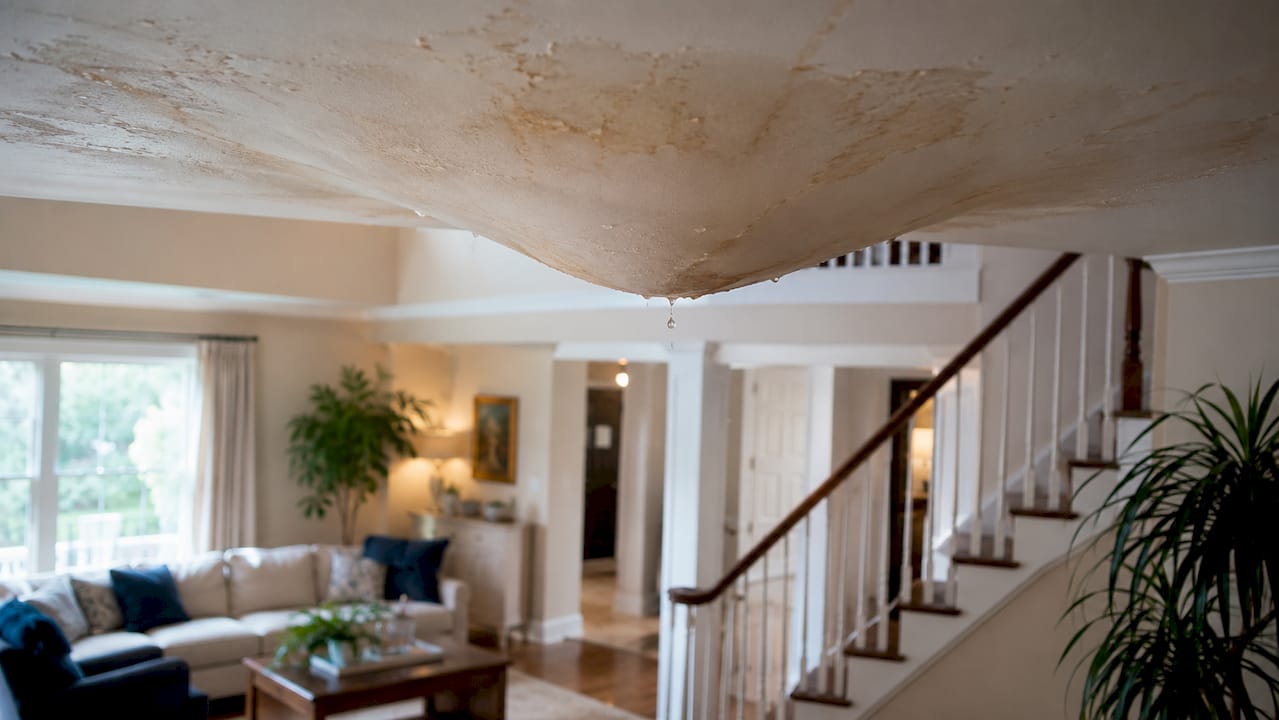
Pro Tip: If your ceiling is bulging or sagging, do not poke it to release the water. That section of drywall may be holding back gallons of pooled water, and puncturing it without preparation can cause a sudden collapse and flood.
What causes ceiling leaks in plumbing systems
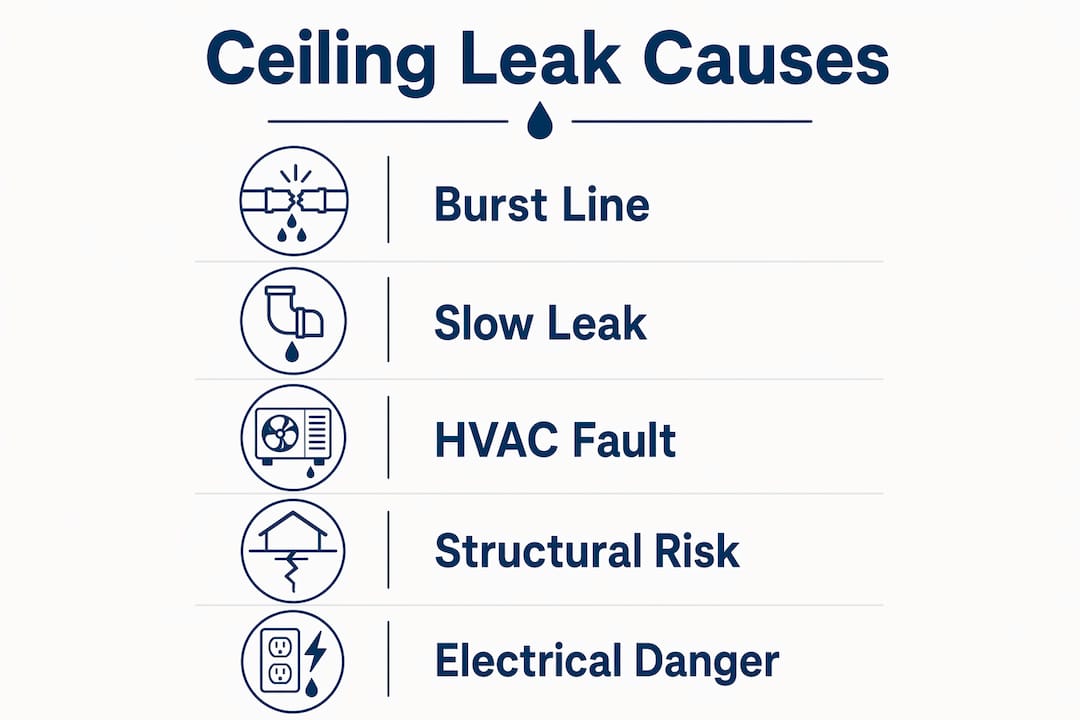
Ceiling leaks originate from several distinct plumbing failures, and identifying the source determines how fast the situation escalates. Common plumbing causes include failed wax rings on toilets, leaking supply lines, cracked drain pipes, and HVAC condensate drain failures. Each has a different damage profile.
Here are the most frequent culprits ranked by how quickly they escalate:
- Burst or leaking supply lines: Supply lines carry pressurized water. A pinhole leak in a copper pipe or a failed braided supply hose under a bathroom sink can push dozens of gallons per hour into the ceiling below.
- Toilet wax ring failure: A failed wax ring allows wastewater to escape at the base of the toilet with every flush. The leak is slow but continuous, saturating the subfloor and ceiling below before any visible sign appears.
- Shower pan and drain failures: Cracked shower pans or failed drain seals allow water to seep through the floor with every shower. This is one of the most common causes of ceiling stains in two-story homes.
- Drain line cracks and backups: A cracked drain pipe inside the ceiling cavity releases wastewater, which carries bacteria and accelerates mold growth faster than clean water leaks.
- Water heater and HVAC drain line failures: Water heaters and HVAC systems cause hidden leaks above ceilings that lead to gradual saturation without obvious early signs. These are frequently missed during routine home inspections.
| Cause | Leak speed | Primary risk |
|---|---|---|
| Burst supply line | Fast (gallons per hour) | Structural flooding |
| Toilet wax ring failure | Slow (continuous) | Subfloor rot and mold |
| Shower pan failure | Slow (per use) | Hidden saturation |
| Cracked drain pipe | Moderate | Bacterial contamination |
| HVAC condensate line | Slow (seasonal) | Mold without visible drip |
How to recognize the severity of a ceiling leak
Reading the signs correctly tells you whether you have minutes or hours to act. Visual cues carry specific meaning, and treating them as decoration is the most expensive mistake a homeowner makes. Homeowners frequently underestimate ceiling stains as cosmetic, missing the ongoing damage and safety hazards underneath.
Watch for these plumbing emergency signs:
- Yellow or brown staining: Indicates water has been present long enough to leach minerals and organic material through the drywall. The leak is not new.
- Bubbling or peeling paint: Paint separates from drywall when the substrate is wet. This means the drywall paper has absorbed moisture.
- Sagging or bulging drywall: Saturated drywall loses structural strength and signals potential collapse. This is a life-safety issue, not a repair priority.
- Active dripping: Any active drip means water is flowing right now. The source is still active and the damage is still growing.
- Multiple wet spots or rapid spread: When staining spreads visibly over minutes or hours, a pressurized supply line is the likely cause and the situation is escalating.
Pro Tip: Use your phone to photograph the stain with a timestamp the moment you notice it. Take another photo 15 minutes later. If the stain has grown, you have an active, pressurized leak and need to shut off your main water supply immediately.
Electrical proximity is the most critical severity factor. If the leak is within three feet of a ceiling light, recessed fixture, ceiling fan, or smoke detector, treat it as an electrical emergency first. Shut off the circuit breaker for that room before doing anything else.
Immediate actions to take when your ceiling leaks
Acting within the first hour limits the scope of damage significantly. Responding within 24 hours can prevent mold from establishing and reduce structural repair costs. Here is the exact sequence to follow:
- Shut off the water supply. Turn off the shutoff valve under the affected fixture first. If you cannot locate the source, shut off water to the home at the main valve. This stops ongoing water intrusion immediately.
- Cut power to the affected area. Go to your breaker panel and shut off the circuit serving the room with the leak. Do not skip this step if the leak is anywhere near a light or electrical fixture.
- Contain the water. Place buckets under active drips. If the ceiling is bulging, use a screwdriver to carefully puncture the lowest point of the bulge into a bucket. This controlled release prevents a larger collapse.
- Move valuables and furniture. Get electronics, rugs, and furniture out of the affected area. Water damage to contents compounds the total loss.
- Document everything. Photograph the leak location, stain size, and any visible damage with timestamps. Note when the leak started and whether it is getting worse.
- Call a 24/7 emergency plumber. Do not attempt to open the ceiling or trace the pipe yourself. You need professional diagnosis.
When you call, give the dispatcher the timescale of onset, whether water is still flowing, and whether the leak is near electrical fixtures. This information helps emergency plumbers prioritize your call and bring the right equipment. A moisture meter and pipe camera are standard tools for diagnosing hidden leaks that are not visible from below.
Avoid two common mistakes: do not use a hair dryer or fan to dry the ceiling surface and assume the problem is solved, and do not patch the drywall before confirming the source is fixed. Surface drying alone is insufficient to confirm no hidden damage remains. You need moisture readings inside the cavity to know the structure is actually dry.
Key takeaways
Ceiling leaks are plumbing emergencies because visible water signals active internal damage to structure, electrical systems, and air quality that worsens every hour without professional intervention.
| Point | Details |
|---|---|
| Visible leaks mean internal damage | Water saturates framing and insulation before breaking through drywall. |
| Mold starts within 24 to 48 hours | Acting fast limits mold growth and keeps remediation costs manageable. |
| Electrical proximity raises severity | Shut off the circuit breaker before inspecting any leak near ceiling fixtures. |
| Sagging ceilings require evacuation | Deflection over 1/4 inch or popping sounds signal imminent collapse. |
| Document before calling a plumber | Photos with timestamps help dispatchers prioritize and plumbers diagnose faster. |
What 15 years of ceiling leak calls taught me
The call I get most often starts the same way: "It's probably nothing, but there's a small stain on my ceiling." By the time I arrive, the stain is the size of a dinner plate and the drywall is soft to the touch. The homeowner waited three days.
The misconception I see constantly is that leak size equals leak urgency. It does not. A slow drip from a failed toilet wax ring on the second floor can saturate an entire floor joist bay over two weeks without ever producing a fast drip. When the ceiling finally shows a stain, the framing has been wet long enough to begin rotting. That repair costs ten times what it would have cost if the homeowner had called on day one.
The other mistake I see is homeowners opening the ceiling themselves to "check it out." Without a moisture meter, you cannot tell where the wet zone ends. I have seen homeowners cut a six-inch inspection hole, see dry framing, and close it up, not realizing the saturation was two feet to the left. Professional diagnosis with a moisture meter and pipe camera maps the full extent of damage before any drywall comes down.
My honest advice: treat every ceiling stain as an active emergency until a professional tells you otherwise. The cost of a service call is nothing compared to mold remediation, structural repair, or an electrical fire. If you are in Santa Barbara County and you are looking at a stain right now, do not wait until morning.
— Kirk
Get emergency ceiling leak help from Drainpointplumbing
When a ceiling leak appears in your home, every hour counts. Drainpointplumbing provides 24/7 emergency plumbing services across Santa Maria and Santa Barbara County, with rapid response for active ceiling leaks, burst pipes, and water damage situations. The team uses moisture meters and pipe cameras to locate the source fast and stop damage before it spreads further.

Drainpointplumbing also handles the full restoration side, from drying and mold prevention to property restoration after water damage. You do not need to coordinate multiple contractors. One call covers the leak repair and the cleanup. Contact Drainpointplumbing for a free plumbing quote or call the emergency line any time, day or night. Senior and military discounts are available.
FAQ
Why is a ceiling leak considered a plumbing emergency?
A ceiling leak is a plumbing emergency because visible water means structural materials inside the ceiling are already saturated, and electrical fixtures nearby create shock and fire hazards. Mold growth begins within 24 to 48 hours, making immediate response critical.
What should I do first when my ceiling is leaking?
Shut off the water supply to the affected fixture or the entire home, then cut power to the circuit serving the room if the leak is near any electrical fixture. Call a 24/7 emergency plumber after containing the drip and documenting the damage with photos.
Can a small ceiling stain wait until morning?
A small stain can represent days of hidden water accumulation inside the ceiling cavity, so waiting risks mold growth, structural weakening, and electrical hazards. Even minor leaks can cause thousands of dollars in structural damage if left unchecked.
What causes most ceiling leaks in two-story homes?
The most common causes are failed toilet wax rings, cracked shower pans, leaking supply lines, and HVAC condensate drain failures on the floor above. Each of these can leak slowly for days before producing a visible ceiling stain.
How do plumbers find the source of a ceiling leak?
Emergency plumbers use moisture meters and pipe cameras to detect hidden saturation and locate the exact pipe or fixture causing the leak. This professional diagnosis prevents unnecessary drywall removal and confirms the full extent of water damage.