
Selecting a licensed plumber for a business project means hiring a verified professional whose credentials, insurance, and workmanship meet California code requirements. The industry term is "licensed plumbing contractor," and it covers both residential and commercial work under California's Contractors State License Board (CSLB) C-36 classification. For homeowners and commercial property managers in Santa Maria, the difference between licensed and unlicensed work is not just paperwork. Unlicensed work risks non-compliance, voided insurance, and costly repairs that far exceed what a licensed contractor would have charged. Drainpointplumbing has served Santa Barbara County for over 15 years, and the patterns we see repeat constantly: the projects that go wrong almost always started with the wrong hiring decision.
How to select a licensed plumber for a business project
The first step is understanding what "licensed" actually means in California. A CSLB C-36 license is the state's plumbing contractor classification. It requires passing a trade exam, proving field experience, and maintaining active insurance. Licensed plumbers detect hidden hazards like concealed leaks and unsafe water pressure that uncertified workers routinely miss. That skill set protects your building's infrastructure and your liability as a property owner.
For commercial property managers, the stakes are higher. A failed inspection on a commercial build-out can delay tenant occupancy by weeks and trigger penalty clauses in lease agreements. Choosing a licensed plumbing contractor from the start eliminates that risk entirely.
Pro Tip: Ask every plumber you contact for their CSLB license number before scheduling a site visit. You can verify it instantly at the CSLB's online license check portal at cslb.ca.gov.

What credentials should you verify before hiring a plumber?
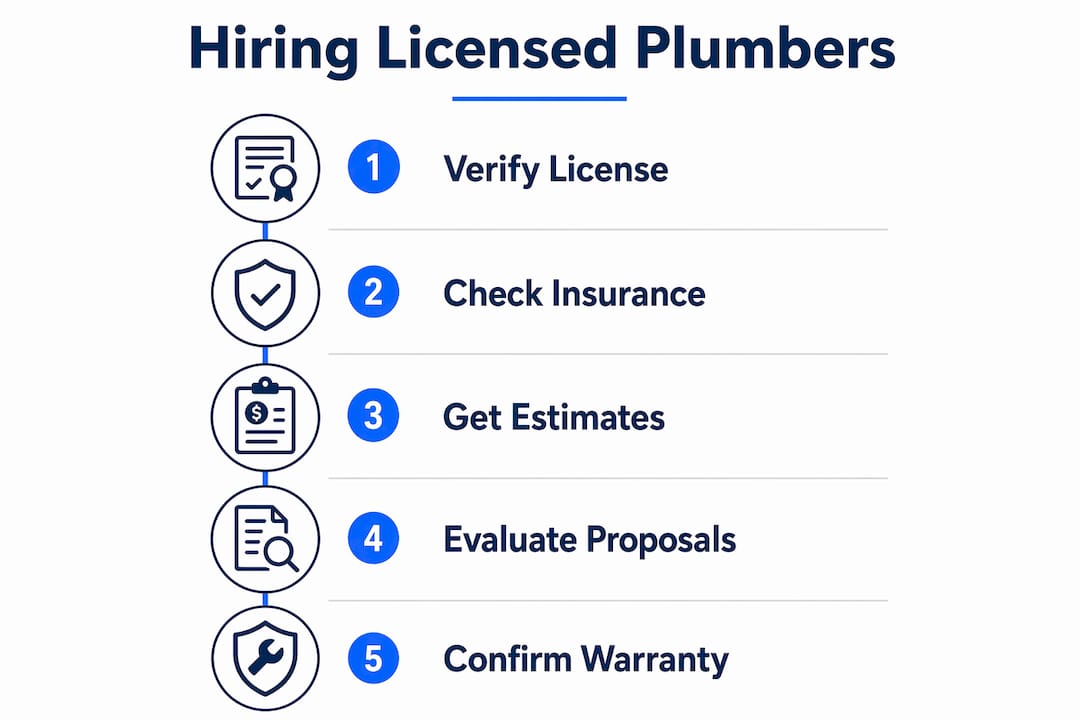
License verification is the non-negotiable first step. California's CSLB website lets you check any contractor's license status, expiration date, and any disciplinary actions in real time. Confirm license validity on the official CSLB website before signing anything. An expired or suspended license is a hard stop.
Beyond the license, verify these credentials:
- Active general liability insurance: Covers property damage during the project. Ask for a certificate of insurance naming you as an additional insured.
- Workers' compensation coverage: Protects you if a worker is injured on your property. Without it, you may be liable.
- Surety bond: Required for CSLB licensure. Confirms the contractor can cover financial claims if work is abandoned or defective.
- Background-checked technicians: Especially relevant for commercial properties with tenant access.
The license number on contracts should appear on every written estimate and invoice. This practice confirms the contractor's insurance is active throughout your project's timeline, not just at the point of hire.
Pro Tip: Request a fresh certificate of insurance directly from the contractor's insurance provider, not just a copy the contractor hands you. Certificates can be forged or outdated.
For commercial projects, also ask whether the contractor carries professional liability coverage. This matters when plumbing work intersects with MEP (mechanical, electrical, and plumbing) engineering plans.
How do you evaluate written estimates and compare proposals?
Obtain at least three written quotes before committing to any plumber. This is the industry standard best practice, and it gives you a realistic baseline for both price and scope. Many licensed plumbing businesses provide free written estimates within 24 hours of an on-site visit.
A solid estimate includes these elements:
- Itemized task list: Each fixture, pipe run, or repair listed separately
- Material specifications: Brand, grade, and quantity of all materials
- Labor cost breakdown: Hours estimated per phase
- Project timeline: Start date, phase milestones, and completion date
- Permit responsibilities: Who pulls permits and who pays for them
- Warranty terms: Labor and materials covered separately
| Estimate Element | What to Look For | Red Flag |
|---|---|---|
| Scope of work | Detailed task descriptions | Vague "plumbing work" language |
| Permit inclusion | Explicitly listed | No mention of permits |
| Material specs | Named brands and grades | "Standard materials" only |
| Warranty | 1-year labor minimum | No warranty offered |
| Payment terms | Progress-based milestones | Full payment upfront |
Low-ball quotes are the most common trap. A price that is significantly below the other two estimates usually means the contractor skipped permit costs, plans to use substandard materials, or will add change orders once work begins. Focusing solely on price is a common error. Licensed plumbers save money long-term by passing inspections and reducing the risk of rework.
Pro Tip: Ask each contractor to walk you through their estimate line by line. A confident, licensed plumber will explain every item without hesitation. Evasiveness on specific line items is a warning sign.
Flat-rate pricing is preferable for defined scopes like water heater replacement or fixture installation. Hourly pricing works for diagnostic or repair work where the full scope is unknown until the wall is opened.
What is the typical process for a licensed plumber on a business project?
Professional plumbing projects follow a defined sequence. Understanding these phases helps you track progress and catch problems early.
| Phase | Description | Key Milestone |
|---|---|---|
| Initial evaluation | Site assessment, code review, plan markup | Written scope delivered |
| Plan review | MEP drawing review, permit application | Permit approved |
| Underground rough-in | Below-slab drain and supply lines | Inspection passed |
| Top-out | Above-slab rough-in, wall and ceiling pipes | Framing inspection cleared |
| Fixture trim-out | Fixture installation, final connections | Functional test complete |
| Final inspection | Code officer sign-off | Certificate of occupancy issued |
For larger commercial projects, submittal packages and BIM coordination are standard practice. These documents align the plumbing contractor's work with the general contractor's schedule and prevent scope gaps between trades. Skipping this step on a multi-trade project is a reliable way to create expensive conflicts between plumbing, HVAC, and electrical rough-ins.
Most contractors provide a standard one-year labor and workmanship warranty on new installations. Get this in writing before work starts, not after. A verbal warranty is unenforceable.
For commercial property managers overseeing tenant improvements, understanding the plumbing renovation planning process helps you set realistic timelines with tenants and avoid lease disputes.
How do you spot red flags when choosing a plumbing contractor?
The warning signs of an unqualified or dishonest plumber are consistent across projects. Knowing them protects your budget and your building.
"Licensed contractors provide clear estimates and explain options without pushing extras. If a plumber uses scare tactics or pressures you to approve additional work on the spot, that behavior signals a problem with their business practices, not your plumbing."
Watch for these red flags:
- No license number on the estimate: A licensed contractor always includes it. Absence suggests the license may not exist or may be expired.
- Cash-only payment demands: Legitimate contractors accept checks and electronic payments and provide receipts.
- Pressure to skip permits: Unpermitted work fails inspections, voids homeowner insurance, and becomes your problem at resale.
- Vague scope of work: If the estimate does not specify what is being done, you have no recourse when the work falls short.
- No written contract: Verbal agreements are unenforceable in California for projects over $500.
Avoid plumbers who use scare tactics or aggressive upselling. Professional quotes are transparent and pressure-free. A licensed plumber explains your options and lets you decide. Signs of genuine professionalism include punctuality, clean work areas, thorough pre-work inspections, and clear communication throughout the project.
For urgent situations, emergency repiping expectations differ from planned projects. Even in emergencies, a licensed contractor will document the work and pull permits where required.
Key Takeaways
Selecting a licensed plumbing contractor for your project in Santa Maria requires verifying CSLB credentials, comparing at least three written estimates, and understanding each project phase before work begins.
| Point | Details |
|---|---|
| Verify CSLB license first | Check license status, expiration, and disciplinary history at cslb.ca.gov before any site visit. |
| Require three written quotes | Compare itemized estimates covering tasks, materials, timeline, and permit responsibilities. |
| License number on all documents | The contractor's license number on every estimate confirms active insurance throughout the project. |
| Know the project phases | From rough-in to final inspection, each phase has a milestone you can verify before approving the next. |
| Price alone is a poor filter | Licensed plumbers cost more upfront and save significantly more by passing inspections and avoiding rework. |
What I've learned after 15 years of plumbing projects in Santa Maria
The most expensive plumbing projects I've seen were not the complex ones. They were the simple jobs that started with an unlicensed worker and ended with a failed inspection, a voided insurance claim, and a licensed contractor called in to redo everything correctly.
Property managers often underestimate how much local code knowledge matters. Santa Maria and Santa Barbara County have specific requirements around water pressure, backflow prevention, and seismic bracing for water heaters. A plumber licensed in another state or county may not know these details. Local licensing and local experience are not the same thing, but the best contractors have both.
My honest recommendation: treat the plumbing service contract as seriously as you treat the estimate. The contract defines what happens when something goes wrong, and something always has the potential to go wrong on a plumbing project. A contractor who resists putting terms in writing is telling you something important about how they handle disputes.
The homeowners who get the best outcomes are the ones who ask the most questions before work starts, not during or after.
— Kirk
Drainpointplumbing: licensed plumbing services in Santa Maria
Drainpointplumbing is a locally owned, CSLB-licensed plumbing and restoration contractor serving Santa Maria and Santa Barbara County for over 15 years. Every technician is background-checked, and every project comes with a free written estimate delivered after an on-site evaluation.
Whether you need residential plumbing repairs for a fixture replacement or a full commercial installation, Drainpointplumbing handles the permits, the inspections, and the documentation. The team is available 24/7 for emergencies, with rapid response plumbing for urgent calls across the county. Senior and military discounts apply. Request a free quote and get a written scope of work within 24 hours.
FAQ
What does a CSLB C-36 license mean for plumbers in California?
The CSLB C-36 is California's plumbing contractor classification. It requires passing a state trade exam, proving field experience, and maintaining active insurance and bonding.
How many quotes should I get before hiring a plumber?
Get at least three written quotes. This is the industry standard and gives you a reliable baseline for pricing, scope, and timeline before committing to any contractor.
Can unlicensed plumbing work void my homeowner's insurance?
Yes. Unlicensed work can void your homeowner's insurance policy and expose you to personal liability if the work causes property damage or injury.
What warranty should a licensed plumber provide?
Most licensed contractors provide a minimum one-year workmanship warranty on new installations. Get the warranty terms in writing before work begins.
How do I verify a plumber's license in Santa Maria?
Visit cslb.ca.gov and enter the contractor's license number. The site shows current status, expiration date, insurance information, and any disciplinary actions on record.