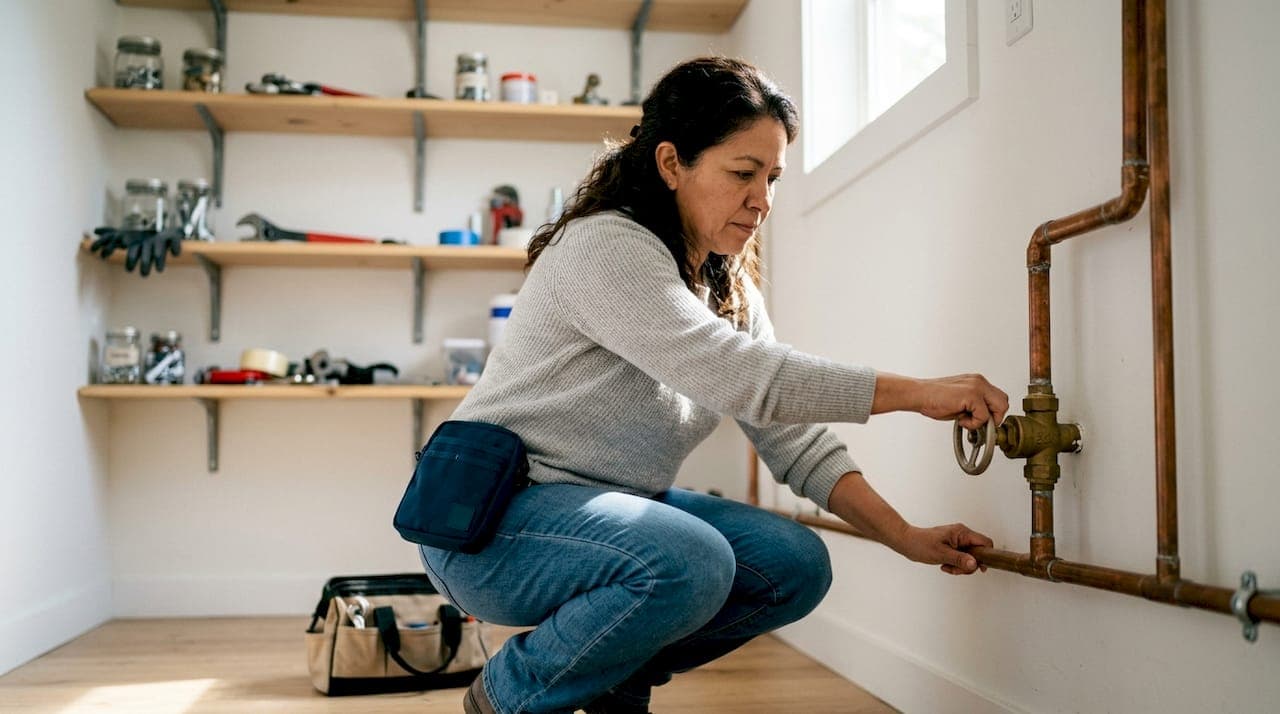
Shutting off your home's water supply in an emergency means locating the correct valve and closing it before flooding spreads. Every minute of unchecked water flow adds damage, and water damage escalates faster than most homeowners expect. Knowing how to shut off water in emergency situations is the single most effective skill you can have as a homeowner or renter. The process involves two main valve types: fixture-specific valves that isolate one appliance, and the main shut-off valve that cuts water to the entire house. Acting on the right valve immediately is what separates a minor incident from a costly repair.
How to shut off water in an emergency: finding your main valve
The main water shut-off valve controls water flow to your entire home. Closing it stops flooding at the source when you cannot identify which fixture is leaking or when the leak is severe.
Where to look for the main valve
Most main shut-off valves sit in one of four locations: the basement near the front wall, the garage, a crawl space, or an exterior utility panel on the side of the house facing the street. In warmer climates like Santa Barbara County, the valve often sits outside in a ground-level box near the water meter. If you have never located yours, check those spots now before you need them.
How to operate the two valve types
Two main types of main water shut-off valves exist in residential plumbing: ball valves and gate valves. Knowing which type you have determines exactly how you close it.
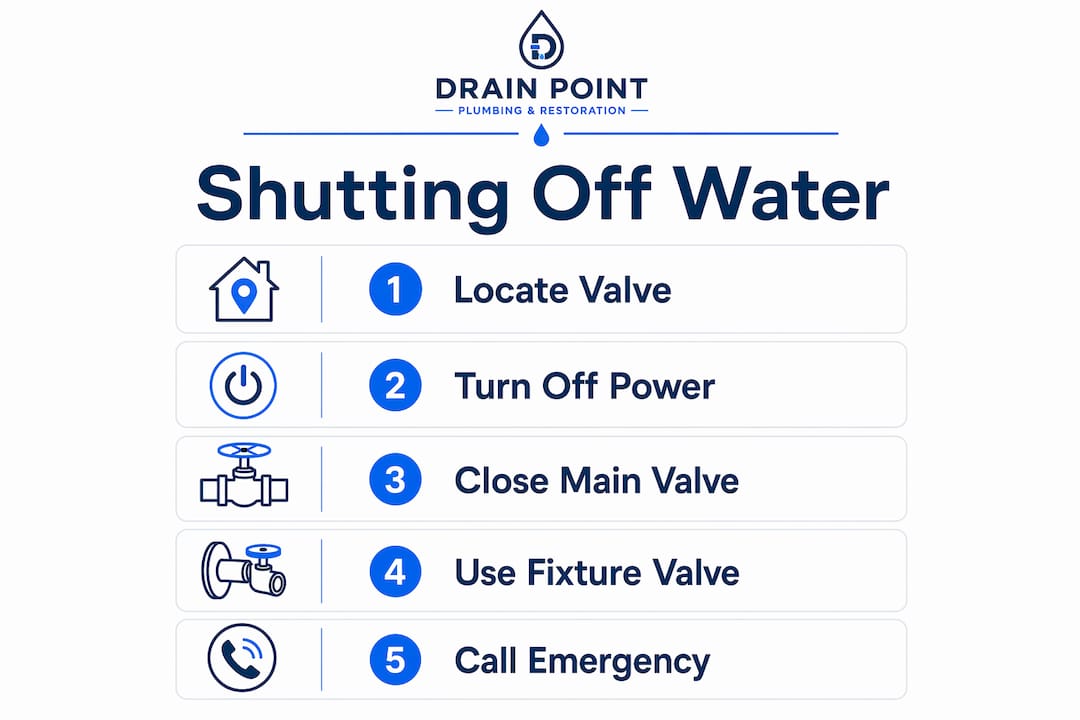
- Locate the valve. Find the main shut-off in the basement, garage, crawl space, or exterior utility box.
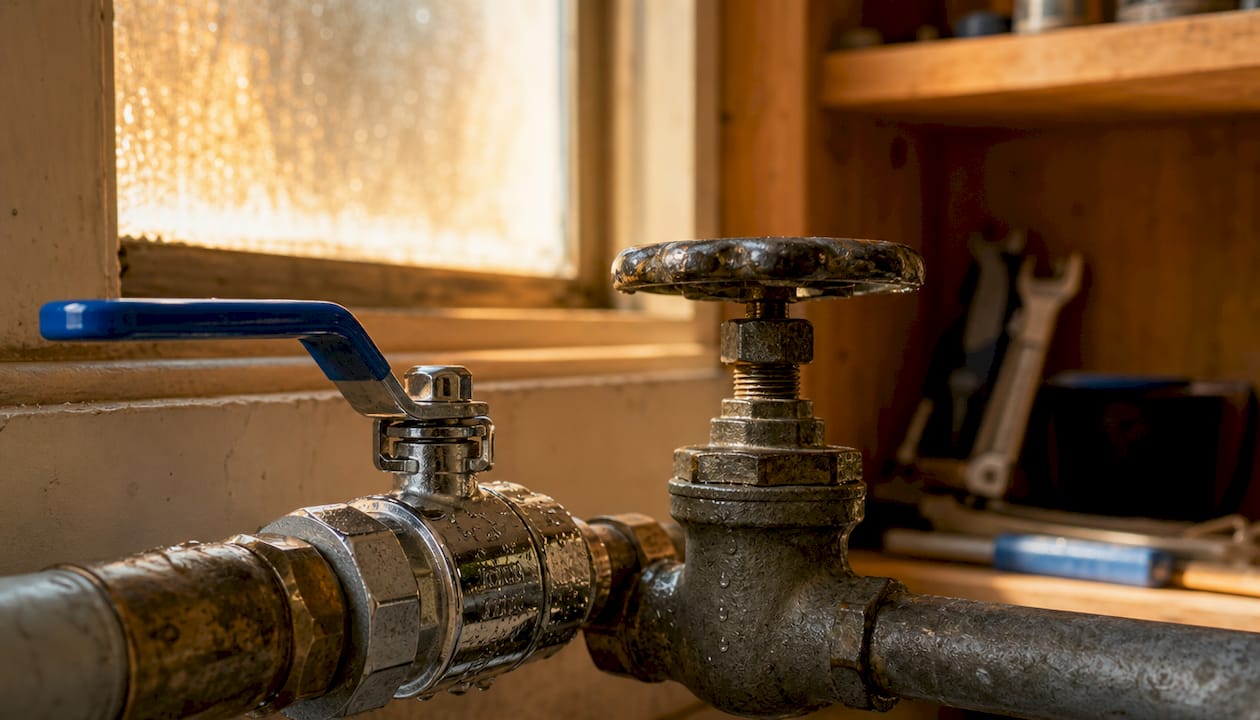
- Identify the valve type. A ball valve has a lever handle. A gate valve has a round wheel handle.
- Close a ball valve. Turn the lever a quarter turn so it sits perpendicular to the pipe. One firm motion is all it takes.
- Close a gate valve. Turn the wheel clockwise until it stops. Gate valves require multiple full rotations and may seize from mineral buildup if unused for years.
- Confirm the water is off. Open a faucet downstream to verify water flow has stopped. A dry faucet confirms success.
- Label the valve. Use a permanent marker or adhesive label so every adult in the household can find it instantly next time.
Pro Tip: Test your main shut-off valve once a year by turning it off and back on. Annual operation prevents mineral deposits from seizing the valve when you need it most.
Using fixture valves to stop a leak without cutting all water
Fixture-specific valves are the fastest way to isolate a single problem without shutting off water to your whole house. They sit close to each appliance and take seconds to close.
Here is where to find the most common fixture valves:
- Toilet: The valve sits near the base of the toilet, behind or beneath the tank. Turning it clockwise stops water to that toilet only. Toilet overflows are the most common reason homeowners need this valve.
- Sink: Look under the sink cabinet for two valves on the supply lines, one for hot and one for cold. Both turn clockwise to close.
- Water heater: The cold-water supply valve sits on the pipe entering the top of the tank. If your heater runs on gas, also locate the gas shutoff valve on the supply line nearby.
- Washing machine: Two valves sit behind the machine on the wall, one for hot and one for cold. Reach behind the unit or pull it forward slightly to access them.
- Dishwasher: The supply valve is usually under the kitchen sink, on the hot-water line.
Fixture valves are small oval or round handles. They all turn clockwise to close. Using them instead of the main valve keeps water running to the rest of your home during the repair.
Pro Tip: Walk through your home right now and locate every fixture valve. Take a photo on your phone so you have a reference when stress makes it hard to think clearly.
What safety steps should you take before shutting off water?
Water near electricity is the most dangerous part of any plumbing emergency. Getting the sequence right protects you from electric shock before you touch a single valve.
- Check for electrical hazards first. If water is pooling near outlets, appliances, or your electrical panel, stop and assess before moving closer.
- Turn off power at the circuit breaker. Safety protocol requires cutting electrical power to affected areas before touching any valve near standing water.
- Never step into standing water if electricity may be live. Call your utility company or 911 first if you cannot safely reach the breaker.
- Shut off electricity before water when both are at risk. Power off first, then close the valve. Reversing this sequence puts you in contact with live circuits near water.
- Call a licensed plumber immediately after shutting off the water. Containment with buckets and towels buys time, but temporary DIY fixes often worsen damage. A professional assessment prevents the next failure.
"Shutting off water should be the first step in emergencies to stop flooding, followed by containing water and calling a licensed plumber before restoring supply. Containment includes using buckets, towels, and moving valuables away from water."
Staying calm is not just good advice. Rushed movements cause forced valves, missed shutoffs, and injuries. Take three seconds to identify the right valve before you act.
How to shut off water at the street curb stop
The curb stop is your last resort when the house shut-off valve fails or is completely inaccessible. It sits in a covered utility box near the water meter at the street edge of your property.
Follow these steps to use it:
- Locate the utility box. Look for a small rectangular or round metal cover near the curb or sidewalk in front of your home. It may be labeled "water."
- Lift the cover. Use a flathead screwdriver or curb key to pry it open.
- Insert the curb key. A T-shaped water meter key fits the valve stem. These cost around $10 at most hardware stores.
- Turn the valve. Rotate the stem a quarter turn to close. Some older curb stops require a full clockwise rotation.
- Confirm water is off. Test a faucet inside the house to verify flow has stopped.
- Notify your water utility. The curb stop is municipal property in most jurisdictions. Homeowners may use it in emergencies but must report the action to the utility afterward.
| Valve type | Location | Tool needed | Who operates it |
|---|---|---|---|
| Main shut-off valve | Basement, garage, or exterior wall | None | Homeowner |
| Fixture shut-off valve | Behind or under each appliance | None | Homeowner |
| Curb stop (street valve) | Utility box at the curb | T-shaped curb key | Homeowner or utility |
If the curb stop is corroded, stuck, or you cannot locate it safely, call your water utility's emergency line. Do not force a stuck curb stop. Forcing it can break the valve stem and create a larger problem.
Preventive maintenance to keep your valves ready
A valve that has not moved in ten years will likely seize when you need it most. Regular maintenance takes less than fifteen minutes per year and prevents that failure.
- Test the main valve annually. Turn it off and back on once a year. Annual operation prevents mineral deposits from locking gate valves and keeps ball valves turning freely.
- Inspect for corrosion and rust. Look at valve bodies and supply lines every six months. Green or white mineral buildup signals a valve that needs replacement soon.
- Keep the area around valves clear. Storage boxes, shelving, and clutter in front of the main valve cost critical seconds during an emergency.
- Label every valve clearly. Use waterproof labels or colored tape. Write "MAIN OFF" or "TOILET HOT" in large letters so anyone in the household can act without guessing.
- Replace faulty valves promptly. A valve that drips, sticks, or does not fully close is not a minor issue. Have a licensed plumber replace it before the next emergency.
- Add a curb key to your emergency kit. A $10 water meter key stored with your flashlight and first aid supplies gives you access to the street valve without scrambling.
Pro Tip: Share valve locations with every adult in your household. Knowledge of valve locations by all household adults significantly reduces damage severity when an emergency hits while you are not home.
Key Takeaways
Shutting off the correct valve immediately is the single most effective action you can take to limit water damage during a plumbing emergency.
| Point | Details |
|---|---|
| Use fixture valves first | Isolate a single appliance to avoid cutting water to the whole house. |
| Know your main valve type | Ball valves close with a quarter turn; gate valves require full clockwise rotations. |
| Electricity comes first | Cut power at the breaker before touching any valve near standing water. |
| Curb stop is a last resort | Use the street valve only when house valves fail, and notify your utility afterward. |
| Test valves every year | Annual operation prevents mineral buildup from seizing valves during emergencies. |
What 15 years of plumbing calls taught me about valve readiness
The homeowners who avoid the worst damage are never the ones who react fastest. They are the ones who prepared before anything went wrong.
After responding to hundreds of emergency calls across Santa Barbara County, the pattern is clear. Forced valves are one of the most common mistakes I see. A homeowner panics, grabs a gate valve that has not moved in a decade, and cranks it hard. The stem snaps. Now the house has no working shut-off and water is still flowing. That situation costs far more to fix than the original leak.
The other mistake I see constantly is skipping the fixture valve and going straight to the main. If your toilet is overflowing, you do not need to cut water to your kitchen and bathrooms. Closing the valve behind the toilet takes five seconds and leaves everything else running. Knowing which valve to use is as important as knowing where to find it.
My honest advice: spend twenty minutes this weekend walking through your home. Find every fixture valve. Test the main shut-off. Buy a curb key if you do not own one. If any valve sticks, drips, or will not fully close, call a licensed plumber before it becomes an emergency. Recognizing emergency plumbing signs early gives you options. Waiting until water is on the floor takes those options away.
— Kirk
Drainpointplumbing is ready when your valves are not
A shut-off valve buys you time. What happens next determines how much damage your home actually takes.
Drainpointplumbing has served Santa Maria and Santa Barbara County homeowners for over 15 years with 24/7 emergency plumbing services built for exactly these moments. The team handles main valve repairs, fixture valve replacements, and full leak assessments so you are not left guessing after the water stops. If your shut-off valve is stuck, corroded, or you need a licensed plumber on-site fast, request a free quote and get a response from a local professional who knows your area. Senior and military discounts are available.
FAQ
Where is the main water shut-off valve in a house?
The main shut-off valve is most commonly found in the basement near the front wall, in the garage, in a crawl space, or in an exterior utility box on the street-facing side of the house.
What is the difference between a ball valve and a gate valve?
A ball valve closes with a single quarter turn of its lever handle and is more reliable. A gate valve requires turning a round wheel clockwise multiple times and can seize from mineral buildup if unused for long periods.
Should I turn off electricity before shutting off water?
Yes. If water is near electrical outlets, appliances, or your breaker panel, cut power at the circuit breaker first to eliminate the risk of electric shock before you approach any valve.
What is a curb stop and when should I use it?
A curb stop is the municipal water valve located in a utility box at the street curb. Use it only when your home's main shut-off valve fails or is inaccessible, and notify your water utility after using it.
How often should I test my shut-off valves?
Test your main shut-off valve and fixture valves at least once a year. Annual operation prevents mineral deposits from seizing the valves and confirms they will work when you need them.