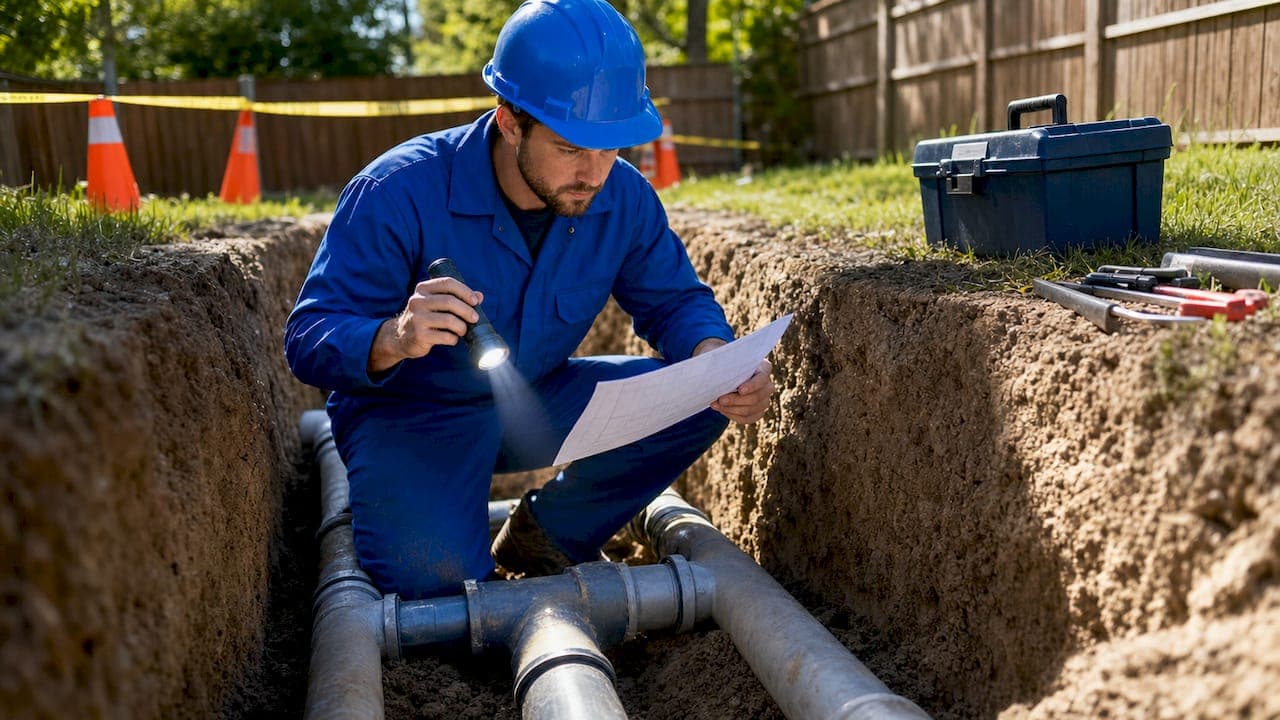
A commercial sewer line upgrade is the process of replacing, relining, or rehabilitating the underground drainage pipes that connect a business property to the municipal sewer main. Property managers who delay this work face permit violations, sewer backups, and operational shutdowns that cost far more than the upgrade itself. The right approach combines regulatory compliance, the correct repair method, and a project plan that keeps your business running. This guide covers every step, from permit requirements to long-term maintenance.
What does upgrading a sewer line on a business property involve?
Upgrading a sewer line on a business property means more than swapping out old pipe. The industry term for this work is sewer lateral rehabilitation, and it covers everything from CIPP lining and pipe bursting to full open-trench replacement. Commercial properties face stricter requirements than residential ones because they generate higher wastewater volumes, serve multiple tenants, and fall under commercial building codes. A failed sewer line at a retail center or office building does not just inconvenience one family. It can trigger health department closures, tenant lease disputes, and municipal fines.
What permits and code requirements must be met first?
Most local jurisdictions require a formal permit for any commercial sewer repair that involves pipe replacement, lining, or excavation. Skipping this step is the single most common mistake property managers make, and it can result in stop-work orders, fines, and mandatory removal of completed work.
Key permit and code requirements for commercial sewer upgrades include:
- Building permit: Required for any structural pipe replacement or trenchless lining on commercial property.
- Excavation permit: Needed when work crosses public sidewalks, streets, or rights of way.
- Encroachment permit: Required from the local public works department when work enters the public right of way.
- Health department clearance: Mandatory for food service properties before resuming operations after sewer work.
- Grease interceptor compliance: Commercial kitchen grease interceptor upgrades are often mandatory during sewer line replacement to pass inspections and avoid fines.
The International Plumbing Code triggers commercial code requirements at three or more dwelling units. That threshold matters for mixed-use buildings and apartment complexes above retail. Property managers of those buildings must apply commercial-grade permitting even if the upper floors feel residential.
One often-overlooked liability: property owners bear responsibility for the entire lateral connecting their building to the city main, including sections under public sidewalks and streets. That responsibility increases permitting complexity and can significantly raise project costs when street restoration is required.
Pro Tip: Request a pre-application meeting with your local building department before submitting permit paperwork. Many jurisdictions will flag missing documents or special requirements in advance, saving weeks of back-and-forth.
Which sewer line upgrade methods are available, and how do they compare?
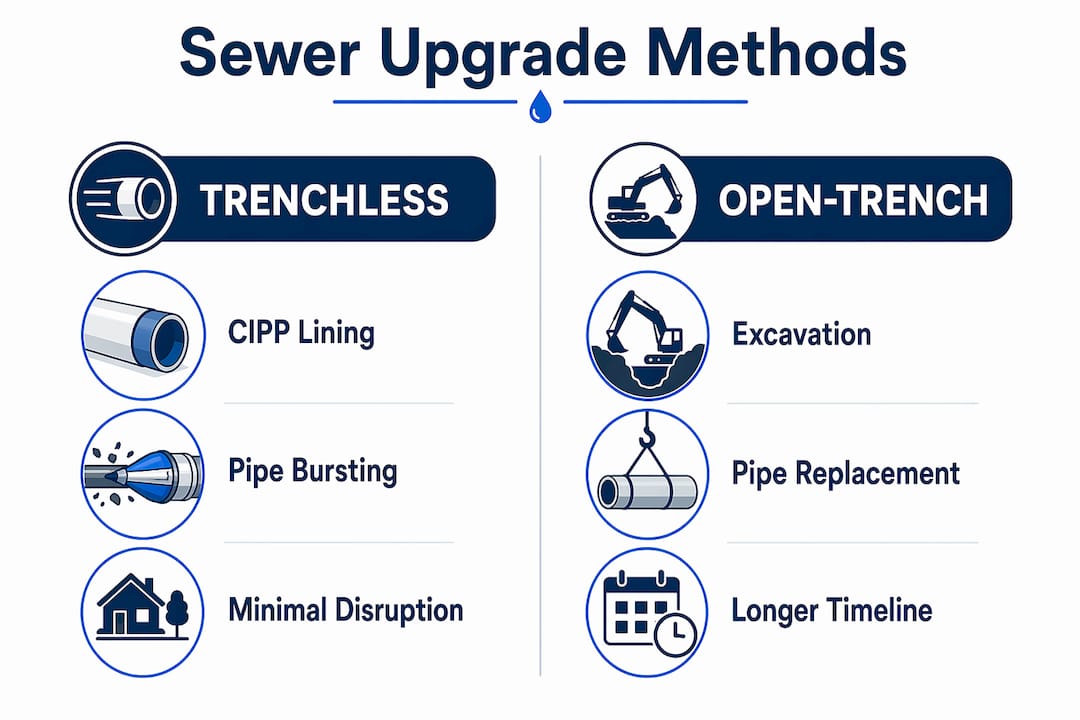
Two primary methods exist for commercial sewer line replacement: trenchless rehabilitation and open-trench excavation. Each has a specific use case, and choosing the wrong one wastes money.
Trenchless methods
Trenchless sewer repair covers two main techniques. Cured-in-place pipe lining, known as CIPP, inserts a resin-saturated liner into the existing pipe and cures it in place, creating a new pipe within the old one. Pipe bursting fractures the old pipe outward while simultaneously pulling a new pipe into position. CIPP lining can be completed in 1 to 2 days, minimizing business downtime. That speed is the primary reason commercial property managers prefer it for occupied buildings.
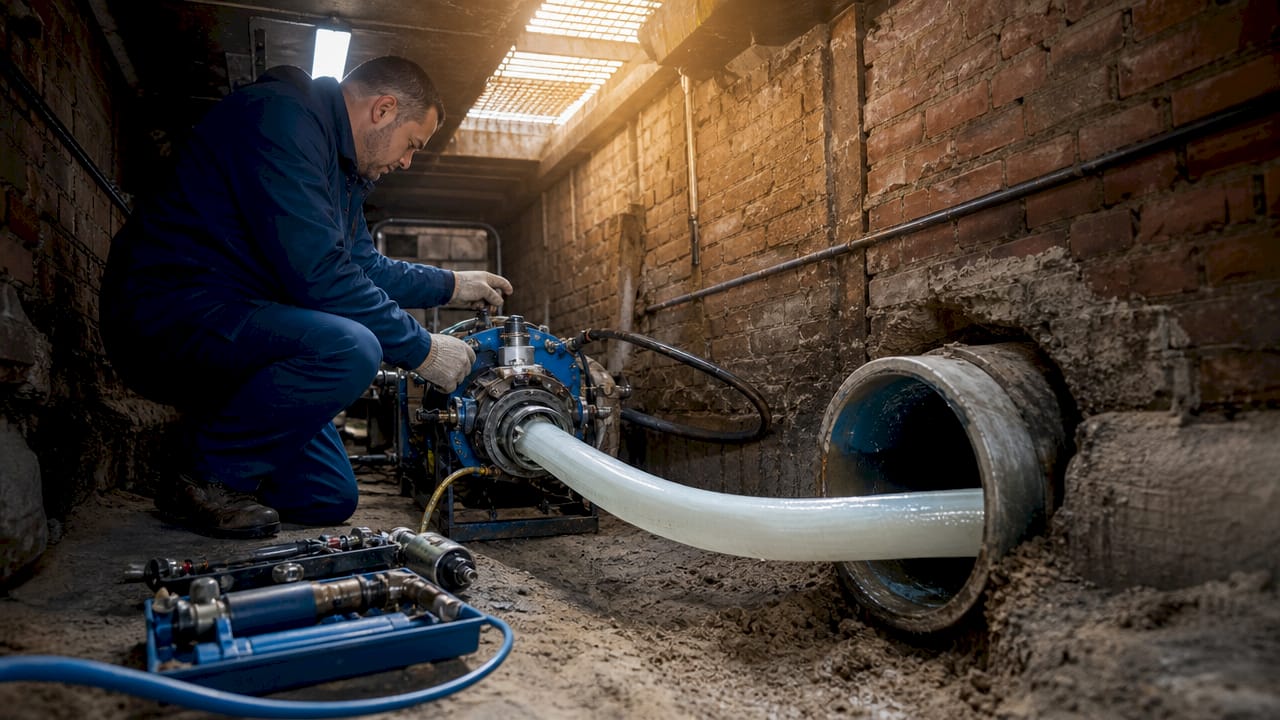
Trenchless methods also deliver long-term performance gains. Trenchless rehabilitation can increase pipe interior diameter capacity and creates a smoother, high-flow surface that resists root intrusion and buildup better than original piping. CIPP lining offers a lifespan of 50 years or more without major demolition or site restoration.
Open-trench replacement
Open-trench excavation is the traditional method. Workers dig down to the pipe, remove it, and install new pipe before backfilling and restoring the surface. This method is slower, more disruptive, and generates secondary costs including landscaping repair, parking lot restoration, and potential lost rent. However, open-trench replacement is the only option when a pipe has completely collapsed or when large sections are missing. CIPP lining requires a host pipe that is still structurally sound. Collapsed or missing sections mandate open-trench work.
Method comparison
| Method | Typical timeline | Disruption level | Lifespan | Best for |
|---|---|---|---|---|
| CIPP lining | 1–2 days | Low | 50+ years | Structurally intact pipes |
| Pipe bursting | 1–3 days | Low to medium | 50+ years | Pipes needing upsizing |
| Open-trench replacement | 3–10 days | High | 50+ years | Collapsed or missing pipe |
Pro Tip: Never commit to a trenchless method before a video camera inspection confirms the pipe is round, intact, and free of major material loss. A contractor who quotes trenchless work without first running a camera is guessing.
How to plan and execute a sewer line upgrade step by step
A well-managed commercial sewer upgrade follows a clear sequence. Skipping steps creates cost overruns and project delays.
- Commission a video camera inspection. A CCTV sewer inspection maps pipe condition, identifies collapse points, locates root intrusion, and confirms pipe material. This data drives every decision that follows.
- Review the inspection report with your contractor. Identify which sections need lining, bursting, or full replacement. Get the scope of work in writing before any permits are pulled.
- Apply for all required permits. Submit applications to the building department, public works, and health department as applicable. Factor in permit lead times when scheduling the project.
- Notify tenants and schedule work strategically. Plan work during low-traffic hours or business closures. Communicate timelines clearly to all tenants and customers.
- Execute the upgrade per the approved method. The contractor follows the permitted scope. Any field changes require a permit amendment before work continues.
- Conduct post-installation verification. Run a post-job camera inspection to confirm the liner is fully cured, joints are sealed, and flow is unobstructed.
- Schedule final inspections with the municipality. Most jurisdictions require a final sign-off before the permit closes. Do not skip this step.
Minimizing business downtime requires coordination between your contractor, tenants, and the municipality. Trenchless methods keep businesses operational during repairs, but even trenchless work requires temporary service interruptions. Schedule those windows in advance and communicate them clearly.
Key factors that reduce tenant disruption during a sewer upgrade:
- Use portable restroom facilities for tenant buildings during service interruptions.
- Stage material deliveries during off-peak hours to keep parking and access clear.
- Assign a single point of contact on your team to handle all tenant questions.
- Confirm with your contractor that all surface restoration is included in the contract scope.
Common challenges and how to troubleshoot them
Even well-planned sewer upgrades run into problems. Knowing the most common ones in advance lets you respond without losing time or money.
- Permit delays: Municipal review timelines vary widely. Submit complete applications with all required drawings and site plans on the first submission to avoid resubmittal cycles.
- Unexpected pipe conditions: Camera inspections reduce surprises, but contractors occasionally find additional collapse or offset joints once work begins. Build a contingency budget of 15–20% of the project cost.
- Grease trap compliance failures: Food service properties that trigger grease interceptor upgrades mid-project face added cost and timeline pressure. Address grease trap requirements during the permit phase, not after work starts.
- Multi-tenant lateral complications: Shared lateral lines serving multiple tenants require coordination on service interruptions and cost allocation. Clarify responsibility in tenant leases before the project begins.
- Street restoration disputes: When work crosses public right of way, municipalities often specify exact restoration standards. Confirm those standards with public works before your contractor begins excavation.
"Proactive, risk-prioritized sewer rehabilitation prevents recurring costly emergency repairs. Data-driven camera inspections help allocate capital efficiently to the highest-risk pipes." — Sewer AI
Public-facing sewer failures can double project costs compared to repairs confined to private property. That cost difference is the strongest argument for addressing known issues before they become emergencies.
How to maintain your upgraded sewer line for long-term reliability
A sewer upgrade is a capital investment. Protecting that investment requires a maintenance program, not a set-it-and-forget-it approach.
Best practices for maintaining a commercial sewer line after upgrade:
- Annual camera inspections: Schedule a proactive CCTV inspection every 12 months to catch root intrusion, joint separation, or buildup before it becomes a blockage.
- Quarterly drain cleaning: Hydro jetting removes grease, scale, and debris that accumulate in high-use commercial lines. For restaurant properties, monthly cleaning is the standard.
- Grease management programs: Require tenants in food service spaces to maintain grease interceptors on a documented schedule. Non-compliance voids your pretreatment compliance and can trigger municipal fines.
- Shared lateral agreements: Document maintenance responsibilities for shared lateral lines in tenant leases. Ambiguity leads to disputes when repairs are needed.
- Risk-based rehabilitation planning: Use camera inspection data to rank pipe segments by condition score. Prioritize capital spending on the highest-risk segments first.
Proactive planning using camera inspection data prevents costly emergency sewer failures and repetitive repair costs. A well-maintained CIPP-lined pipe can serve a commercial property for decades without major intervention.
Pro Tip: Keep a maintenance log for every sewer inspection, cleaning, and repair. That documentation protects you during permit applications, tenant disputes, and property sales.
Plumbing upgrades also carry a secondary benefit worth tracking. Sewer infrastructure improvements can increase assessed property value and reduce insurance risk profiles, making the investment case stronger than the repair cost alone suggests.
Key Takeaways
A successful commercial sewer line upgrade requires compliance, the right repair method, and a maintenance plan that protects the investment long after the contractor leaves.
| Point | Details |
|---|---|
| Permits come first | Pull all required permits before any excavation or lining work begins to avoid fines and stop-work orders. |
| Camera inspection is non-negotiable | A CCTV inspection before the project determines which method is viable and prevents costly mid-job surprises. |
| Trenchless methods reduce downtime | CIPP lining completes in 1–2 days and keeps businesses operational, making it the preferred choice for occupied properties. |
| Lateral responsibility extends to the street | Property owners are liable for the full lateral to the city main, including sections under public sidewalks and streets. |
| Maintenance protects the investment | Annual camera inspections and quarterly drain cleaning extend the lifespan of any sewer upgrade significantly. |
What I've learned after 15 years of commercial sewer work
The biggest mistake I see property managers make is treating a sewer upgrade as a pure construction project. It is not. It is a regulatory and operational project that happens to involve pipe. The managers who get it right are the ones who start with the permit process, not the contractor bid.
Trenchless technology has genuinely changed what is possible for occupied commercial buildings. A decade ago, a sewer replacement at a multi-tenant retail strip meant days of parking lot closures, angry tenants, and a landscaping bill that rivaled the plumbing cost. Today, a CIPP lining job on the same property is often invisible to tenants. That shift in disruption profile changes the financial math entirely.
The preliminary camera inspection is where projects succeed or fail. I have seen contractors skip it, quote trenchless work, and then discover a collapsed section mid-job. The change order that follows always costs more than the inspection would have. Do not let a contractor skip that step to win your bid.
Contractor selection matters more on commercial jobs than residential ones. You need a contractor who understands municipal permit workflows, can coordinate with public works on street restoration, and has documented experience with commercial-scale CIPP or pipe bursting. Ask for references from comparable commercial projects, not residential ones.
— Kirk
Drainpointplumbing's commercial sewer services in Santa Maria
Drainpointplumbing has served commercial property managers across Santa Barbara County for over 15 years, handling sewer camera inspections, trenchless lining, and full lateral replacements. The team manages the permit process from application to final municipal sign-off, so property managers are not navigating building departments alone.
For properties in Santa Maria and surrounding areas, Drainpointplumbing's commercial sewer inspection service is the right starting point before any upgrade decision. The camera report gives you the data to choose the correct method, build an accurate budget, and submit a complete permit application. Request a quote to schedule your inspection and get a project estimate with no obligation.
FAQ
What permits are required to upgrade a commercial sewer line?
Most jurisdictions require a building permit, an excavation permit, and in some cases an encroachment permit when work crosses public right of way. Food service properties typically need health department clearance before resuming operations.
Can trenchless methods be used on all commercial sewer lines?
No. CIPP lining and pipe bursting require a host pipe that is structurally intact. Completely collapsed or missing pipe sections require open-trench replacement, which is why a camera inspection must precede any method selection.
Who is responsible for the sewer lateral under the public sidewalk?
The property owner is responsible for the entire lateral from the building to the city main, including sections under public sidewalks and streets. Repairs in those zones require additional permits and street restoration at the owner's expense.
How long does a commercial sewer line upgrade take?
Trenchless CIPP lining typically completes in 1–2 days. Open-trench replacement on a commercial property can take 3–10 days depending on line length, depth, and surface restoration requirements.
How often should a commercial sewer line be inspected after an upgrade?
Annual camera inspections are the standard recommendation for most commercial properties. High-use properties such as restaurants or multi-tenant buildings benefit from inspections every 6 months combined with quarterly hydro jetting.