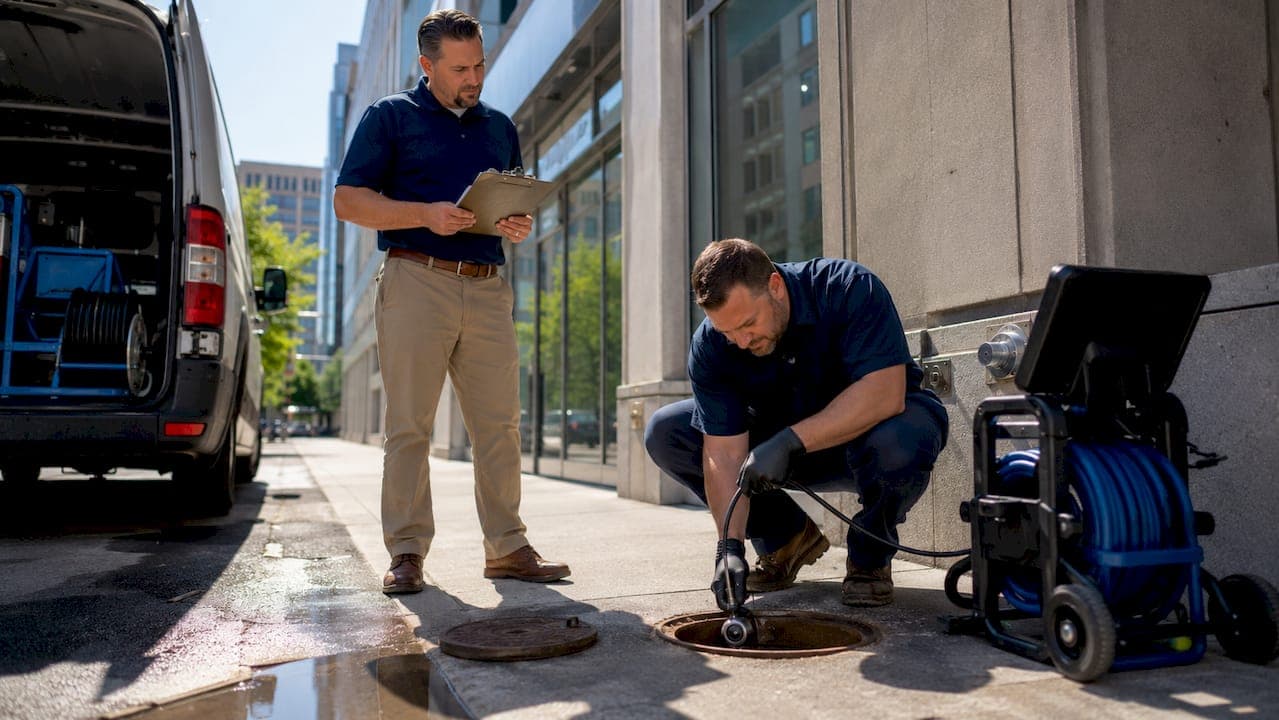
Commercial sewer line inspection is defined as a professional diagnostic process using CCTV camera technology to assess the internal condition of underground sewer pipes without excavation. For commercial property managers and business owners, the benefits of sewer inspections extend far beyond simple clog detection. Early problem identification, precise repair targeting, and documented condition data protect property value, reduce emergency costs, and support regulatory compliance. The EPA has documented catastrophic failures like the Potomac Interceptor collapse that discharged 240 million gallons of untreated sewage, a direct consequence of deferred inspection and maintenance. Routine commercial plumbing inspections prevent exactly that kind of outcome.
1. What issues can sewer line inspections detect early?
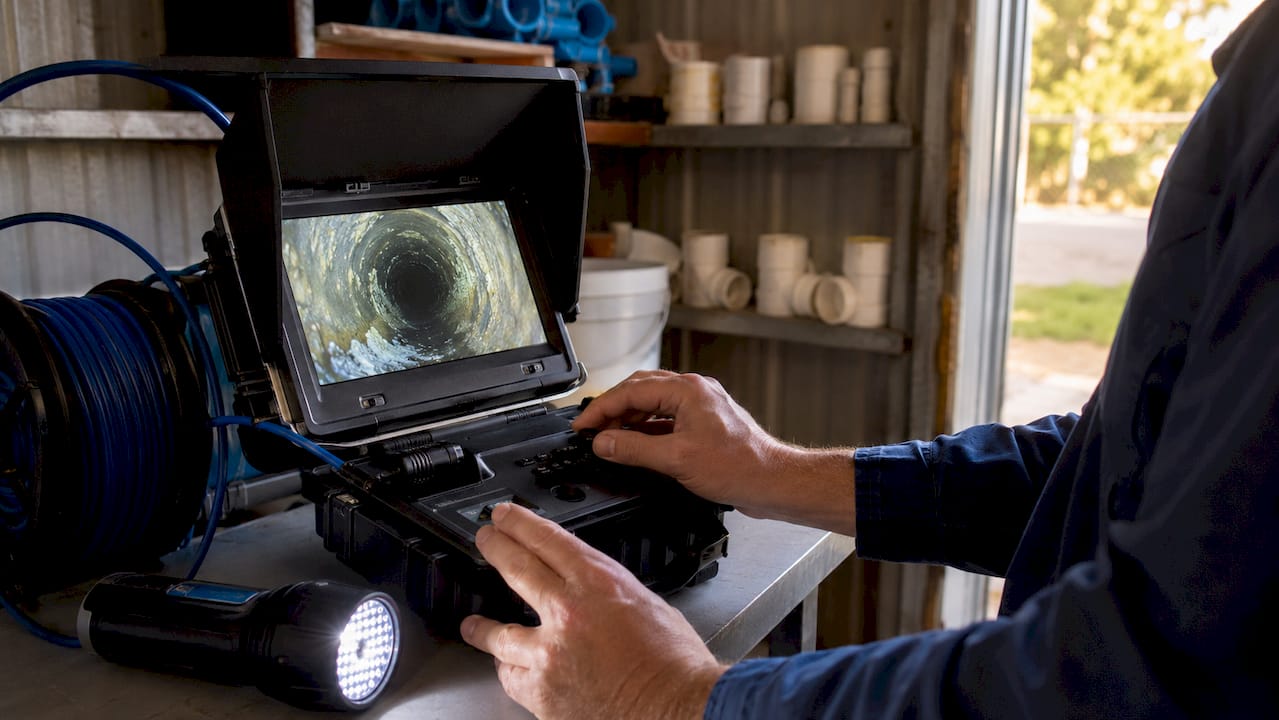
Camera inspections reveal problems that no surface-level walkthrough can find. High-resolution CCTV equipment travels through your pipe network and transmits live footage of conditions inside, giving technicians a clear picture of what is actually happening underground.
The most common issues detected include:
- Pipe cracks and fractures caused by ground movement, age, or thermal stress
- Root intrusion from trees and shrubs penetrating joints and restricting flow
- Grease and debris blockages that build up in commercial kitchens and high-traffic facilities
- Pipe bellies and offsets where sections have shifted out of alignment, creating low spots that trap waste
- Infiltration points where groundwater enters the system, increasing flow volume and treatment costs
- Deteriorating pipe walls showing corrosion, scaling, or structural thinning
Routine inspections identify clogs, leaks, pipe deterioration, and root intrusion early, preventing emergency shutdowns and irreversible property damage. That matters enormously in commercial settings where a single sewer backup can close a restaurant, hotel, or office building for days.
Camera inspections use existing cleanout access points, so there is no digging required during the diagnostic phase. Non-invasive inspections allow the process to occur during normal business operations without disrupting tenants or customers. For a retail center or multi-tenant office building, that distinction is significant.
Pro Tip: Schedule your inspection during off-peak hours or low-occupancy periods, such as early mornings or weekends, to minimize any minor disruption from access point work.
2. How inspections reduce long-term repair and operational costs
The financial case for regular commercial plumbing inspections is straightforward. Without visual evidence of what is inside your pipes, every repair decision is a guess. Guesswork leads to repeated service calls, temporary fixes, and eventually a crisis that forces expensive emergency work.
Video evidence replaces assumptions with documented findings, narrowing repair options to treatments that actually address the root cause. A technician who can see a pipe belly on camera will not recommend hydro jetting as the solution. That precision eliminates wasted labor and materials.
The cost comparison is striking. A $1,500 inspection can prevent six-figure repair costs, with video pipe inspections delivering an estimated return on investment of 20x to 50x by avoiding emergency repairs and supporting capital expenditure forecasting. For a commercial property owner managing a multi-million dollar asset, that ratio makes routine inspection one of the highest-value maintenance decisions available.
Targeted repairs also mean less excavation. When a technician knows the exact location and nature of a defect, trenchless repair methods like pipe lining or spot rehabilitation become viable. Those methods cost a fraction of open-cut excavation and cause far less disruption to parking lots, landscaping, and building access.
Reactive cleaning or exploratory digging without inspection often misses root causes like bellies or offsets, leading to repeated disruptions and compounding costs over time.
Pro Tip: Build sewer inspection into your annual property maintenance budget as a fixed line item. Treating it as optional means it gets skipped during budget cuts, which is exactly when deferred problems become expensive emergencies.
3. How NASSCO PACP coding supports maintenance planning
The industry standard for documenting sewer inspection findings is the NASSCO PACP system, which stands for Pipeline Assessment and Certification Program. Understanding how this system works gives commercial property managers a significant advantage in long-term asset management.
NASSCO PACP assigns condition grades from 1 to 5 across defect families including cracks, root intrusion, infiltration, and construction anomalies. A grade of 1 indicates a minor defect with no immediate action required. A grade of 5 flags a critical structural failure demanding urgent intervention. This grading scale transforms raw inspection footage into a prioritized maintenance schedule.
| PACP Grade | Defect Severity | Typical Action |
|---|---|---|
| 1 | Minor, no structural concern | Monitor at next scheduled inspection |
| 2 | Light defect, early-stage deterioration | Schedule preventive maintenance |
| 3 | Moderate defect, functional impact | Plan targeted repair within 12 months |
| 4 | Severe defect, structural risk | Prioritize repair within 90 days |
| 5 | Critical failure, immediate hazard | Emergency repair required |
Standardized defect reports with location and severity coding allow property managers to plan maintenance during low-occupancy periods and avoid reactive repairs. That scheduling flexibility is something you simply cannot achieve without coded inspection data.
PACP coding also improves communication across your team. When your property manager, structural engineer, and plumbing contractor all reference the same grading system, decisions on spot rehabilitation versus full pipe replacement are based on shared, objective data rather than competing opinions. Standard defect coding is the foundation of consistent grading and rehabilitation prioritization across different inspectors and regions.
Pro Tip: Request PACP-coded inspection reports from your contractor, not just raw video footage. Coded reports are the format that supports capital expenditure forecasting and insurance documentation.
4. Why inspections matter for compliance and environmental risk
Commercial properties face regulatory exposure that residential properties do not. Sanitary sewer overflows trigger EPA enforcement, generate public health liability, and create reputational damage that can affect tenant retention and property valuation.
The EPA's commitment to this issue is reflected in funding levels. Approximately $80 million in Sewer Overflow and Stormwater Reuse grants was allocated for 2025 to 2026, targeting municipal programs aimed at preventing sewage overflows and environmental contamination. That scale of federal investment signals how seriously regulators treat sewer system failures.
For commercial property managers, the compliance benefits of regular inspections include:
- Documented due diligence that demonstrates proactive maintenance to regulators and insurers
- Identification of illegal connections where stormwater or non-approved discharge enters the sanitary system
- Detection of infiltration and inflow points that increase municipal treatment costs and can trigger compliance notices
- Evidence for regulatory reporting when a property is subject to environmental monitoring requirements
- Reduced liability exposure in the event of a sewage release, since documented inspection history shows responsible management
Preventing backflow contamination and sewage overflows through regular inspections directly reduces regulatory violations and contamination risk at commercial sites. A single overflow event at a commercial property can result in fines, mandatory remediation costs, and legal claims from neighboring properties or tenants.
The documentation produced by professional inspections also supports environmental due diligence during property transactions. Video inspections provide legally defensible evidence that can shift negotiations or require pre-closing repairs, protecting buyers and sellers alike from undisclosed liability.
5. How inspections support smarter property management decisions
Proactive sewer inspections transform maintenance from reactive fixes into data-driven risk management, reducing emergency costs and giving property managers control over their maintenance calendar. That shift from reactive to proactive is the defining advantage of routine commercial sewer inspections.
When you have current inspection data, you can make decisions based on actual pipe condition rather than age estimates or service history. A 40-year-old cast iron pipe with a PACP grade of 2 may have years of service life remaining. A 15-year-old PVC line with a grade of 4 needs attention now. Without inspection data, you are managing by assumption.
Inspection data also integrates directly into commercial drain maintenance programs, giving contractors the specific information they need to target cleaning and treatment where it matters most. That precision reduces the frequency of service calls and extends the intervals between major interventions.
For property managers overseeing multiple buildings or a large campus, CCTV inspection data creates a portfolio-level view of infrastructure condition. You can rank assets by risk, allocate repair budgets to the highest-priority systems, and demonstrate responsible stewardship to building owners, lenders, and insurers.
Key takeaways
Commercial sewer line inspection benefits are most fully realized when inspections are scheduled regularly, documented with NASSCO PACP coding, and integrated into a structured maintenance and capital planning program.
| Point | Details |
|---|---|
| Early detection prevents crises | Camera inspections identify cracks, root intrusion, and pipe failures before they cause shutdowns or overflows. |
| Inspections deliver strong ROI | A single inspection can prevent six-figure emergency repair costs, with estimated returns of 20x to 50x. |
| PACP coding enables planning | Standardized defect grades from 1 to 5 support prioritized repair scheduling and capital expenditure forecasting. |
| Compliance risk is real | Documented inspection history reduces regulatory liability and supports due diligence in property transactions. |
| Proactive beats reactive | Data-driven maintenance programs reduce emergency costs and give property managers control over repair timing. |
Why I stopped treating sewer inspections as optional
After working in commercial plumbing for over 15 years, the pattern I see most often is this: a property manager defers inspection for two or three years, a slow-developing problem reaches a critical point, and a repair that would have cost a few thousand dollars becomes a five-figure emergency. The math is never close.
What surprises most property managers is how much information a single inspection produces. You are not just finding out whether the pipes are blocked. You are getting a condition map of your entire underground infrastructure, coded by severity, with footage you can share with engineers, insurers, and contractors. That documentation changes every conversation you have about your property.
The other thing I have seen consistently is that properties with regular inspection programs spend less on plumbing overall, not just on emergencies. When you know exactly where a problem is and what is causing it, you stop paying for guesswork. Trenchless repairs, targeted cleaning, and scheduled spot lining cost far less than the exploratory digging that happens when nobody knows what is underground.
My advice to any commercial property manager reading this: build inspection into your plumbing service contract as a fixed annual item. Treat it the same way you treat fire system testing or roof inspections. The pipes under your building carry the same risk profile as any other critical infrastructure, and they deserve the same level of scheduled attention.
— Kirk
Protect your property with professional sewer camera inspections
Drainpointplumbing provides professional sewer camera inspection services for commercial properties across Santa Barbara County and the Santa Maria area. Using high-resolution CCTV equipment and NASSCO-standard reporting, the team delivers precise diagnostic findings without unnecessary excavation or disruption to your operations. Whether you manage a retail center, office complex, or multi-tenant building, Drainpointplumbing's 15-plus years of commercial plumbing experience means you get accurate condition data and clear repair recommendations. Request a free quote to schedule a commercial inspection and start managing your sewer infrastructure with real evidence instead of guesswork.
FAQ
What do commercial sewer line inspections typically detect?
Camera inspections detect cracks, root intrusion, pipe offsets, grease blockages, infiltration points, and structural deterioration. These findings cover both immediate failures and developing problems that would escalate without intervention.
How often should commercial properties schedule sewer inspections?
Most commercial properties benefit from annual inspections, with higher-frequency checks for properties with heavy usage, older pipe materials, or a history of recurring blockages. Properties undergoing transactions should schedule an inspection as part of due diligence.
What is NASSCO PACP and why does it matter for property managers?
NASSCO PACP is the industry-standard defect coding system that grades sewer pipe conditions from 1 (minor) to 5 (critical). Coded reports give property managers a consistent, documented basis for prioritizing repairs and forecasting capital expenditures.
Can sewer inspections help during a commercial property purchase?
Video inspection reports provide legally defensible documentation of pipe condition that can shift purchase negotiations, require pre-closing repairs, or adjust pricing to reflect infrastructure risk.
Do sewer inspections require shutting down business operations?
Camera inspections use existing access points and do not require excavation, so most commercial inspections proceed without interrupting normal business operations.