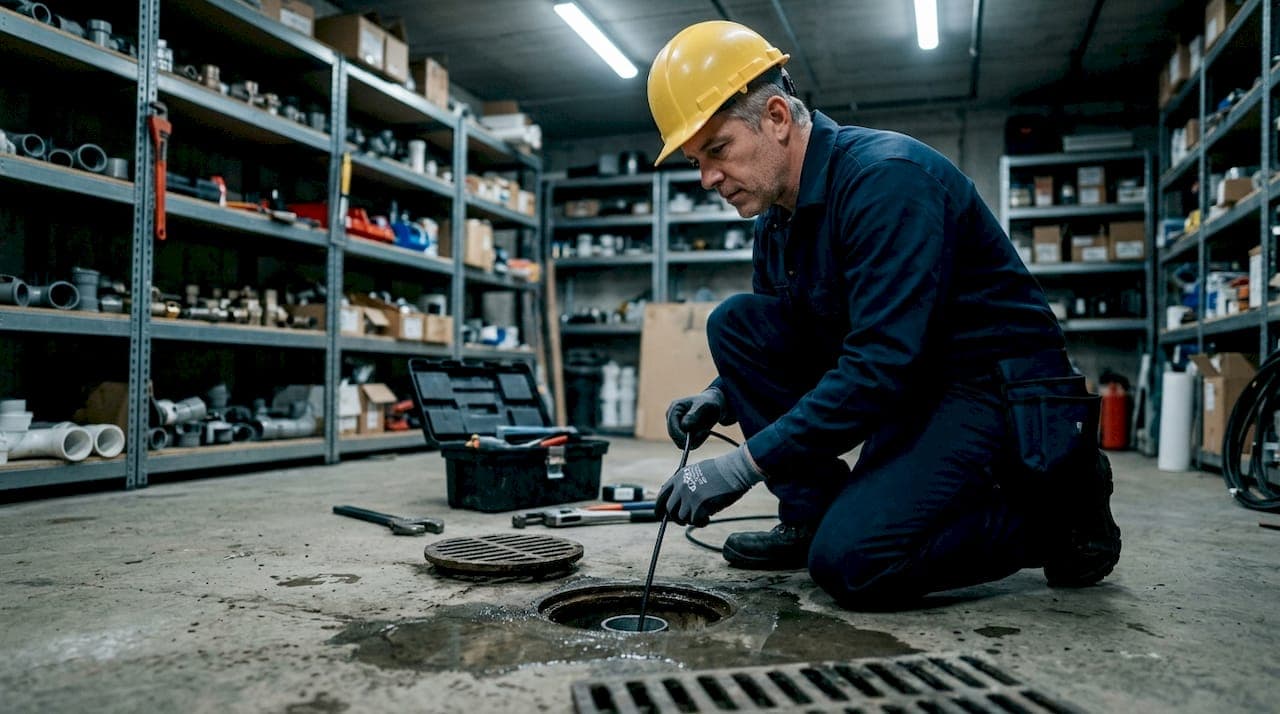
Commercial drain failure is defined as the partial or complete loss of drainage function in a commercial building's pipe network, caused by blockages, structural damage, or improper connections. Examples of commercial drain failures appear across every property type, from restaurants and hotels to office complexes and retail centers. Fats, oils, and grease (FOG), tree root intrusion, pipe collapse, and illegal sewer connections are the four most common failure categories. Recognizing these failure types early is the difference between a scheduled repair and an emergency shutdown. Drainpointplumbing has responded to all four categories across Santa Barbara County properties.
1. Examples of commercial drain failures: FOG blockages in food service
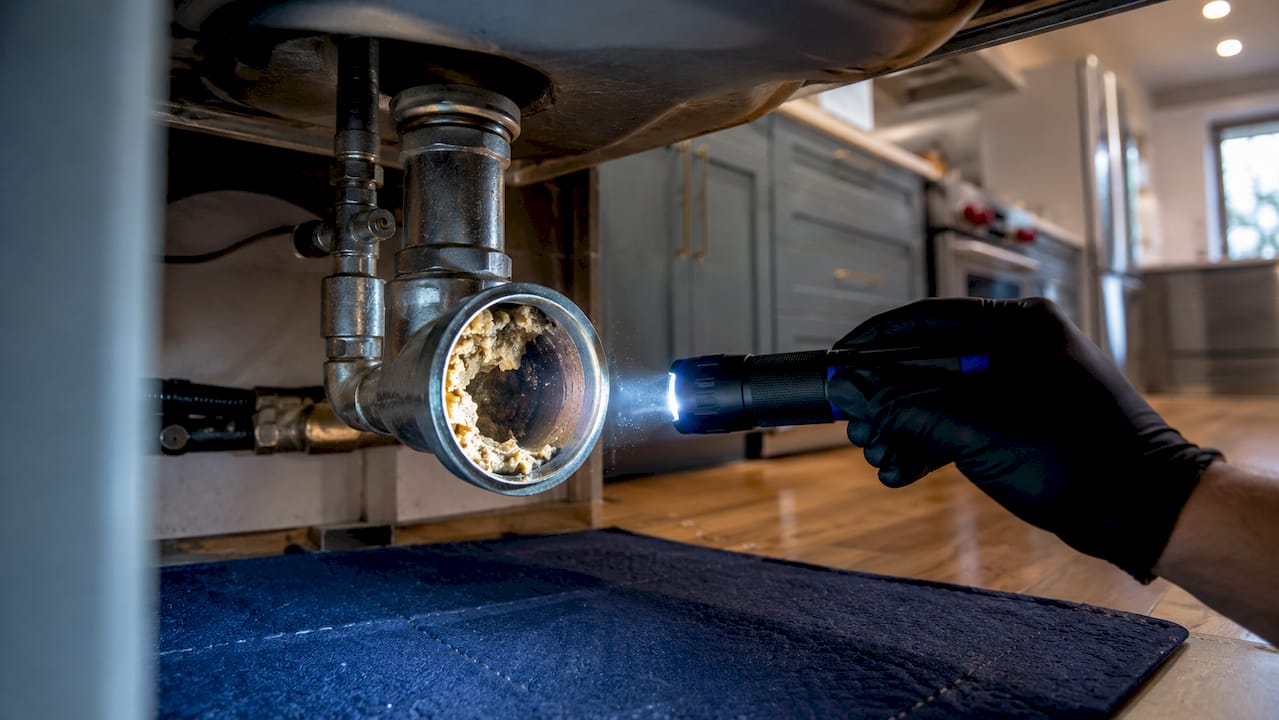
FOG is the leading cause of blockages in commercial food service facilities. Grease solidifies inside pipes, coats the interior walls, and progressively narrows the flow path until drainage stops entirely. A typical restaurant kitchen drain can accumulate enough FOG buildup to cause a full blockage within weeks if grease traps are not maintained on schedule.
The failure pattern is predictable. Drains slow first, then back up during peak service hours when hot water pushes grease deeper into the line. By the time standing water appears in floor drains, the blockage is usually well past the trap and into the main line.
Pro Tip: Schedule grease trap cleaning at least once per month in high-volume kitchens. A full trap pushes FOG directly into the drain line, accelerating blockage timelines significantly.
2. Tree root intrusion in outdoor commercial drain lines
Tree root intrusion is one of the most destructive and least visible commercial drainage problems. Roots enter pipes through hairline cracks or loose joints, then expand inside the pipe as they grow. A single mature tree near a parking lot drain or sewer lateral can cause complete pipe obstruction within one to two growing seasons.
The damage compounds over time. Roots that are cleared without repairing the entry point will regrow within months. Recurring blockages in the same location after cleaning nearly always indicate a structural problem like root intrusion that requires camera inspection to confirm and address properly.
3. Pipe collapse and structural failure
Pipe collapse is a severe drain issue that occurs when the pipe wall fails under external load or internal corrosion. Ground movement, frost, and nearby construction accelerate pipe corrosion and can cause structural failure before any visible symptoms appear at the surface. Older commercial properties with clay or cast iron drain lines are especially vulnerable.
A collapsed pipe does not just block flow. It creates a void in the soil above it, which can undermine paving, flooring, or building foundations. Property managers who notice unexplained surface depressions near drain lines should treat that as an urgent diagnostic signal, not a cosmetic issue.
4. Illegal and improper sewer connections
Improper drain connections are a compliance risk that many property managers inherit without knowing it. In one documented case, a Nashville restaurant experienced repeated sewer backups that standard clearing could not resolve. A CCTV inspection revealed that the sanitary sewer line had been tied directly to the storm drain, a connection that is illegal under standard municipal codes and caused backups every time storm flow increased.
Older commercial buildings are particularly prone to this problem. Renovations done without permits, or work completed before modern plumbing codes were enforced, frequently leave behind improper connections. Thorough system mapping during any renovation is the only reliable way to identify these connections before they trigger regulatory action.
5. Debris and sediment accumulation in outdoor drains
Physical debris buildup in outdoor commercial pipes rapidly reduces drainage capacity and leads to blockages. Mud, leaves, sand, and construction waste accumulate in catch basins and underground drain lines, particularly in properties with large paved areas, loading docks, or landscaping adjacent to drain inlets.
This failure type is common in retail centers and industrial properties. The debris does not cause an immediate crisis. It builds gradually until a heavy rain event overwhelms the reduced capacity and causes surface flooding. Parking lot flooding during routine rain is a reliable early indicator of sediment accumulation in the underground drain network.
6. How symptoms point to specific failure types
Warning signs in commercial drainage are not random. Each symptom maps to a specific failure category, and reading them correctly saves significant diagnostic time.
- Slow drainage across multiple fixtures points to a blockage in the main line, not individual branch lines. FOG accumulation or debris in the main sewer lateral is the most common cause.
- Gurgling sounds from floor drains indicate a partial blockage or venting problem. Air is being displaced by water trying to pass a restriction.
- Foul odors without visible backup often signal a dry trap, a cracked pipe leaking sewer gas, or a partial blockage trapping decomposing material.
- Standing water in a single fixture area points to a localized branch line blockage, often FOG or debris close to that drain.
- Recurring backups in the same location after professional clearing confirm a structural defect. Repeated blockages confirm structural problems like misaligned joints, root intrusion, or pipe collapse that basic clearing cannot fix.
Managers who treat drainage reactively face higher emergency repair costs and greater shutdown risk than those who act on early warning signs. A slow drain reported by kitchen staff on a Tuesday can become a full backup that closes the facility by Friday if left unaddressed.
7. Causes of drain failures and how to prevent them
The causes of drain failures in commercial properties fall into four categories: operational misuse, environmental stress, structural aging, and installation errors.
Operational misuse includes disposing of FOG, food solids, wipes, and paper products through drains not designed to handle them. Environmental stress covers ground movement, freeze-thaw cycles, and vibration from nearby construction. Structural aging affects any pipe material over time, with clay and cast iron lines showing accelerated degradation after 30 to 40 years of service. Installation errors, including improper slope, undersized pipe diameter, and illegal connections, create failure conditions from day one.
Pro Tip: Schedule a CCTV drain inspection every 12 to 24 months as a baseline. This interval is the recognized industry standard for professional commercial drain servicing and catches structural issues before they become emergencies.
Drain maintenance best practices combine three layers of protection. First, grease control programs with regular trap cleaning prevent FOG accumulation. Second, scheduled professional inspections every 12–24 months catch structural deterioration early. Third, staff training on what can and cannot enter commercial drains reduces the operational misuse that accelerates every other failure type.
8. How professional diagnostic technology identifies hidden failures
CCTV camera inspections are the standard diagnostic tool for commercial drain failures that cannot be resolved by basic clearing. Diagnostic cameras enable quick identification of hidden defects and illegal connections that are invisible from the surface. Push cameras handle straight runs and branch lines. CCTV crawlers navigate longer main lines and produce footage that can be reviewed and archived for future reference.
Dye testing confirms whether drain systems are connected correctly. A technician introduces colored dye at one point and observes where it exits. This method identified the illegal storm drain connection in the Nashville restaurant case and prevented a regulatory shutdown.
Hydro jetting uses high-pressure water to clear FOG, debris, and root intrusion more thoroughly than mechanical snaking. It also cleans pipe walls rather than simply punching a hole through a blockage, which extends the time before the next service is needed.
The combination of camera inspection and hydro jetting is the most effective protocol for commercial properties with recurring drainage problems. Camera first, then jetting. Jetting without a prior inspection risks damaging already-compromised pipe sections.
Commercial sewer line inspections give property managers documented evidence of drain system condition. That documentation supports insurance claims, regulatory compliance, and capital planning for pipe replacement.
Key takeaways
Commercial drain failures follow predictable patterns. Identifying the failure type early, through symptoms and professional diagnostics, is the most cost-effective strategy available to property managers.
| Point | Details |
|---|---|
| FOG is the top failure cause | Grease trap maintenance and staff training are the primary defenses in food service properties. |
| Recurring blockages signal structural damage | A drain that blocks repeatedly after clearing needs a camera inspection, not another snake. |
| Illegal connections create compliance risk | Older buildings require system mapping during renovations to confirm legal drain connections. |
| CCTV inspections every 12–24 months | This industry-standard interval catches structural deterioration before it becomes an emergency. |
| Early symptoms are diagnostic signals | Slow drains, gurgling, and odors each point to specific failure types that guide the repair approach. |
What 15 years of drain calls taught me about property managers
The property managers who avoid major drain emergencies share one habit. They treat their drain system as infrastructure, not as a problem to address when it breaks. That sounds obvious, but the majority of commercial drain calls I have seen could have been prevented with a single annual inspection.
The most expensive drain failures I have encountered were not caused by unusual circumstances. They were FOG blockages that were ignored for months, or tree roots that were cleared twice without anyone asking why they kept coming back. The pattern is always the same: a symptom appears, it gets addressed at the surface level, and the underlying cause is left to worsen.
The other mistake I see regularly is assuming that a drain that clears easily is a drain that is fine. A snake can punch through a partial blockage and restore flow without touching the root intrusion or pipe misalignment that caused it. Two months later, the same drain backs up again, and the property manager is surprised. Camera inspection removes the guesswork entirely.
My recommendation for any commercial property manager is to schedule a professional drain assessment before a problem appears, not after. The cost of a scheduled inspection is a fraction of the cost of an emergency repair, and it gives you documented evidence of system condition that is useful for budgeting, insurance, and compliance.
— Kirk
Drainpointplumbing's commercial drain services in Santa Barbara County
Commercial drain problems rarely wait for a convenient time. Drainpointplumbing provides professional drain inspections and cleaning for commercial properties across Santa Barbara County, using CCTV camera technology and hydro jetting to diagnose and resolve failures at the source.
With over 15 years of experience and 24/7 emergency plumbing response, Drainpointplumbing handles everything from routine grease trap maintenance to complex structural repairs. Property managers can request a free quote or schedule a consultation directly through the website. Getting ahead of a drain failure is always less expensive than responding to one.
FAQ
What is the most common cause of commercial drain failure?
Fats, oils, and grease (FOG) are the leading cause of blockages in commercial food service drainage. FOG solidifies inside pipes and progressively reduces flow until drainage stops completely.
How often should commercial drains be professionally inspected?
The industry-standard interval for professional commercial drain servicing is every 12–24 months. Properties with high-volume kitchens or older pipe systems benefit from annual inspections.
What does a recurring drain blockage mean?
A drain that blocks repeatedly after clearing nearly always indicates a structural defect such as root intrusion, pipe misalignment, or collapse. Camera inspection is required to identify and fix the underlying cause.
Can illegal drain connections cause a business shutdown?
Yes. Sanitary sewer lines connected to storm drains violate municipal codes and can trigger regulatory action, fines, or forced closure until the connection is corrected.
What is hydro jetting and when is it used?
Hydro jetting uses high-pressure water to clear FOG, debris, and root material from commercial drain lines. It is most effective after a camera inspection confirms the pipe is structurally sound enough to handle the pressure.