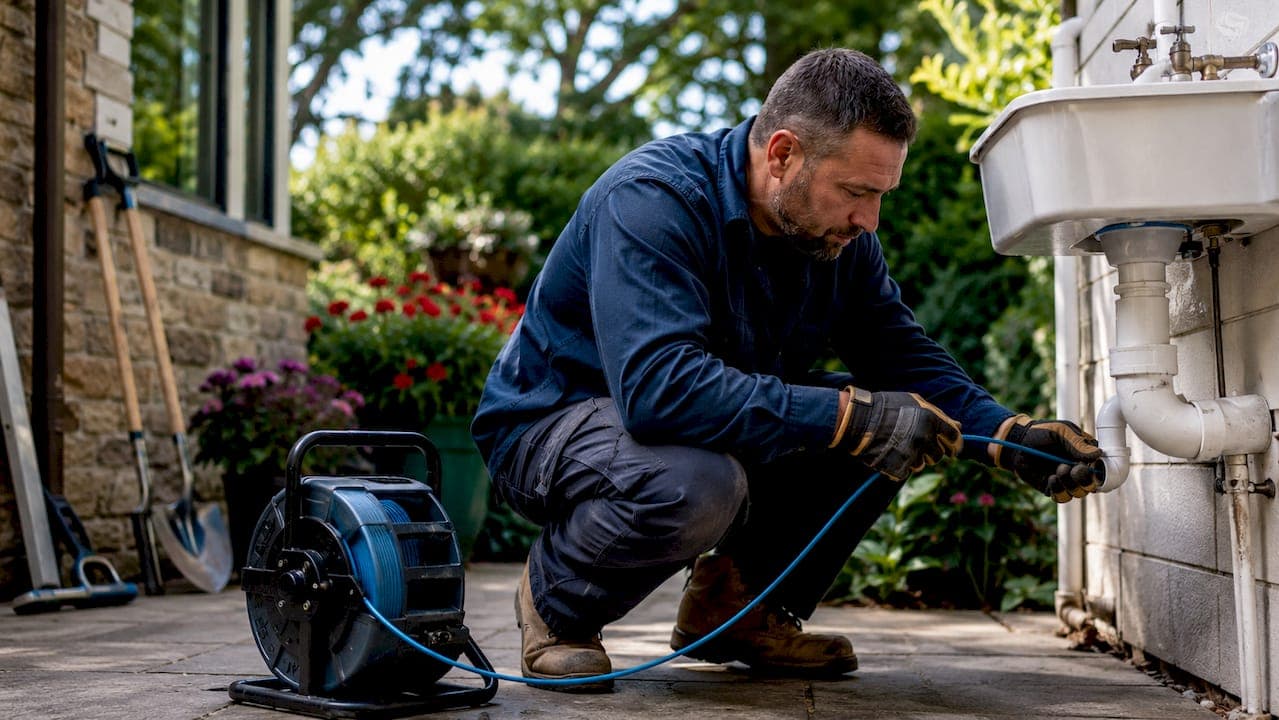
Drain camera inspection is a diagnostic method where a waterproof camera travels through your pipes and transmits live video of the interior condition. Combined with professional drain cleaning, hydro jetting services, and repiping plumbing services, this trio of solutions covers every stage of pipe diagnosis and repair. Drain camera inspection, drain cleaning, hydro jetting, and repipes are the three core tools modern plumbers use to fix what you cannot see. A sewer camera inspection costs far less than a misdiagnosed repair. Knowing how each service works helps you make smarter decisions before you spend a dollar.
How does drain camera inspection work before cleaning or repairs?
A drain camera inspection uses a flexible, waterproof camera mounted on a cable that a plumber feeds directly into your pipes. The camera transmits live footage to a monitor, showing blockages, cracks, root intrusions, pipe bellies, and corrosion in real time. That footage tells the plumber exactly what treatment your system needs before any work begins.
The camera-first approach has become the industry standard because it prevents unnecessary damage and wasted expense. Without it, a plumber is guessing. With it, every decision is based on what is actually inside your pipes.
Here is what a camera inspection reveals:
- Blockage type and location: grease buildup, root intrusion, or foreign objects
- Pipe condition: cracks, corrosion, offsets, or collapsed sections
- Pipe material: helps determine whether hydro jetting is safe or repiping is needed
- Flow problems: bellies or low spots where water pools and debris collects
A standard residential inspection takes 30–60 minutes. Reputable companies record and share footage with clients so you can see exactly what was found. That transparency protects you from being upsold on repairs you do not need.
Pro Tip: Ask your plumber for a copy of the inspection video before approving any repair work. If they refuse, find someone else.
Hydro jetting vs. traditional drain cleaning: which one actually works?
Hydro jetting is a drain cleaning method that uses water pressure between 1,500 and 4,000 PSI to blast through blockages and scour the entire interior wall of a pipe. A standard session runs 30–60 minutes and uses 4–8 gallons of water per minute. That is a fundamentally different process from mechanical snaking, which most homeowners have experienced.
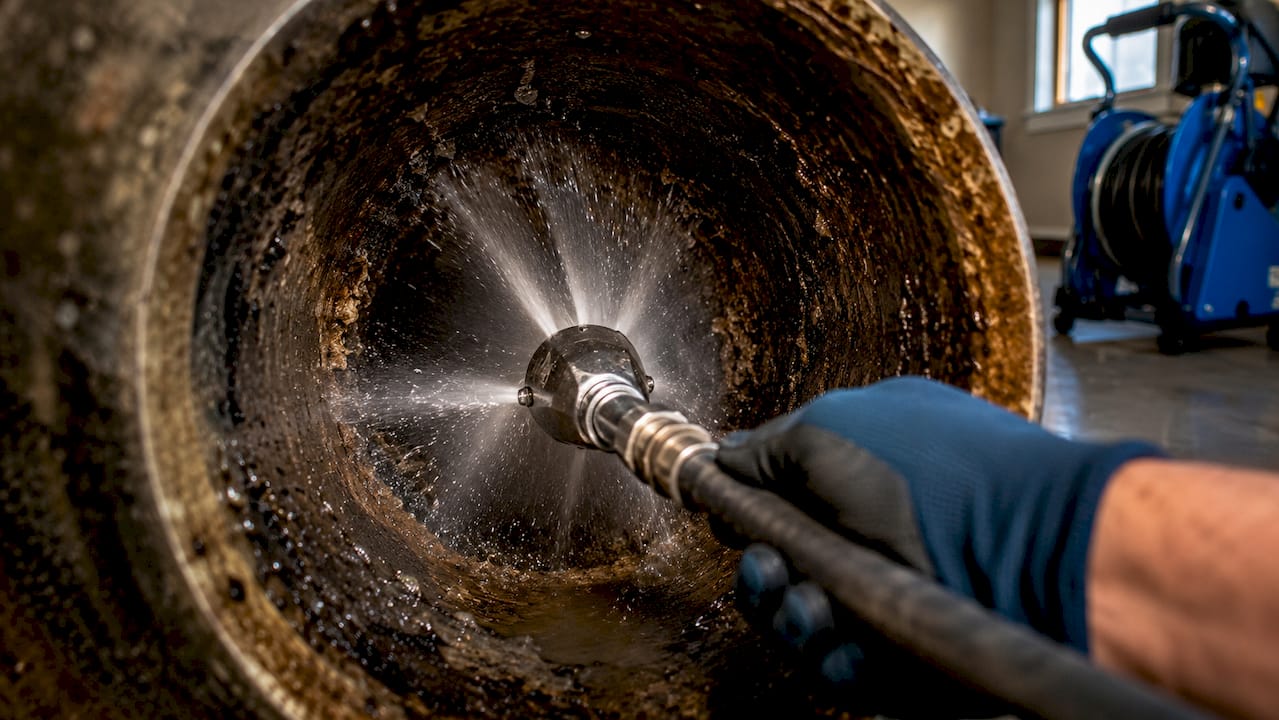
Mechanical snaking only punches a hole through a clog. It does not remove the grease, scale, or root material clinging to the pipe walls. Hydro jetting removes all of it. That difference explains why snaked drains often clog again within weeks while jetted drains stay clear far longer.
Hydro jetting vs. snaking: a direct comparison
| Factor | Mechanical snaking | Hydro jetting |
|---|---|---|
| Method | Auger punches through clog | High-pressure water scours pipe walls |
| Effectiveness | Clears pathway only | Removes grease, scale, roots, and debris |
| Duration | 15–30 minutes | 30–60 minutes |
| Cost | $150–$350 per session | $350–$600 per session |
| Best for | Simple clogs, soft blockages | Heavy buildup, recurring clogs, root intrusion |
| Pipe wall cleaning | No | Yes |
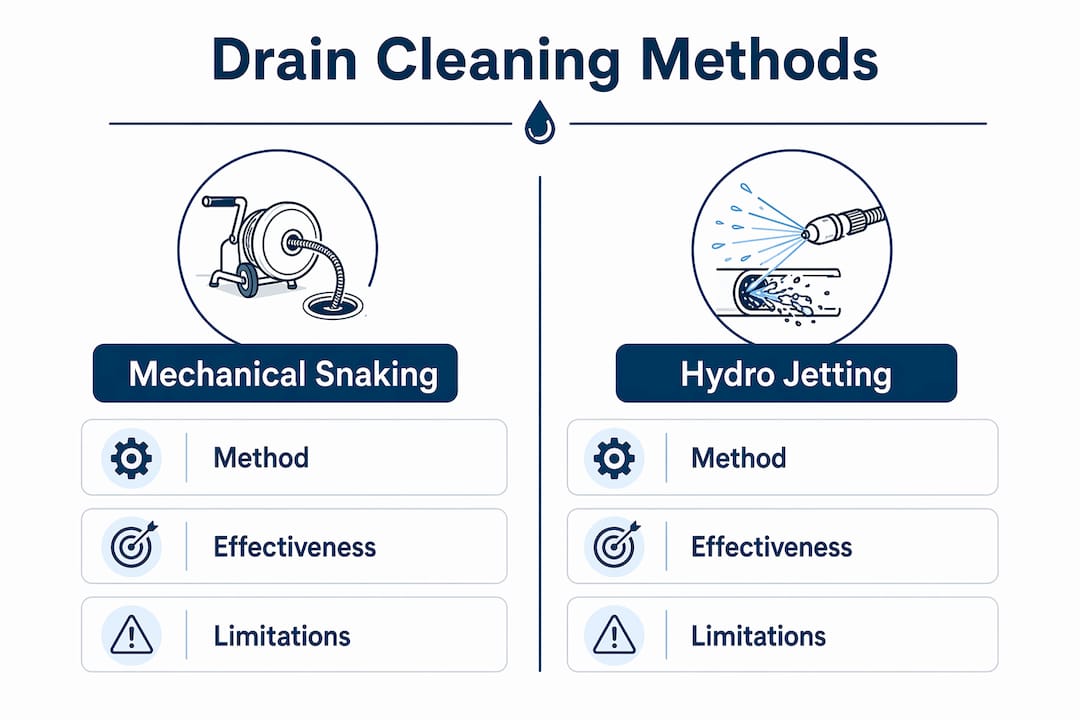
The nozzle design is what makes hydro jetting so thorough. Forward jets break through the clog while rear jets spray outward to clean the pipe wall as the nozzle moves. Nothing mechanical can replicate that.
However, hydro jetting is not appropriate for every situation. High-pressure jetting on compromised pipes can turn a hairline crack into a full collapse. That is exactly why a camera inspection must come first. If the camera reveals structural damage, jetting is off the table and repiping becomes the conversation.
For a deeper look at how this method works in residential settings, the hydro jetting homeowner guide from Drainpointplumbing covers the process in plain language.
When is repiping necessary instead of cleaning?
Repiping is the replacement of existing pipes with new material, typically copper, PEX, or CPVC, when cleaning and repairs can no longer restore function. It is not a last resort. It is the correct solution when the pipe itself has failed structurally. Full sewer line replacement costs between $3,000 and $7,000 depending on damage severity and location. That number sounds high until you compare it to years of repeated service calls that never solve the underlying problem.
Camera inspection is what makes the repiping decision defensible. Without footage, a plumber recommending a full repipe is asking you to take their word for it. With footage, you can see the collapsed section, the offset joint, or the pipe belly yourself.
Signs that cleaning will not fix the problem:
- Recurring clogs that return within weeks of professional cleaning
- Corrosion or rust visible in your water or confirmed by camera
- Root intrusion that has cracked or displaced pipe sections
- Pipe bellies where the line has sagged and water pools permanently
- Offset joints where pipe sections have shifted out of alignment
- Collapsed sections that no amount of pressure can clear
Recurring clogs often signal structural pipe damage such as offsets or root intrusion. A camera inspection identifies these conditions and ends the cycle of ineffective treatments. Homeowners who skip straight to repeated snaking spend more over two years than a single repipe would have cost.
Repiping also integrates with other plumbing upgrades. If your home has aging galvanized steel or cast iron pipes, replacing them with PEX during a repipe improves water pressure, reduces corrosion risk, and extends system life by decades. The whole house repipe guide from Drainpointplumbing explains what that process looks like from start to finish.
How to maintain your plumbing system and avoid costly emergencies
Proactive drainage system maintenance costs a fraction of emergency repairs. The schedule is simpler than most homeowners expect.
-
Schedule professional drain cleaning every 1–2 years. Experts recommend this interval for average homes. Grease-heavy kitchens, older plumbing, or high-occupancy properties need attention more frequently, sometimes annually.
-
Add a camera inspection every 3–5 years. Early detection of root intrusion or pipe degradation costs far less to address than a full emergency repair. Think of it as a physical exam for your plumbing.
-
Use hydro jetting as preventive maintenance. Most homeowners only call for jetting after a backup. Scheduling it proactively removes buildup before it becomes a blockage. This is especially valuable for restaurants, rental properties, and older homes.
-
Watch for these warning signs between service visits:
- Slow drains in multiple fixtures at the same time
- Gurgling sounds from toilets or floor drains
- Sewage odors inside the home
- Water backing up into a tub or shower when you flush
-
Budget for maintenance, not just emergencies. A $400 hydro jetting session every two years is far less disruptive than a $5,000 emergency sewer repair. Property managers especially benefit from building drain maintenance into annual operating budgets.
On the environmental side, hydro jetting uses only water. No chemical drain cleaners enter the sewer system, which matters for homeowners on septic systems or those in areas with strict water quality regulations in Santa Barbara County.
Pro Tip: If you manage rental properties, document every camera inspection and keep the video files. They protect you from tenant damage claims and give you a clear maintenance history when selling the property.
For a full breakdown of your options, the residential drain cleaning guide from Drainpointplumbing covers every method with clear comparisons.
Key takeaways
Camera inspection, hydro jetting, and repiping work as a system: inspection identifies the problem, jetting cleans what is structurally sound, and repiping replaces what cleaning cannot fix.
| Point | Details |
|---|---|
| Camera inspection comes first | Always inspect before jetting or repiping to avoid turning minor issues into major failures. |
| Hydro jetting outperforms snaking | Jetting scours the full pipe wall; snaking only punches through the clog and leaves buildup behind. |
| Recurring clogs signal structural damage | Repeated blockages mean the pipe itself needs repair or replacement, not another cleaning. |
| Repiping is a long-term investment | A $3,000–$7,000 repipe ends years of repeated service calls that never solve the root cause. |
| Preventive maintenance saves money | Scheduling cleaning every 1–2 years costs far less than emergency sewer repairs. |
What 15 years of drain calls taught me about pipe diagnostics
The biggest mistake I see homeowners make is calling for a snake when what they actually need is a camera. Snaking feels like a solution because the water drains again. But if the clog comes back in three weeks, the snake never addressed the cause. It just bought time.
The shift to camera-first diagnosis changed everything about how good plumbers work. Before you touch a pipe, you know what you are dealing with. That knowledge changes the recommendation every time. A plumber who skips the camera and goes straight to jetting is either cutting corners or does not know what pressure can do to a compromised line.
I have also watched homeowners spend $1,500 over two years on repeated snaking for a drain that needed a $600 hydro jet and a $200 camera inspection from the start. The math is not complicated. The hesitation is always about the upfront cost of doing it right.
Repiping gets the most pushback. Nobody wants to hear that their pipes need to be replaced. But cast iron pipes in a 1960s home have a finite life. When the camera shows you a pipe that looks like the inside of a rusted car door, no amount of cleaning changes what you are looking at.
My advice: find a plumber who shows you the footage, explains what it means, and gives you options. If they cannot do all three, keep looking.
— Kirk
Drainpointplumbing: drain camera, hydro jetting, and repipe services in Santa Maria
Drainpointplumbing serves homeowners and property managers across Santa Barbara County with over 15 years of hands-on experience in sewer camera inspections, hydro jetting, and full repiping projects. Every service starts with a documented camera inspection so you see exactly what is in your pipes before any work begins.
Pricing is transparent and upfront. No surprise charges after the fact. Whether you need a one-time drain cleaning service or a complete residential plumbing repair including repiping, Drainpointplumbing brings the equipment and the expertise to get it done right. Emergency services are available 24/7. Senior and military discounts apply. Request a free quote today and get a clear answer about what your plumbing actually needs.
FAQ
What does a drain camera inspection cost?
Drain camera inspections typically range from $100 to $300 for a residential property. The cost depends on pipe length, access points, and whether the footage is recorded and provided to the homeowner.
How long does hydro jetting take?
Standard hydro jetting takes 30–60 minutes for a residential drain line. Larger or more severely blocked systems may take longer depending on buildup severity.
Can hydro jetting damage my pipes?
Yes, if pipes are already cracked or structurally compromised. High-pressure jetting on damaged pipes can cause a collapse. A camera inspection before jetting prevents this outcome.
How do I know if I need repiping instead of cleaning?
Recurring clogs that return quickly after professional cleaning, visible corrosion, or camera footage showing collapsed or offset pipe sections all indicate that cleaning will not resolve the problem.
How often should I schedule professional drain cleaning?
Most homes need professional cleaning every 1–2 years. Older homes, high-use kitchens, and rental properties benefit from annual service to prevent backups and extend pipe life.