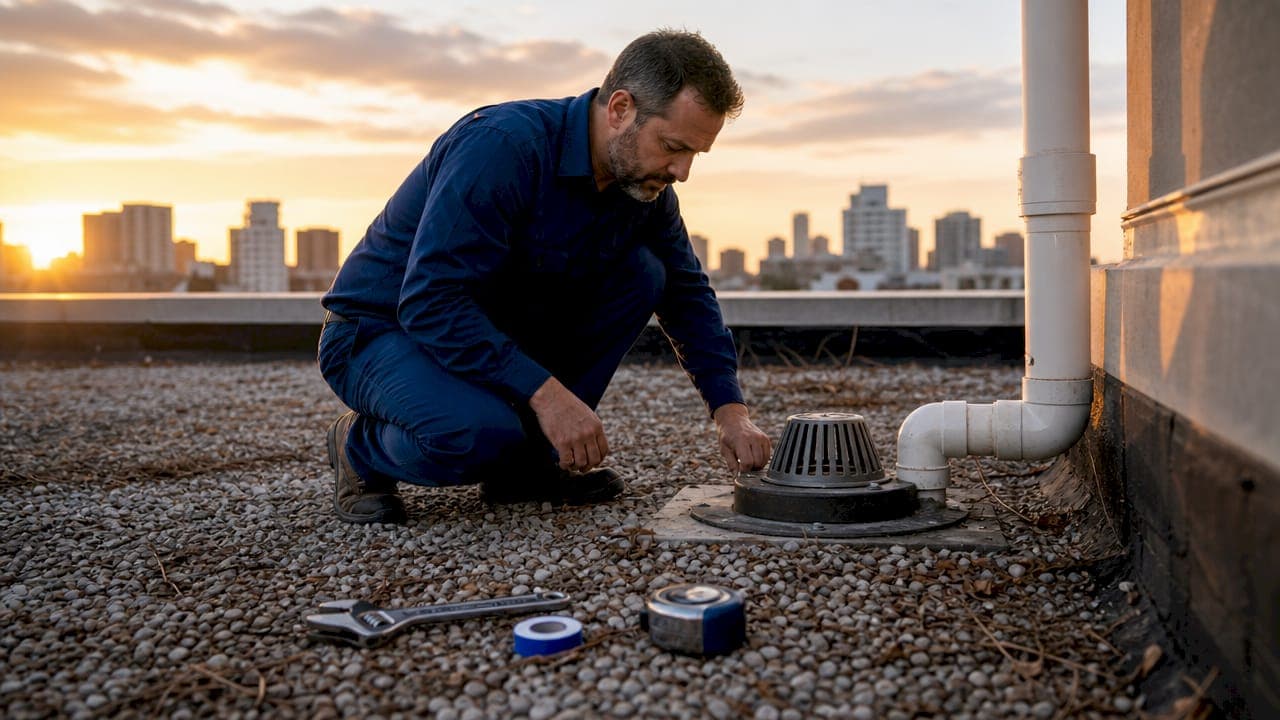
Roof drains connect to plumbing systems to channel rainwater off a roof surface and direct it safely through the building's interior piping to a controlled discharge point. This connection, formally called an interior roof drainage system, is the reason flat and low-slope roofs on homes, commercial buildings, and multi-family structures can shed water without flooding walls, saturating structural decks, or overloading foundations. Understanding why roof drains connect to plumbing matters whether you are a homeowner inspecting your property, an architect detailing a new build, or a contractor ensuring code compliance under the International Residential Code (IRC) or International Plumbing Code (IPC).
Why roof drains connect to plumbing systems
Roof drains connect to plumbing because water left standing on a roof will find its own path, and that path is almost always destructive. The IRC roof drainage requirement under Section R903.4 mandates that roof drainage systems be designed to prevent water damage and ponding. This means every drain must tie into a controlled piping network rather than simply discharging water over a parapet or through an unmanaged opening. The code is performance-based: the goal is to protect the building, and the plumbing connection is the mechanism that achieves it.
The practical reason is hydraulic control. A roof drain sitting in a membrane without a connected pipe is just a hole. Once that drain connects to interior plumbing, water flows at a predictable rate, through a predictable path, to a predictable endpoint. That predictability is what prevents the two most common failure modes: ponding water that adds dead load to a structural deck, and uncontrolled runoff that erodes foundations or floods adjacent properties.
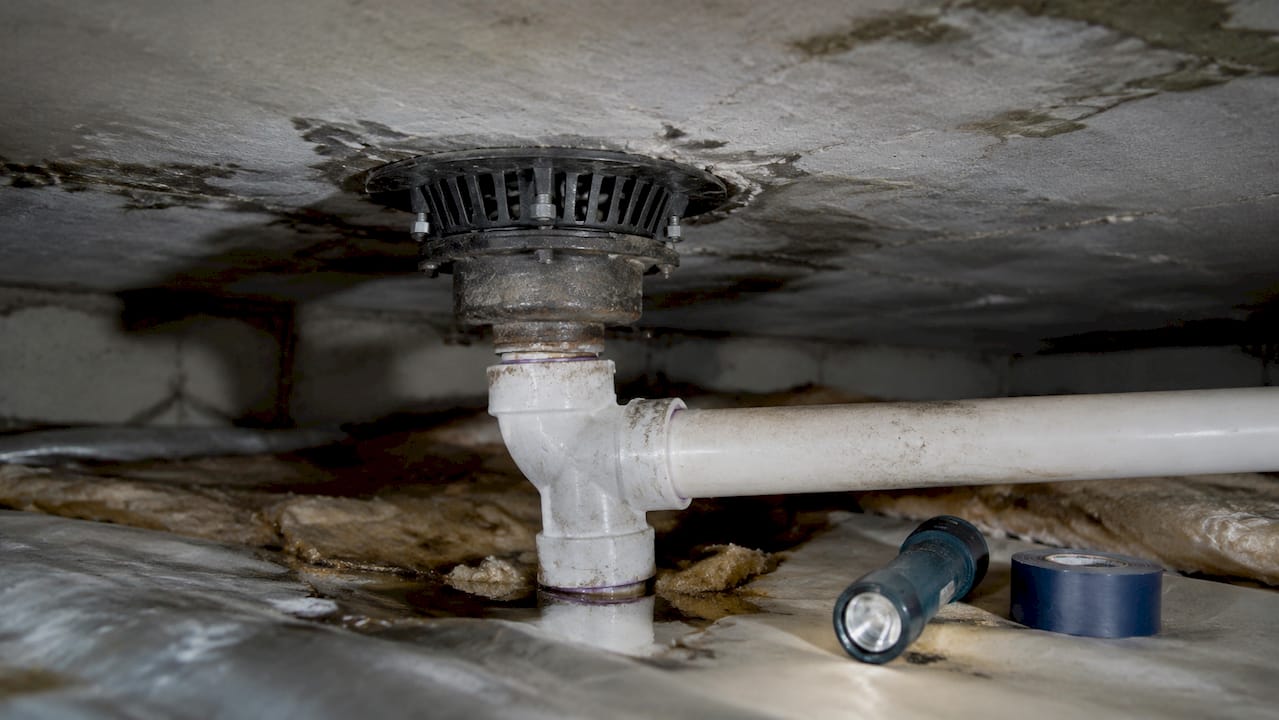
One detail most homeowners and even some contractors miss: roof drains must connect to the storm drainage system, not the sanitary sewer. Connecting to a sanitary line creates a direct path for sewer gas to migrate back through the drain and into the building. That is both a health hazard and a code violation under the IPC. The storm system and the sanitary system are kept separate for exactly this reason.
What building codes actually require for roof drainage
The IRC and IPC do not simply say "drain the roof." They specify how, where, and at what capacity. Here is what the codes require in practice:
- Storm system connection only. The IPC prohibits roof drainage from discharging into sanitary sewers. Water from roofs must route to a dedicated storm drainage system or an approved point of discharge.
- Sizing based on rainfall intensity. The IPC uses 100-year, 1-hour rainfall intensity maps to size roof drains and the connected piping. After 2024, the IBC is transitioning to ASCE 7 standards for rainfall data, which updates the intensity values used in design calculations.
- Secondary overflow drainage. Both the IBC and IPC require a secondary drainage path. This can be a second set of drains set at a higher elevation, or overflow scuppers through the parapet wall. The secondary system activates only when the primary system is blocked or overwhelmed.
- Proper sealing and flashing. The IPC requires proper gasketing, flashing, and sealants at every drain connection to prevent leaks at the roof membrane interface.
"Roofs must drain without damaging the building." This is the performance standard that underpins every code requirement for roof drainage. Every sizing calculation, every connection detail, and every secondary drain exists to satisfy this single outcome.
The sizing requirement is worth understanding in depth. A drain that is too small for the rainfall intensity of its location will back up during a heavy storm, creating exactly the ponding the code is designed to prevent. Architects and engineers use local rainfall data to calculate the required drain capacity, then select pipe diameters and drain bowl sizes accordingly. Getting this wrong at the design stage is far more expensive to fix than getting it right the first time.
How roof drains physically connect to the plumbing system
The physical connection between a roof drain and the building's plumbing involves several components working together. IIBEC describes the system this way: the drain flange integrates directly with the roofing membrane, the bowl collects water, the strainer keeps debris out, and the clamping ring compresses the membrane against the flange to create a watertight seal. Below the roof deck, the drain body connects to interior piping that routes through ceiling cavities and wall chases to reach the storm drainage system.
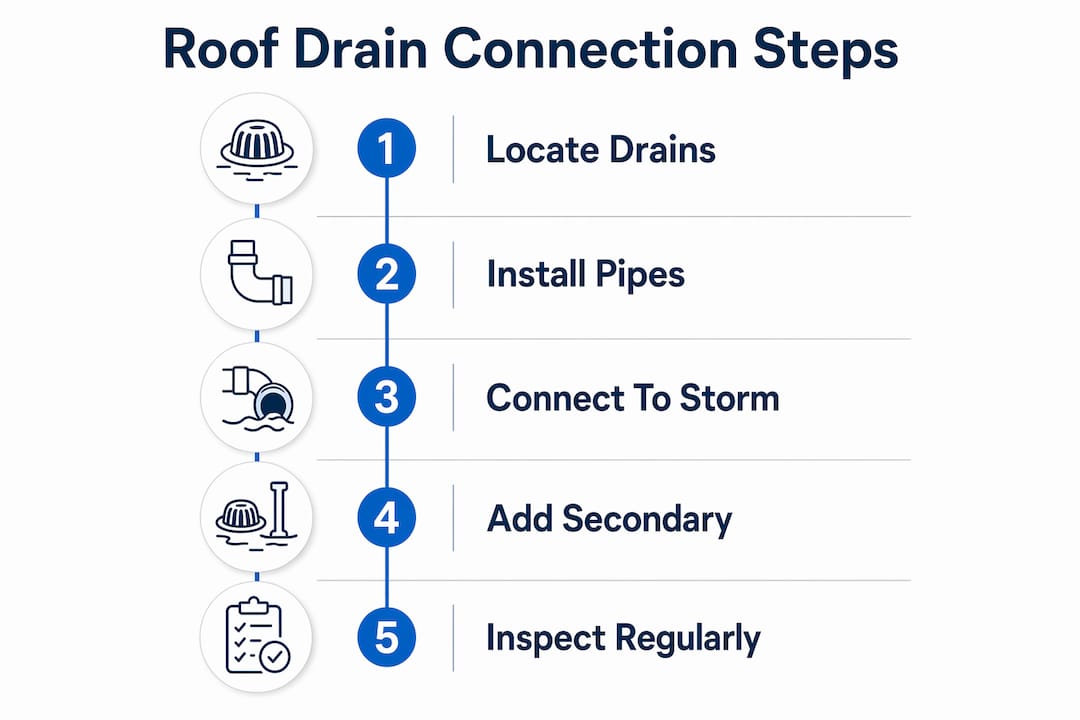
Here is how a typical interior roof drain installation proceeds:
- Set the drain body. The drain flange is embedded in the roofing membrane during installation. The membrane is cut, folded into the drain bowl, and clamped tight. This is the most leak-prone point in the entire system if done incorrectly.
- Connect the outlet to interior piping. The drain body's outlet connects to a vertical or horizontal pipe run concealed behind finishes. Pipe material is typically cast iron, PVC, or ABS depending on local code and building type.
- Route piping to the storm system. Interior piping runs through the building structure to connect to the storm drainage main, which discharges to a municipal storm sewer, retention basin, or other approved point.
- Install cleanout access panels. Cleanouts are placed at regular intervals in the concealed piping. Access panels in ceilings or walls allow maintenance crews to reach these cleanouts without demolishing finishes.
- Test the system. Before finishes are closed in, the piping is tested for leaks under pressure or water flow.
Pro Tip: On low-slope roofs, specify drain locations at the lowest points of the structural deck, not just the lowest points of the finished roofing surface. Structural deflection under load can shift where water actually collects, and a drain placed at the wrong point will leave a persistent puddle even on a new roof.
The concealed piping behind finishes is both the system's strength and its vulnerability. It keeps the building interior clean and protects pipes from UV and physical damage. But it also means a slow leak in a drain connection can go undetected for months, causing mold, rot, and structural deterioration before anyone notices. This is why cleanout access and regular inspections are not optional features.
How proper plumbing connections prevent structural damage
Connecting roof drains to plumbing is the primary defense against three categories of building damage: structural overload, membrane failure, and water intrusion through walls and ceilings.
- Structural overload. Water weighs approximately 8.34 pounds per gallon. A flat roof with even two inches of standing water across a 2,000-square-foot surface carries over 86,000 pounds of unplanned load. Most residential and light commercial structures are not designed for that. Hydraulic incompatibility between drain capacity and rainfall rate is a leading cause of this condition.
- Membrane failure. Ponding water accelerates the degradation of roofing membranes. TPO, EPDM, and modified bitumen all lose service life faster when submerged repeatedly. A properly connected drain keeps the membrane surface dry between rain events.
- Water intrusion. When water ponds near parapets, penetrations, or HVAC curbs, it finds every imperfection in the membrane and flashing. Properly connected drains pull water away from these vulnerable points before it has time to infiltrate.
- Foundation and site erosion. Uncontrolled roof runoff discharged at grade can saturate soil adjacent to foundations, contributing to settlement, basement leaks, and erosion of landscaping.
The importance of roof drainage extends beyond the roof itself. A failed roof drain connection does not just damage the roof. It damages ceilings, walls, insulation, electrical systems, and finishes below. The repair cost for a water intrusion event caused by a blocked or disconnected roof drain routinely exceeds the cost of the drain system itself many times over.
What secondary drainage does and why it matters
Secondary drainage is the backup system that activates when the primary roof drains cannot handle the water load. Secondary drainage systems provide emergency overflow routes when primary drains are blocked by debris or overwhelmed by rainfall that exceeds the design storm.
| Component | Function |
|---|---|
| Overflow scuppers | Wall openings set above primary drain elevation; discharge water over the parapet before structural overload |
| Secondary roof drains | A second set of drains set 2 inches above the primary drain elevation; connect to separate piping |
| Emergency overflow pipes | Pipes through parapet walls that terminate visibly above grade, signaling a drainage problem |
| Primary roof drains | First line of defense; sized for design storm; connect to interior storm plumbing |
The elevation difference between primary and secondary drainage is the critical design detail. Secondary drains or scuppers are set higher than primary drains so they remain dry under normal conditions. They only carry water when the primary system fails. This means a building owner who sees water discharging from an overflow scupper knows immediately that the primary drains are blocked and need service.
Pro Tip: Specify overflow scuppers that terminate with a visible extension pipe above grade rather than flush with the parapet. When a primary drain clogs and the secondary system activates, that visible discharge is the building's way of telling you there is a problem. Without it, you may not know until water is already inside.
Coordinated design among architects, structural engineers, and plumbers is what makes primary and secondary systems work together. The structural engineer confirms the deck can handle the maximum water load before secondary drainage activates. The plumber sizes the piping. The architect coordinates the drain locations with the roof slope and parapet heights. When any one of these disciplines works in isolation, the result is usually a system that fails under real conditions.
Maintenance considerations for roof drain plumbing connections
A properly designed and installed roof drain plumbing system still requires regular maintenance to perform as intended. Cleanouts and strainers are the two most important maintenance access points in the system.
- Inspect strainers twice a year. Leaves, gravel, and debris accumulate on strainer domes and restrict flow. A blocked strainer is the most common cause of roof ponding on an otherwise functional system. Clean strainers before and after the rainy season.
- Check cleanout access panels. Confirm that access panels in ceilings and walls are unobstructed and that cleanout plugs are intact. A missing cleanout plug allows sewer gas or storm system odors to enter the building.
- Look for signs of slow leaks. Water stains on ceilings near drain locations, efflorescence on concrete decks, or mold growth in ceiling cavities are all indicators of a failing drain connection. Address these immediately.
- Use hydro jetting for stubborn blockages. Debris that accumulates in concealed piping over years can form partial blockages that reduce flow capacity without fully stopping drainage. Hydro jetting clears these without damaging the pipe.
- Schedule professional camera inspections periodically. A sewer camera run through the interior drain piping reveals cracks, root intrusion, joint separations, and buildup that visual inspection cannot detect.
The most common maintenance mistake is treating roof drains as a set-and-forget system. Because the piping is concealed, problems develop slowly and invisibly. A plumbing service contract that includes annual roof drain inspection is one of the most cost-effective investments a building owner can make.
Key takeaways
Roof drains connect to plumbing because uncontrolled roof water destroys buildings, and the plumbing connection is the only code-compliant, hydraulically reliable way to prevent that outcome.
| Point | Details |
|---|---|
| Storm system connection required | Roof drains must tie to storm drainage, not sanitary sewer, to prevent sewer gas and code violations. |
| Sizing drives performance | IPC rainfall intensity maps determine pipe and drain sizing; undersized systems cause ponding and structural risk. |
| Secondary drainage is mandatory | Overflow scuppers or backup drains must activate before water reaches structural overload levels. |
| Concealed piping needs access | Cleanouts and access panels in finished ceilings are required for maintenance and long-term system reliability. |
| Maintenance prevents failures | Biannual strainer cleaning and periodic camera inspections catch blockages before they cause interior water damage. |
What 15 years on the job taught me about roof drain failures
I have seen the same failure repeat itself more times than I can count: a building owner calls because water is coming through a ceiling, and when we trace it back, the roof drain was either never connected to the storm system properly or the interior piping had been quietly failing for years behind a finished ceiling. The damage is always worse than it looks from the outside.
The detail that surprises most people is how often the connection to the wrong system causes the problem. A contractor routes a roof drain to a sanitary line because it is closer and easier. It works hydraulically for years. Then the building starts smelling, or a health inspector flags it, or worse, the sanitary system backs up and water comes out of the roof drain instead of going in. That is not a hypothetical. I have seen it.
My advice to homeowners is straightforward: if your building has a flat or low-slope roof with interior drains, ask your plumber or roofer to confirm in writing that those drains connect to the storm system and that secondary overflow drainage is in place. If they cannot answer that question confidently, get a camera inspection done. The cost of that inspection is a fraction of what you will spend on restoration after a failure.
For architects and contractors, the lesson is coordination. Roof drainage is not a roofing problem or a plumbing problem. It sits at the intersection of both, plus structural engineering. The buildings that perform well over decades are the ones where those three disciplines talked to each other during design.
— Kirk
Get your roof drain system inspected by Drainpointplumbing
If you are not certain your roof drains are properly connected to the storm system or if you have noticed water stains, slow drainage, or odors near drain locations, Drainpointplumbing can help. Based in Santa Maria, California, and serving Santa Barbara County for over 15 years, Drainpointplumbing provides residential plumbing repairs, drain inspections, and full system diagnostics for homeowners and commercial property owners alike.
Whether you need a camera inspection to confirm your interior drain piping is intact, a cleanout service to clear a blocked line, or a full assessment of your roof drainage system before the rainy season, Drainpointplumbing's licensed team is available 24/7 for emergency calls. Request a free quote and get a straight answer about the condition of your system before a small problem becomes a costly repair.
FAQ
Why do roof drains connect to plumbing instead of discharging at grade?
Interior roof drains connect to plumbing to control the rate, path, and discharge point of roof runoff. Uncontrolled discharge at grade causes foundation erosion, site flooding, and code violations in most jurisdictions.
Can a roof drain connect to a sanitary sewer line?
No. The IPC and IRC both prohibit roof drains from connecting to sanitary sewers. Connecting to a sanitary line risks sewer gas intrusion into the building and creates a health hazard and code violation.
What happens if a roof drain is not connected to any plumbing?
An unconnected roof drain leaves water with no controlled exit path, leading to ponding, membrane deterioration, and potential structural overload. The IRC under Section R903.4 requires all roof drainage to connect to a controlled system.
How often should roof drain plumbing be inspected?
Strainers should be cleaned at least twice a year, before and after the rainy season. Interior piping should receive a professional camera inspection every three to five years to catch cracks, joint failures, or buildup before they cause damage.
What is the difference between primary and secondary roof drains?
Primary roof drains handle normal rainfall and connect directly to the storm drainage system. Secondary drains or overflow scuppers are set at a higher elevation and activate only when primary drains are blocked or exceeded, preventing structural overload.