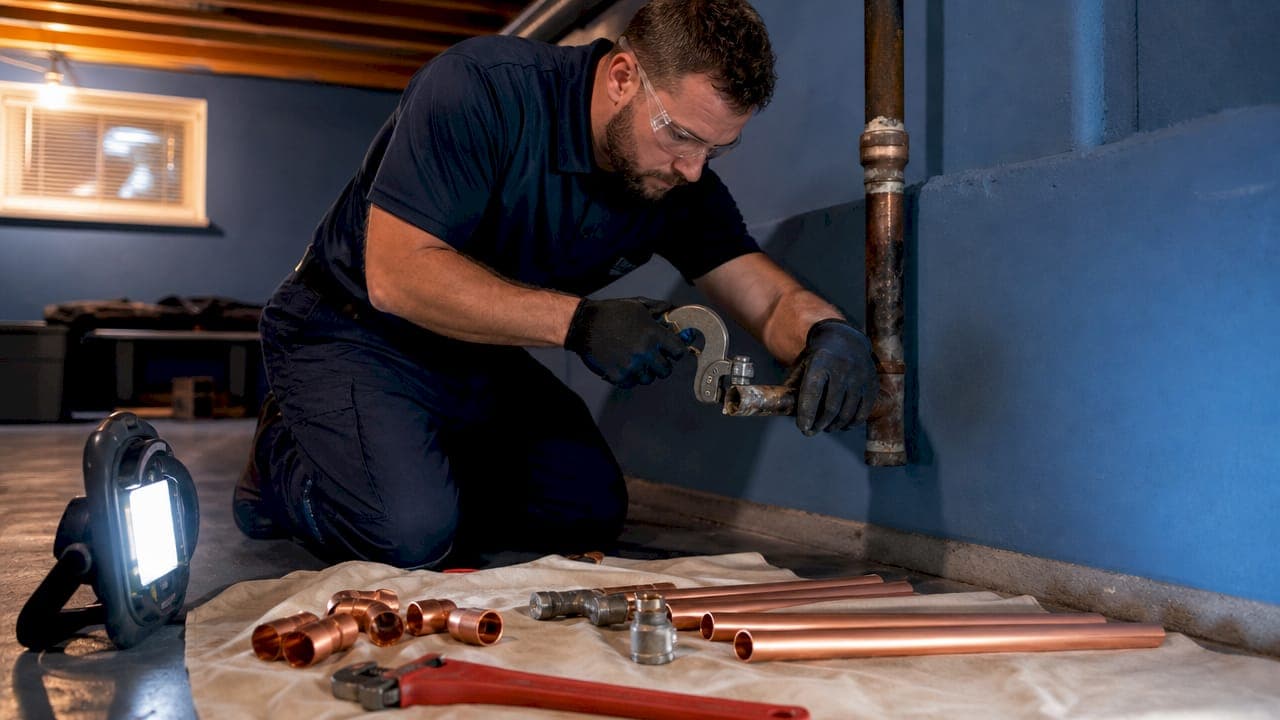
Fire-damaged pipe replacement is the process of removing heat-compromised plumbing materials and installing new, code-compliant pipes after a residential or commercial fire. Knowing how fire damaged pipes get replaced protects you from hidden water contamination, structural leaks, and insurance disputes that can drag on for months. The process follows strict material-specific rules, multi-stage testing protocols, and municipal inspection requirements. Skipping any step puts your water supply, your walls, and your family's health at risk.
How professionals assess fire damage in plumbing systems
Professional assessment is the first and most critical step in repairing fire damaged plumbing. Inspectors do not rely on visual checks alone. A multi-stage testing protocol is mandatory after any residential fire, covering visual inspection, fiber-optic video inspection, and hydrostatic pressure testing.
Each stage catches what the previous one misses:
- Visual inspection identifies obvious heat warping, soot coating, melted fittings, and discolored pipe surfaces.
- Fiber-optic video inspection sends a camera through the pipe interior to reveal internal corrosion, warping, and micro-fractures that look fine from the outside.
- Thermal imaging detects heat-stressed zones in walls and ceilings where pipes are not directly visible.
- Hydrostatic pressure testing pressurizes the system to confirm whether micro-fractures or joint failures exist before any walls are closed.
Soot and smoke residues are acidic. They corrode metal pipes from the inside out, causing ongoing water quality problems long after the fire is out. A plumber who skips internal inspection is leaving a ticking problem inside your walls.
Pro Tip: Request a written inspection report that documents every test result and every pipe section flagged for replacement. You will need this for your insurance claim.
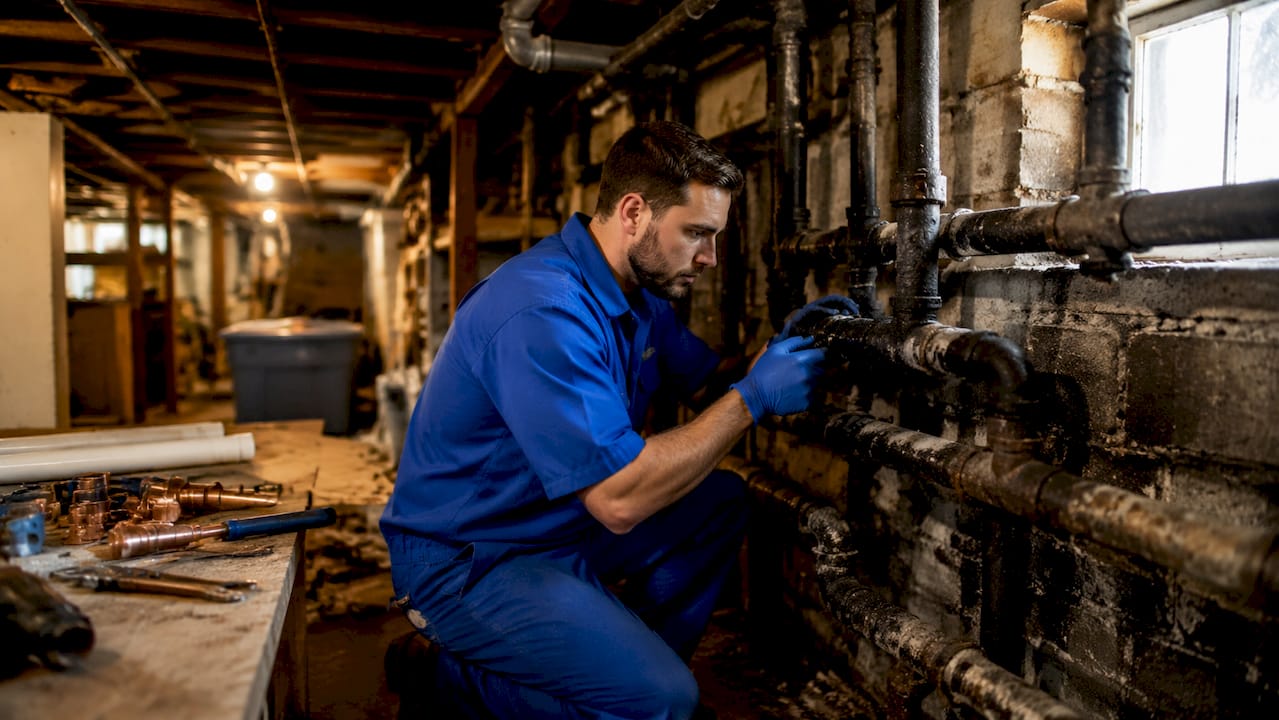
Which pipe materials need full replacement after a fire?
Not every pipe in your home needs to come out. The replacement decision depends entirely on the material and its heat exposure. Material-specific heat thresholds determine whether a plumber can spot-repair a section or must replace the entire run.
| Pipe material | Replacement rule |
|---|---|
| CPVC | Full replacement if any heat exposure occurred |
| PEX | Full replacement if exposed to flame or temperatures above 200°F |
| PVC | Full replacement if visibly warped, discolored, or heat-affected |
| ABS | Full replacement if heat-exposed; check for brittleness throughout |
| Copper | Spot repair if not annealed; full replacement if annealed across the run |
Copper deserves special attention. Annealing occurs at around 400°F, making copper brittle in ways that are not visible to the naked eye. Lead-free solder melts in a fire, causing joint failures throughout the system. Pressure testing is the only reliable way to find these failures.
PEX carries an additional risk that most homeowners do not know about. When PEX melts, it releases toxic VOCs that can contaminate drinking water in pipe sections that were never directly touched by flames. This is why partial PEX repairs after fire exposure are not safe. The entire affected run must come out.
The risk of partial repairs goes beyond the pipe itself. Fire-compromised materials left in place can leach contaminants into your water supply for years. Full replacement is not overcaution. It is the only way to restore a safe, functional system.
Step-by-step process for replacing fire damaged pipes
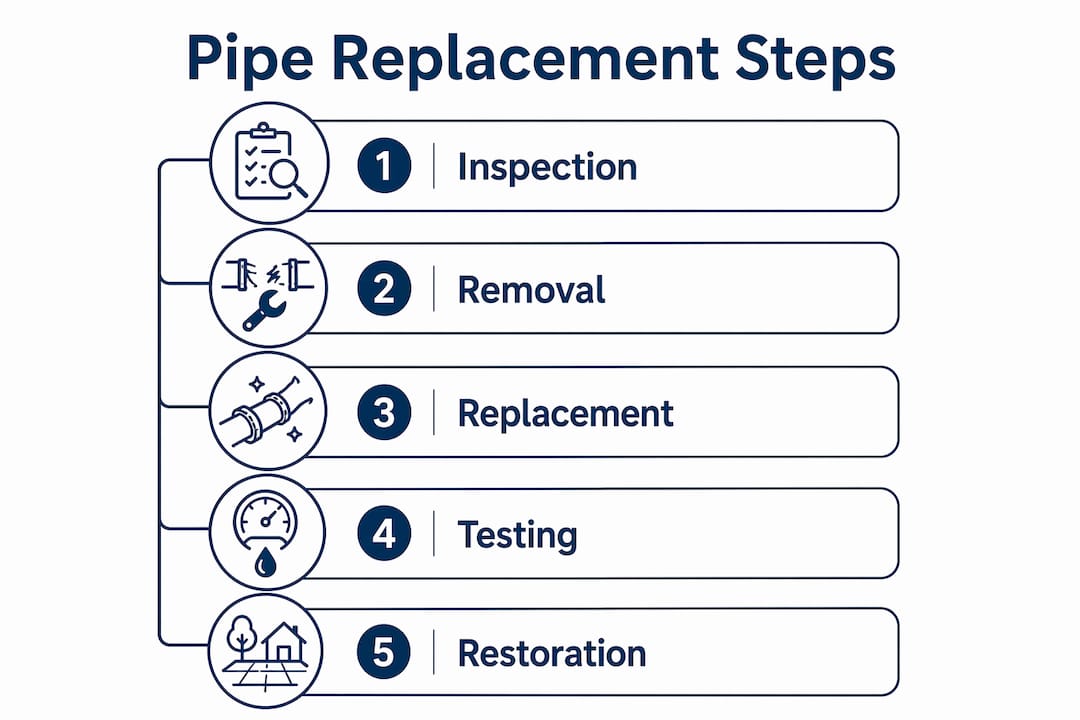
The steps for pipe damage restoration follow a fixed sequence. Skipping or reordering steps creates code violations, insurance problems, and safety hazards.
-
Shut off the main water supply immediately. Turning off water after detecting fire damage prevents water saturation of fire-weakened structures and stops contamination from spreading through the system. DIY repairs at this stage are unsafe and violate local codes.
-
Hire a licensed restoration contractor. A qualified contractor coordinates with your insurance adjuster, documents damage with thermal imagery and lab tests, and manages the full scope of work. Do not let a general handyman handle fire damage plumbing solutions.
-
Open walls and framing for access. Drywall and framing must be removed to expose the pipe runs. This work is coordinated with your general contractor so structural repairs and plumbing replacement happen in the right order.
-
Remove and dispose of damaged pipes. Damaged pipe materials, especially PEX and CPVC, must be disposed of following environmental codes. Melted plastics are classified as hazardous waste in many jurisdictions.
-
Install new pipes to current code. New pipe installation must meet the plumbing codes in effect today, not the codes that were in place when your home was originally built. Municipal code upgrades are mandatory when structural framing is replaced after fire, which expands the scope of work beyond simple pipe swaps.
-
Perform hydrostatic pressure testing. Pressure tests run at 100 psi held for 15 minutes confirm the new system is leak-free and code-compliant before any walls are closed.
-
Pass municipal inspection. A licensed inspector must sign off on the completed plumbing work. No walls close until the inspection is approved.
Pro Tip: Schedule your whole-house plumbing inspection before the restoration contractor begins work. A baseline assessment helps document pre-fire conditions for your insurance claim.
Common challenges during pipe replacement after fire damage
Pipe replacement after fire rarely goes as simply as pulling out old pipes and putting in new ones. Several complications routinely affect the cost, timeline, and scope of fire damage plumbing solutions.
-
Insurance documentation battles. Insurance companies frequently push for partial repairs rather than full system replacement. Qualified restoration contractors act as technical advocates, presenting thermal imagery and lab test results to justify code-compliant full replacement. Without this advocacy, you risk an underpaid claim that leaves compromised pipes in your walls.
-
Mandatory code upgrades. When structural framing is replaced after a fire, municipalities require all mechanical systems in that area to meet current building codes. This means your new plumbing may need to include features your original system never had, such as updated water pressure regulators, new shutoff configurations, or different pipe sizing.
-
Water contamination from combustion byproducts. Smoke residues inside pipes are acidic and continue corroding metal long after the fire is extinguished. Soot contamination also affects water quality and odor. Cleaning and deodorizing the system is a required step, not an optional upgrade.
-
Coordination with structural and electrical work. Plumbing replacement cannot happen in isolation. Pipe runs share wall cavities with electrical wiring and structural framing. The restoration sequence must be planned so trades do not undo each other's work. A licensed restoration contractor manages this coordination and keeps the project on schedule.
The cost of replacing fire damaged pipes varies widely based on material type, the extent of heat exposure, code upgrade requirements, and the size of the home. Getting a detailed written scope of work before any repairs begin protects you from unexpected charges and gives your insurance adjuster a clear record to work from.
Key takeaways
Replacing fire-damaged pipes requires a strict sequence of professional inspection, material-specific removal, code-compliant installation, and pressure-tested approval before any wall can close.
| Point | Details |
|---|---|
| Assessment comes first | Multi-stage testing including video inspection and hydrostatic pressure testing identifies all compromised pipe sections. |
| Material type determines scope | CPVC, PEX, and heat-annealed copper require full replacement; partial repairs on these materials create contamination and leak risks. |
| Shut off water immediately | Turning off the main supply after a fire prevents secondary water damage and system contamination. |
| Code upgrades are mandatory | Municipal inspections require new plumbing to meet current codes, expanding the scope beyond like-for-like replacement. |
| Contractors protect your claim | Licensed restoration professionals document damage with lab tests and thermal imagery to secure proper insurance compensation. |
What I've learned after years of post-fire plumbing calls
The calls that concern me most are not the ones that come in right after a fire. Those homeowners are in crisis mode and they listen. The calls that concern me are the ones that come in six months later, when a homeowner tells me their pipes "looked fine" after the fire and now they have a slow leak inside a wall they just finished repainting.
Visual inspection misses the most dangerous damage. Annealed copper looks identical to healthy copper. A PEX run that was near heat but not directly in flames can still carry VOC contamination into your drinking water. The only way to know what you actually have is to test it properly, with pressure and with a camera inside the pipe.
The other thing I see constantly is homeowners who accept partial repairs because their insurance adjuster pushed back on full replacement. I understand the pressure. But a partial repair on a fire-compromised system is not a repair. It is a delay. The code exists for a reason, and the testing protocols exist for a reason. When you skip them, you are not saving money. You are moving the problem to a future version of yourself who will pay more to fix it.
If you are dealing with fire damage right now, get a licensed professional on site before you make any decisions about what stays and what goes. The emergency pipe repair window right after a fire is when the most important decisions get made. Make them with a professional, not alone.
— Kirk
Drainpointplumbing's post-fire plumbing services in Santa Maria
Drainpointplumbing has handled fire-damaged plumbing restoration across Santa Barbara County for over 15 years. The team performs the full sequence: multi-stage inspection, material-specific pipe removal, code-compliant installation, and hydrostatic pressure testing before any wall closes.
Homeowners and property managers in the Santa Maria area can request a free quote for residential plumbing repairs and fire restoration assessments. Drainpointplumbing is available 24/7 for emergency response, offers discounts for seniors and military personnel, and works directly with insurance adjusters to document damage and justify full, code-compliant replacement. Contact the team at Drainpointplumbing to schedule your inspection.
FAQ
Can you fix fire damaged pipes without full replacement?
Some copper pipes can be spot-repaired if they were not annealed by heat. Synthetic materials like CPVC and PEX require full replacement if they were exposed to flame or temperatures above 200°F.
How long does pipe replacement after fire take?
Timeline depends on the extent of damage, code upgrade requirements, and coordination with structural repairs. Most residential projects take several days to several weeks from inspection to final municipal approval.
What does hydrostatic pressure testing involve?
The system is pressurized to 100 psi and held for 15 minutes. This confirms the new plumbing is leak-free and code-compliant before walls are closed and the inspection is signed off.
Will insurance cover the cost of replacing fire damaged pipes?
Most homeowner insurance policies cover fire-damaged plumbing replacement. A licensed restoration contractor can document damage with thermal imagery and lab tests to support a full replacement claim rather than a cheaper partial repair.
Is it safe to use water after a house fire?
No. Smoke residues and combustion byproducts can contaminate the water supply through compromised pipes. Shut off the main water supply immediately and do not use the system until a licensed plumber has inspected and cleared it.