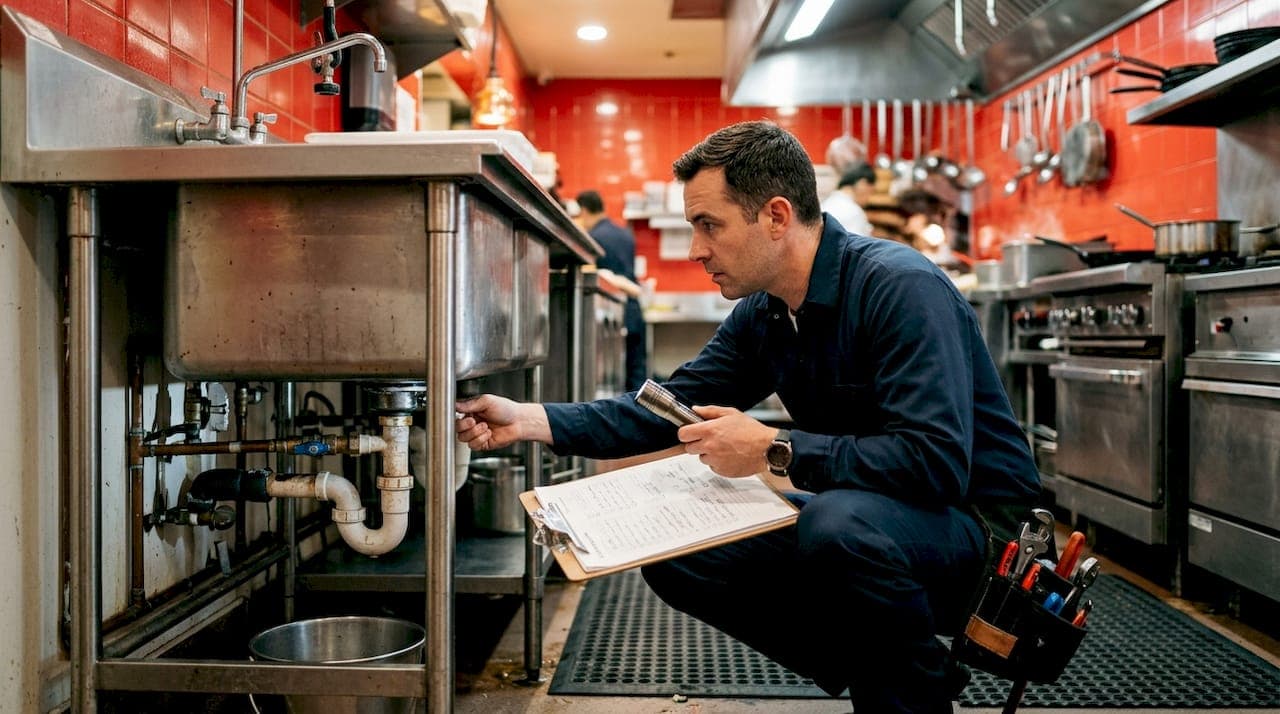
A restaurant plumbing upgrade checklist is a structured list of plumbing components and systems that require inspection, maintenance, or replacement to meet health codes, building standards, and operational demands in commercial foodservice spaces. Neglecting this process puts you at risk of health inspection failures, costly shutdowns, and expensive emergency repairs. The International Plumbing Code (IPC), NSF/ANSI standards, and your local Authority Having Jurisdiction (AHJ) all set the baseline requirements. Commercial kitchen plumbing installations typically cost between $15,000 and $80,000, which means getting the upgrade right the first time is not optional.
1. Restaurant plumbing upgrade checklist: core components to inspect
Every plumbing system checklist for a commercial kitchen starts with the same five critical systems. Miss any one of them, and you risk a failed inspection or an unplanned closure.
Grease interceptors. A grease interceptor captures fats, oils, and grease (FOG) before they enter the municipal sewer system. Gravity grease interceptors require pumping monthly to quarterly, and each service visit costs between $200 and $700. Sizing matters as much as frequency. Many cities require interceptors far larger than the IPC minimum, so confirm your unit's capacity with your local AHJ before installation.
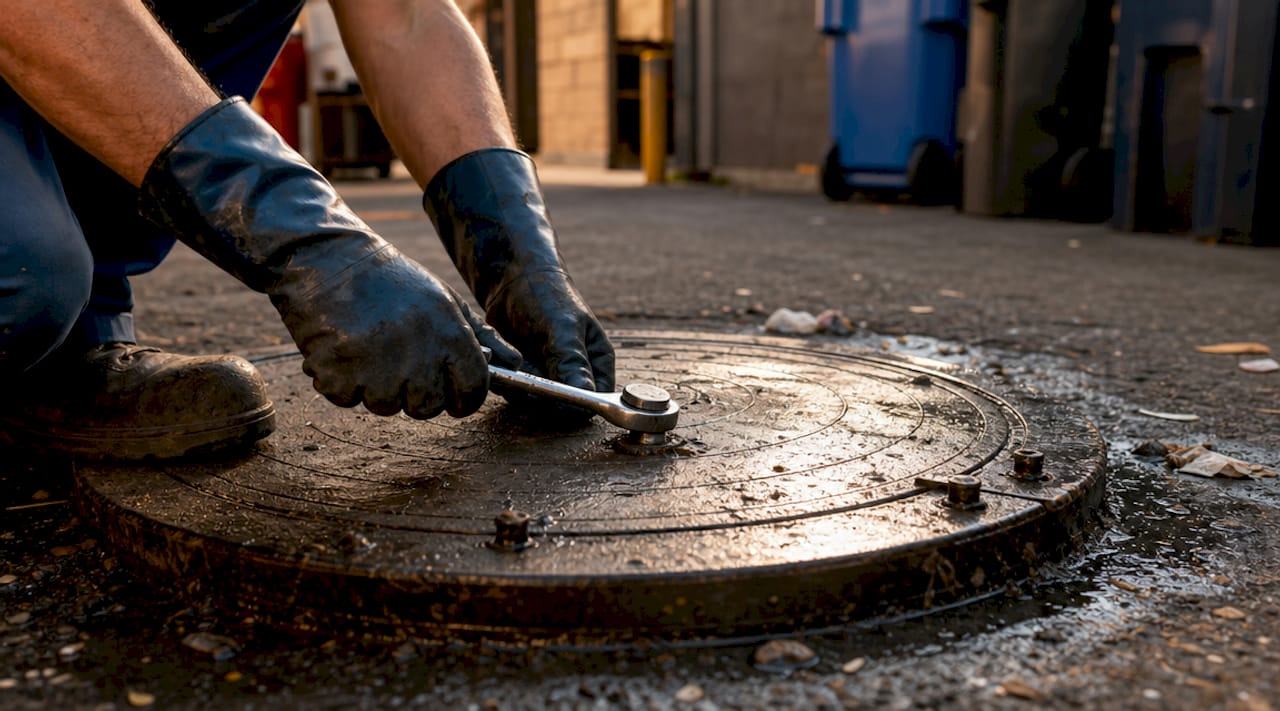
Floor drains and floor sinks. Floor sinks collect indirect waste from equipment like ice machines, steamers, and prep sinks. The IPC requires indirect drainage for food equipment, meaning drain lines cannot connect directly to the sanitary sewer without an air gap. Placement must align precisely with equipment drain stubs. A misalignment discovered after the slab is poured can cost between $4,000 and $15,000 in retrofits.
Hot water systems. Water heaters in commercial kitchens must be sized for peak simultaneous demand, not average daily use. A three-compartment sink, a dishwasher, and two hand sinks running at the same time draw far more hot water than most residential units can supply. Commercial water heater sizing errors are one of the most common causes of health inspection failures.
Backflow prevention devices. A backflow preventer stops contaminated water from flowing backward into the potable water supply. Health inspectors test these devices during inspections, and a failed or missing device is an automatic violation. Reduced pressure zone (RPZ) assemblies require annual testing by a certified tester in most jurisdictions.
Pipe velocity and sizing. Water supply piping must maintain flow below 8 fps for cold water and below 5 fps for hot water. Exceeding these limits causes pipe erosion, noise, and premature failure. Verify pipe diameter calculations before finalizing any upgrade plan.
Pro Tip: Ask your licensed plumber to provide a written fixture unit calculation for your hot water system before any equipment is ordered. This single document prevents the most common sizing mistake in commercial kitchen upgrades.
2. How to prepare for permits and inspections
Upgrading restaurant plumbing without a permit is a serious liability. Most jurisdictions require a minimum of three inspection phases before final health department approval: rough-in, grease interceptor installation, and a final functional check.
- Submit permit drawings early. Plumbing plans must show fixture locations, pipe sizes, drain slopes, and grease interceptor specs. Submit these to your local building department before any demolition begins. Delays at this stage push back your entire project timeline.
- Schedule the rough-in inspection first. This inspection happens after pipes are installed but before walls or slabs are closed. Inspectors check drain slope, pipe material, and vent connections. Failing here means opening up finished work.
- Coordinate the grease interceptor inspection separately. Many jurisdictions treat this as a standalone inspection. Have your interceptor sizing calculations and manufacturer specs ready on site.
- Pass the final functional inspection. Inspectors run water at every fixture, test backflow devices, and verify hot water temperature at hand sinks. The minimum required temperature at hand sinks is typically 100°F, though local codes vary.
- Obtain the certificate of occupancy before opening. No certificate means no legal operation, regardless of how complete the kitchen looks.
Pro Tip: Build a project binder with your permit application, inspection reports, grease interceptor service records, and equipment spec sheets. Health inspectors can request this documentation at any time, and having it organized saves hours during a surprise visit.
Early coordination between your plumber, kitchen designer, and other trades prevents costly conflicts in pipe routing and fixture placement. Schedule a pre-construction meeting with all trades before breaking ground.
3. Common mistakes that make restaurant plumbing upgrades expensive
Most costly plumbing mistakes happen before a single pipe is installed. Catching them on paper is always cheaper than fixing them in concrete.
- Undersized grease interceptors. City-specific code amendments can double the IPC minimum sizing requirements. Operators who size to the model code without checking local amendments often face mandatory replacement within months of opening.
- Misaligned floor sinks. Floor sinks must align within inches of equipment drain stubs. A misalignment discovered after the slab is poured triggers a retrofit that can cost up to $15,000 and delay your opening by weeks.
- Undersized water heaters. Sizing a water heater for average demand instead of peak simultaneous demand is the single most common commercial kitchen plumbing error. The result is a failed health inspection on opening day.
- Ignoring local code amendments. The IPC is a model code. Your city or county may have adopted amendments that change pipe materials, interceptor sizing, or fixture requirements. Always verify local requirements with your AHJ before finalizing plans.
- Inheriting plumbing liabilities. Leasing an existing commercial space does not transfer the previous tenant's compliance record. Grease interceptor service records from previous tenants must be obtained before signing a lease. If records are unavailable, schedule an immediate cleaning and inspection.
- Skipping pipe velocity calculations. Exceeding 8 fps in cold water lines or 5 fps in hot water lines accelerates pipe wear and creates noise complaints. These limits are not suggestions.
Inherited plumbing liabilities are one of the most overlooked risks in restaurant leasing. A grease interceptor that has not been pumped in two years is your legal problem the moment you sign the lease. Get service records before you sign, not after.
FOG management failures cause more immediate restaurant shutdowns than any other plumbing issue. Cross-connection violations and undersized hot water systems follow closely. These three categories account for the majority of emergency closures in commercial foodservice operations.
4. Maintenance best practices that protect your investment
A plumbing upgrade is only as good as the maintenance program that follows it. The best plumbing practices for restaurants treat maintenance as a scheduled operating cost, not an emergency fund.
- Pump grease interceptors on schedule. Gravity interceptors need pumping monthly to quarterly. Each visit costs $200 to $700. Skipping a cycle allows FOG to harden and overflow into the drain line, which triggers health inspection failures related to grease trap conditions.
- Test backflow prevention devices annually. RPZ assemblies require annual testing by a certified tester. Keep the test report on file for health inspectors.
- Flush and clean drain lines quarterly. High-volume kitchens with heavy FOG output need drain line cleaning aligned to their grease interceptor pumping schedule. Hydro jetting is the most effective method for clearing grease buildup in commercial drain lines. Drainpointplumbing uses hydro jetting technology to clear lines without damaging pipe walls.
- Inspect water heater anode rods annually. Anode rods protect tank water heaters from corrosion. Replacing a depleted rod costs under $100. Replacing a corroded tank costs several thousand dollars.
- Check pressure relief valves and shut-off valves twice a year. Valves that seize from disuse fail when you need them most. Exercise every shut-off valve during scheduled maintenance visits.
- Keep a maintenance log. Record every service visit, inspection result, and repair. This log is your primary defense during a health inspection and your best tool for planning future upgrades.
Pro Tip: Establish a relationship with an emergency plumbing vendor before you need one. A burst pipe at 2:00 AM on a Saturday is not the time to search for a licensed commercial plumber. Pre-negotiated after-hours rates save money and reduce downtime.
Key takeaways
A compliant restaurant plumbing system requires grease interceptor sizing verified against local code amendments, water heaters sized for peak demand, and a documented maintenance schedule that supports every health inspection.
| Point | Details |
|---|---|
| Verify local code amendments | IPC minimums often fall short of city requirements; always confirm sizing with your local AHJ. |
| Size for peak demand | Water heaters must handle simultaneous fixture loads, not average daily use. |
| Coordinate trades early | Pre-construction alignment between plumbers and kitchen designers prevents costly slab retrofits. |
| Maintain service records | Grease interceptor logs and backflow test reports are required documentation during health inspections. |
| Plan maintenance as an operating cost | Monthly to quarterly grease interceptor pumping at $200–$700 per visit is far cheaper than an emergency closure. |
What I've learned from restaurant plumbing upgrades in the field
The most expensive mistakes I see in restaurant plumbing upgrades are not technical. They are scheduling mistakes. Owners finalize kitchen equipment layouts before a plumber has reviewed the floor plan. Then the slab gets poured, and the floor sink is six inches off from where it needs to be. That six-inch gap turns into a $10,000 problem.
The second pattern I see constantly is operators treating the IPC as the final word on code compliance. The IPC is a starting point. Your city may require a grease interceptor twice the size the model code specifies. I have seen restaurants pass the building department inspection and then fail the health department inspection because the two agencies were using different sizing standards. The only way to avoid that is to talk to both agencies before you finalize your plans.
Proactive maintenance is where most operators leave money on the table. A grease interceptor pumped on schedule costs $200 to $700 per visit. A drain line backup during a Friday dinner service costs far more in lost revenue, emergency labor, and potential health code violations. The math is straightforward. The operators who treat maintenance as a fixed operating expense rather than a reactive cost are the ones who stay open.
— Kirk
Drainpointplumbing is ready to support your upgrade
Restaurant plumbing upgrades require more than a parts list. They require a licensed commercial plumber who understands permit requirements, inspection sequencing, and the specific demands of foodservice operations.
Drainpointplumbing has served commercial clients across Santa Barbara County for over 15 years. The team handles commercial plumbing repairs and upgrades, from grease interceptor installations to full kitchen repiping, with the documentation and inspection coordination your project requires. Emergency service is available 24/7 for urgent issues that cannot wait. Request a free quote through the online consultation portal and get a licensed plumber reviewing your upgrade plan before the first permit is filed.
FAQ
What does a restaurant plumbing upgrade checklist include?
A restaurant plumbing upgrade checklist covers grease interceptors, floor drains, hot water systems, backflow prevention devices, and pipe sizing. Each component must meet IPC standards and any local code amendments enforced by your AHJ.
How many inspections does a commercial kitchen plumbing project require?
Most jurisdictions require at least three inspections: rough-in, grease interceptor installation, and a final functional check. Failing any phase delays the project and may require opening finished walls or slabs.
How often should a restaurant grease interceptor be pumped?
Gravity grease interceptors require pumping monthly to quarterly. Each service visit costs between $200 and $700, and skipping cycles is one of the top causes of health inspection failures.
What happens if floor sinks are misaligned after the slab is poured?
Correcting a floor sink misalignment after the slab is poured costs between $4,000 and $15,000 in retrofits. Precise coordination between the plumber and kitchen designer before pouring is the only way to avoid this cost.
Do local plumbing codes differ from the IPC?
Yes. City-specific amendments can significantly exceed IPC minimums, particularly for grease interceptor sizing. Always verify requirements directly with your local Authority Having Jurisdiction before finalizing any upgrade plans.