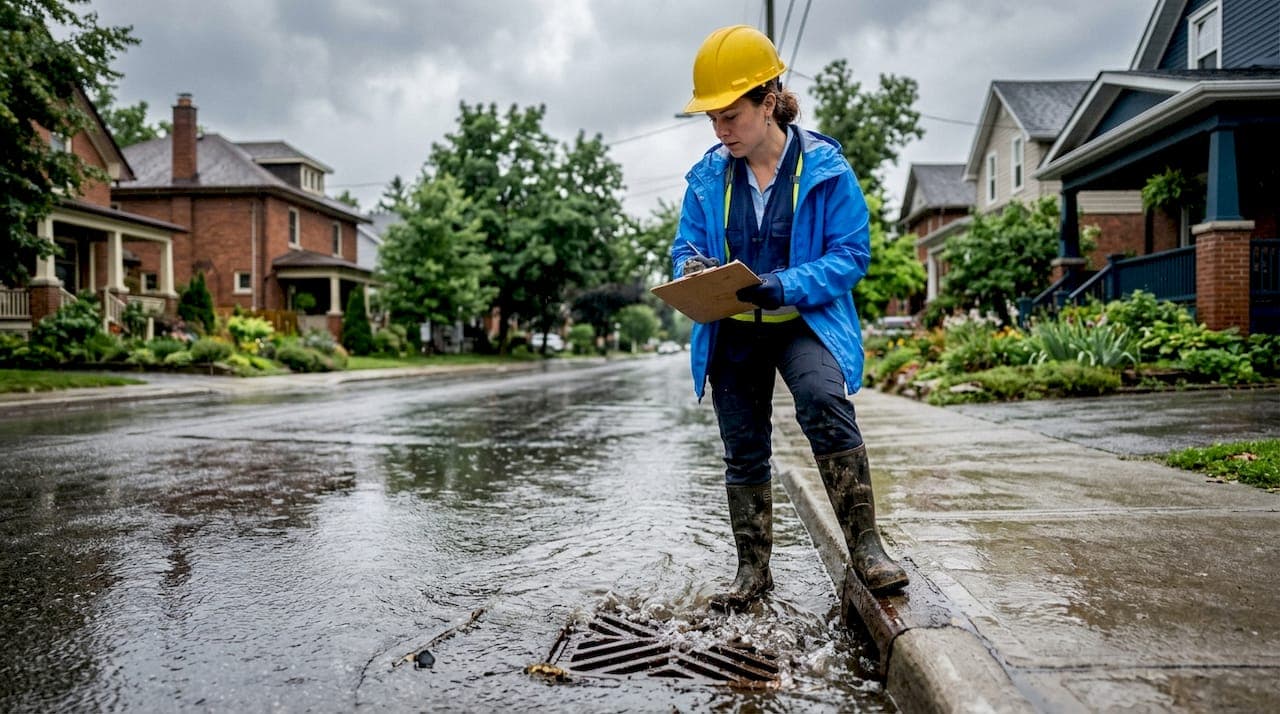
Drains back up during rain because stormwater overwhelms sewer systems faster than they can discharge it, forcing wastewater backward through the path of least resistance. That path almost always leads into your home through the lowest plumbing opening available. Understanding why drains back up during rain means looking at two separate but connected systems: the municipal sanitary sewer network and your private lateral line. Both can fail at the same time, and heavy rain is the trigger that exposes every weakness in each. Homeowners who know how these systems interact can act before a storm turns into a sewage cleanup.
Why drains back up during rain: the core mechanics
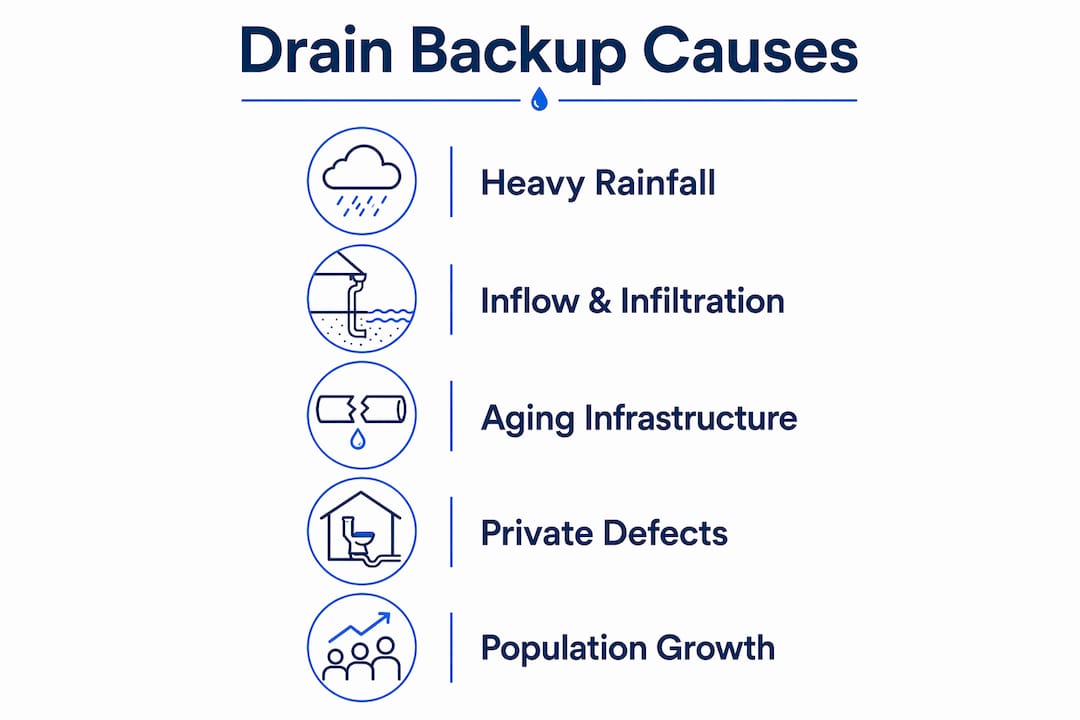
Municipal sanitary sewer systems are engineered to handle a specific volume of wastewater. When rainfall exceeds that design capacity, the system surcharges, meaning pressure builds up inside the pipes and wastewater has nowhere to go but backward. Heavy rainfall exceeding 3.5 inches in one hour can push a municipal sewer system past its limit, causing sewage to backflow directly into homes. That threshold is lower than most homeowners expect.
The mechanism behind this is called inflow and infiltration, or I&I. Inflow is stormwater that enters sanitary sewer pipes through illegal connections, such as downspouts or sump pumps tied directly into the sewer line. Infiltration is groundwater that seeps in through cracked pipes and faulty joints during saturated soil conditions. Both dramatically increase the water volume inside a system designed only for sewage. The result is a pipe network carrying far more than its rated capacity.
New Orleans experienced a textbook example of this in july 2026. More than 3.5 inches of rain fell in a single hour, and pump station failures across multiple neighborhoods reduced the system's ability to discharge water fast enough. Streets flooded, and sewage backed up into homes across the city. The lesson is not unique to New Orleans. Any aging urban sewer network faces the same risk when rainfall intensity outpaces infrastructure age.
Population growth compounds the problem. Systems built decades ago were sized for smaller communities. As density increases, the same pipes carry more daily wastewater load, leaving less buffer capacity when a storm hits.
What private plumbing defects make backups worse?
The municipal system is only half the story. Your private lateral line, the pipe that connects your home to the city sewer, can amplify a backup significantly. Several common defects turn a manageable surcharge into a full sewage event inside your basement.
The most frequent private-side causes include:
- Cracked or bellied sewer laterals. Older homes with clay or cast iron pipes develop hairline cracks over time. During rain, groundwater pours in through those cracks, adding volume to an already strained system.
- Tree root intrusion. Roots follow moisture and grow into pipe joints, creating partial blockages that restrict flow. When rain increases the volume of water trying to move through the line, even a partial blockage becomes a full one.
- Illegal sump pump or footing drain connections. Sump pumps tied to sanitary sewer lines send large volumes of groundwater directly into the sewer during storms, multiplying the load beyond design capacity.
- Accumulated debris and sediment. Grease, wipes, and sediment narrow the pipe's effective diameter. Rain-driven surges push that debris into a solid blockage.
- Basement floor drains as relief points. The basement floor drain sits at the lowest point in your plumbing system. When municipal pressure builds, sewage exits through that drain first.
Pro Tip: If you own a home built before 1980, assume your lateral line has some degree of root intrusion or pipe degradation. A camera inspection will confirm it before the next storm does.
Stormwater-related roof damage can also redirect water toward your foundation, worsening ground saturation around your lateral line. Homeowners dealing with storm roof repairs should check their drainage path at the same time, since roof runoff that pools near the foundation increases infiltration into sewer pipes.
How do you tell a main line backup from a single clog?
Diagnosing the source of a backup during rain determines whether you call a plumber or contact your city's environmental services department. The distinction is straightforward once you know what to look for.
- Check multiple fixtures at once. Flush a toilet, run a sink, and watch a floor drain simultaneously. If two or more fixtures back up or gurgle at the same time, the problem is in the main sewer line or the municipal system, not a single drain.
- Identify the lowest affected point. Multiple fixtures backing up during rain almost always signals a main sewer blockage or municipal surcharge. A single slow sink drain points to a localized clog in that branch line only.
- Note the timing relative to rainfall. If backups appear within hours of heavy rain starting, the cause is almost certainly rain-driven surcharge or I&I, not a coincidental clog.
- Look for sewage odor at floor drains. A sulfur or sewage smell rising from a basement floor drain during rain indicates that municipal pressure is already pushing back through your lowest fixture.
- Check your neighbors. If multiple homes on your street report the same issue at the same time, the problem is in the municipal main, not your private line.
This distinction matters for cost and urgency. A localized clog is a straightforward drain cleaning service. A main line backup during a storm may require both a private lateral inspection and a report to your city's public works department.
How to prevent drain backups caused by heavy rain
Prevention is far cheaper than cleanup. Most rain-induced backups are predictable and preventable with consistent maintenance on the private side of your plumbing system.
The most effective steps homeowners can take include:
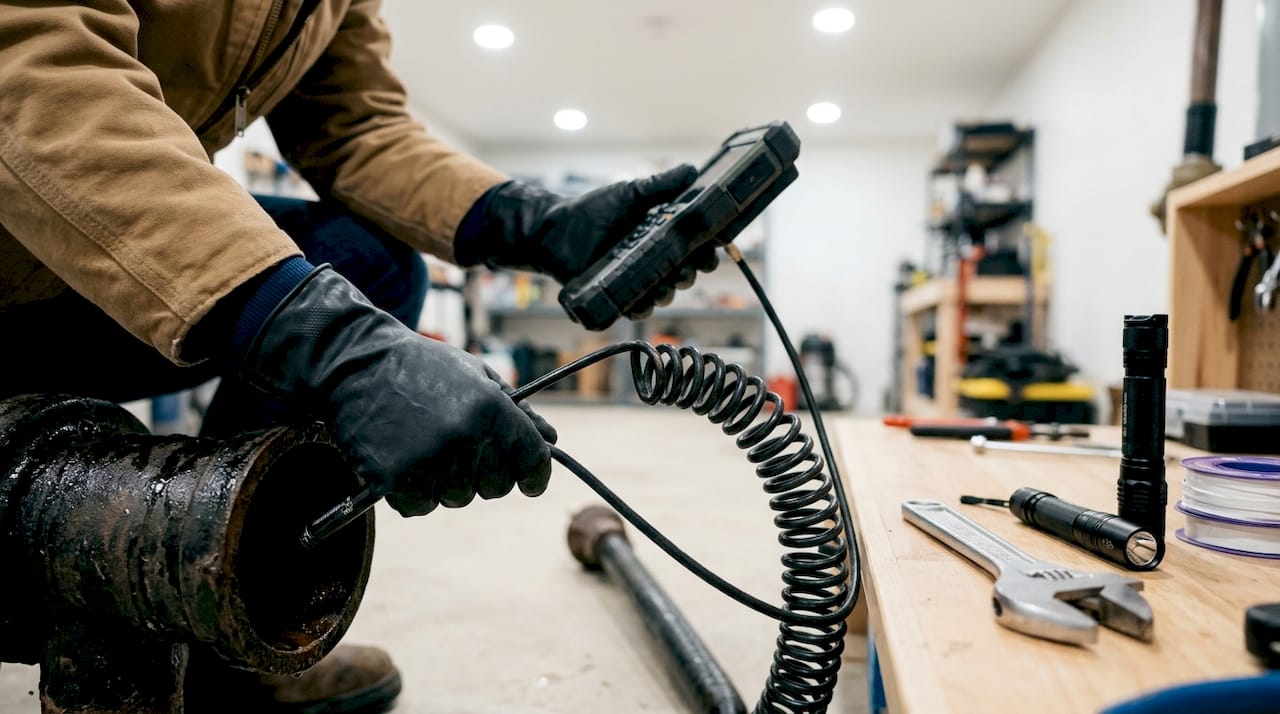
- Schedule annual camera inspections. Camera scans of private lateral lines reveal cracks, root intrusion, and illegal connections before they cause a backup. This is the single highest-value preventive action available.
- Remove illegal sump pump connections. If your sump pump discharges into the sanitary sewer, disconnect it. Route it to daylight or a dry well instead.
- Clean gutters and downspouts twice a year. Clogged gutters overflow against your foundation, saturating soil and increasing infiltration into your lateral line.
- Install a backflow prevention valve. A backflow preventer on your main sewer lateral physically blocks sewage from reversing into your home during a municipal surcharge. It is one of the most cost-effective flood protection tools available.
- Hydro jet your lateral every few years. High-pressure water jetting clears accumulated grease, sediment, and early-stage root growth before it becomes a full blockage.
Pro Tip: Schedule your lateral camera inspection in the fall, before the rainy season. You will catch root growth at its peak and have time to repair it before the first major storm.
Consistent plumbing preventive maintenance is the difference between a dry basement and a sewage cleanup bill. Most homeowners only call a plumber after a backup. The ones who avoid backups entirely are the ones who inspect before the storm.
What role do municipal authorities play in managing drainage?
Homeowners are responsible for their private lateral line from the home to the property line. The city owns everything from the property line to the main sewer. That boundary matters when a backup occurs, because the cause determines who pays for the fix.
Municipal responsibilities include maintaining main sewer lines, operating pump stations, and managing stormwater infrastructure. When pump stations fail during heavy rain, the entire neighborhood downstream loses discharge capacity. That failure is the city's responsibility to repair, but the sewage that enters your home is still your problem to clean up.
Homeowners can take several steps to work with their municipality:
- Report backups to your city's environmental services or public works department immediately. Many cities track backup reports to identify failing main lines.
- Ask your city whether a lateral lining or backflow prevention subsidy program exists. Several municipalities offer cost-sharing for private lateral repairs that reduce I&I.
- Attend public meetings on sewer capacity upgrades. Informed homeowners who show up and ask questions accelerate infrastructure investment decisions.
- Avoid flushing wipes, grease, or non-biodegradable materials. Every household that reduces its contribution to blockages helps the whole system perform better under storm load.
The relationship between private maintenance and public infrastructure is direct. A neighborhood where homeowners maintain their laterals and eliminate illegal connections puts significantly less stress on the municipal system during a storm.
Key Takeaways
Drains back up during rain when sewer system capacity is exceeded, and private plumbing defects on your property make every storm-driven backup worse.
| Point | Details |
|---|---|
| Rainfall threshold matters | More than 3.5 inches per hour can exceed municipal sewer capacity and push sewage into homes. |
| I&I is the hidden multiplier | Inflow and infiltration through cracks and illegal connections dramatically increase storm load on sanitary sewers. |
| Basement drains are the first warning | The lowest plumbing fixture in your home is the first place sewage appears during a municipal surcharge. |
| Multiple fixtures signal a main line issue | When two or more fixtures back up simultaneously during rain, the problem is in the main line, not a single drain. |
| Camera inspections prevent backups | Annual lateral line scans catch cracks, roots, and illegal connections before they cause a storm-driven backup. |
What 15 years of sewer calls taught me about rain and drains
The most common thing I see after a major rainstorm is a homeowner who is genuinely shocked that their drains backed up. They had no visible warning signs. The toilet flushed fine the day before. The basement drain looked clean. But the lateral line had a root intrusion the size of a fist sitting 40 feet from the house, and nobody knew it was there.
Heavy rain does not create plumbing problems. It reveals them. Every crack, every illegal connection, every root that has been quietly growing for three years shows up the moment the municipal system surcharges and pushes back. That is why I tell every homeowner: the storm is not the problem. The storm is the test.
The fix that most people overlook is the camera inspection. Homeowners will spend money on a new water heater, new fixtures, even a full bathroom remodel, but they will skip a $300 lateral scan that would have told them their 1960s clay pipe has three cracks and a root ball. I have seen that decision cost people $15,000 in sewage cleanup and pipe replacement.
The other thing I have learned is that backflow prevention valves are underused. They are not expensive, they are not complicated to install, and they physically stop sewage from entering your home during a surcharge. If you live in an area with aging municipal infrastructure, a backflow preventer is not optional. It is the most practical protection you can put between your basement and the city sewer. Learn to recognize the emergency plumbing signs before a storm forces the issue.
— Kirk
Drainpointplumbing: local sewer and drain expertise for Santa Maria homeowners
Drain backups during rain are not random. They follow a pattern, and that pattern starts with private lateral defects that a camera inspection can find before the next storm hits.
Drainpointplumbing serves residential and commercial clients across Santa Barbara County with sewer camera inspections, hydro jetting, and drain cleaning backed by over 15 years of local experience. If your drains backed up during the last rainstorm, or if you want to know what your lateral line looks like before the next one, the team is available 24/7. Request a free quote for residential plumbing repairs and get a clear answer on what your system needs.
FAQ
Why do drains back up specifically during rain?
Rain increases the volume of water entering sewer systems through inflow and infiltration, pushing capacity past its limit and forcing wastewater backward into homes through the lowest plumbing fixtures.
Is a rain-related drain backup a city problem or my problem?
The city owns the main sewer line; you own the private lateral from your home to the property line. If the backup originates in the municipal main, the city is responsible for the main, but you are responsible for cleanup inside your home.
What is the fastest way to stop sewage from backing up into my basement?
Installing a backflow prevention valve on your main sewer lateral is the most direct protection. It physically blocks sewage from reversing into your home during a municipal surcharge.
How do I know if my sewer lateral is causing the backup?
A camera inspection of your lateral will show cracks, root intrusion, and illegal connections that allow stormwater to enter the sanitary system and worsen backups.
Can gutters and downspouts really affect drain backups?
Yes. Downspouts that discharge near the foundation saturate soil around your lateral line, increasing groundwater infiltration into cracked pipes and adding volume to an already strained sewer system during rain.