Drain venting is defined as the process of introducing air into your home's plumbing pipes to equalize pressure and allow wastewater to flow freely. Without it, draining water creates a vacuum that pulls water out of P-traps, the curved pipe sections under every sink and toilet. Once those traps dry out, sewer gases like methane and hydrogen sulfide enter your living space. Understanding how drain venting works is the first step toward catching problems early and keeping your home safe.
How drain venting works within the DWV system
The Drain-Waste-Vent system (DWV) is the complete network that moves wastewater out of your home and manages the air pressure that makes that movement possible. It has three distinct parts working together at all times.
- Drain pipes carry wastewater away from fixtures by gravity.
- Waste pipes collect discharge from toilets and route it to the main sewer line.
- Vent pipes run from drain lines up through the roof, supplying fresh air to the system.
The DWV system operates entirely on gravity and atmospheric pressure balance. No pumps assist waste movement, which makes proper pipe slope and unobstructed vents critical for performance.
Vent pipes prevent vacuum formation by keeping air pressure in the drain lines equal to the air pressure outside. Think of it like a drinking straw: if you put your thumb over the top and lift, the liquid stays in the straw. Remove your thumb and it flows out freely. Vent pipes are the "open thumb" in your plumbing system.
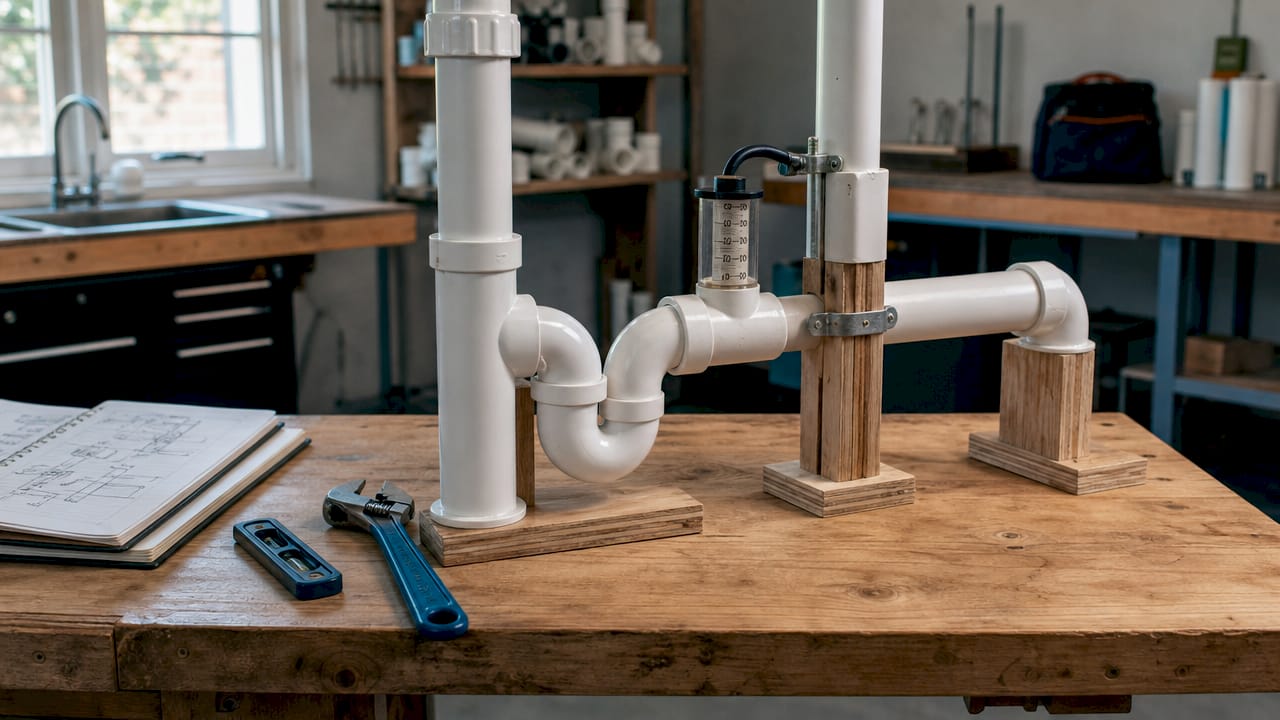
Sewer gas management is a second function of vent pipes, though not the primary one. The most common misconception is that vents exist mainly for odor removal. Their primary mechanical job is to supply air so water drains without creating suction. The odor control comes as a result of keeping P-trap seals intact, not from venting gases directly.
Why does pressure balance matter in drain pipes?
When water rushes down a drain pipe, it temporarily displaces the air in that pipe. That displacement creates a zone of negative pressure directly behind the moving water. IPC standards require venting to keep pressure differentials below a 1-inch water column limit to prevent trap seal failure. That limit exists because even a small pressure drop is enough to siphon the water out of a P-trap.
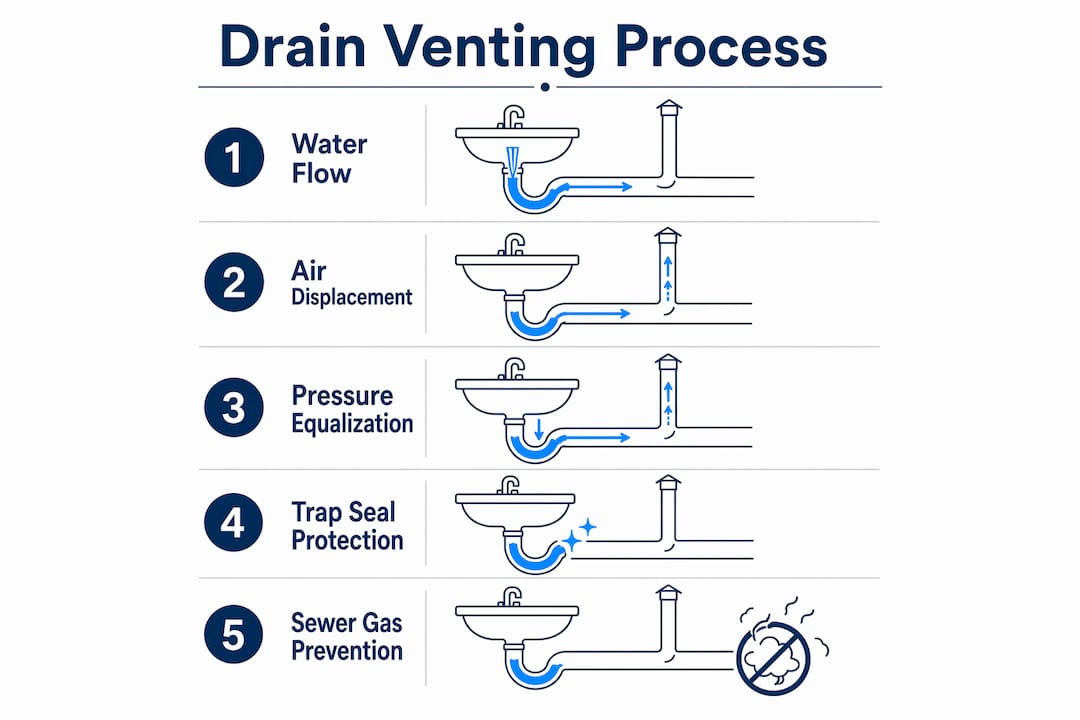
The consequences of a siphoned trap are invisible at first. Pressure differentials exceeding 1 inch of water column can pull water from P-traps without any visible warning sign like a slow drain or backup. You will not see it happen. You will only notice it when you start smelling something foul.
Positive pressure is also a problem. If a vent is blocked, air has nowhere to escape when wastewater pushes through the pipe. That trapped air forces its way out through the nearest opening, which is usually a P-trap. The result is the same: a broken water seal.
Common symptoms of poor venting include:
- Gurgling sounds from drains after flushing a toilet or running a sink
- Slow drainage that does not improve after clearing the drain itself
- Sewer odors inside bathrooms or kitchens, especially near floor drains
- Bubbling water in a toilet bowl when a nearby sink drains
Gurgling noises indicate air being pulled through P-traps due to negative pressure from a vent blockage. That sound is your plumbing telling you something is wrong before a bigger problem develops.
Pro Tip: If you smell sewer gas but all your drains seem to flow fine, suspect a siphoned P-trap first. Pour a cup of water into any floor drain or rarely used sink to refill the trap seal before calling a plumber.
How can homeowners identify and troubleshoot venting problems?
Many homeowners misdiagnose vent problems as clogs. Blocked roof vents are a common cause of drainage symptoms and require inspection at the roof level, not under the fixture. Leaves, bird nests, and debris are the most frequent culprits.
A simple test confirms whether your vent stack is blocked:
- Flush a toilet and listen for gurgling from a nearby sink or tub drain. Gurgling confirms negative pressure is pulling air through a P-trap instead of through the vent.
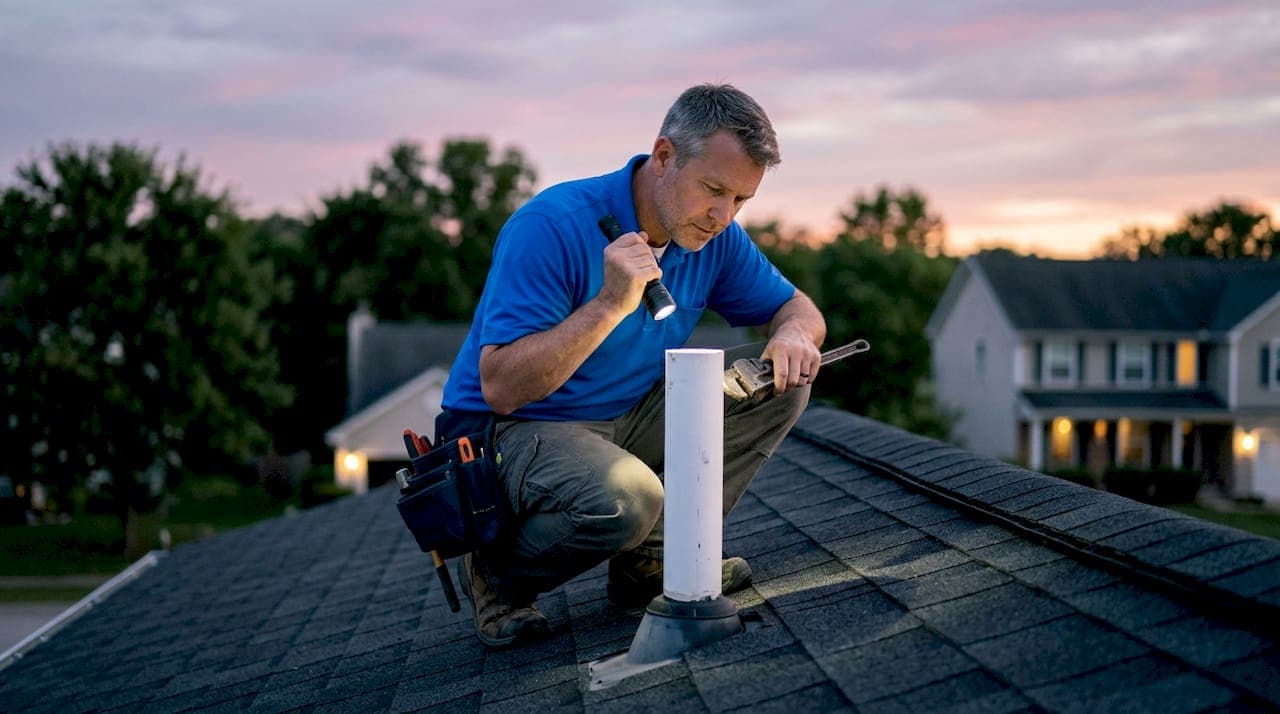
- Go to the roof and locate the vent stack pipe. Look down into it with a flashlight for visible debris.
- Use a garden hose to flush water down the vent stack from the roof. A clear vent allows water to flush freely without backing up.
- Use a plumber's snake if the hose flush does not clear the blockage. Insert it from the roof opening and work it down to break up compacted debris.
- Call a professional if the blockage is deep, if you find cracked or disconnected vent pipes, or if symptoms persist after clearing the stack.
Pro Tip: Always use a safety harness when accessing your roof to inspect vent stacks. Roof work is the leading cause of DIY home maintenance injuries. If your roof pitch is steep, skip the DIY approach entirely.
For identifying vent blockages, the toilet flush test is the fastest diagnostic tool available to a homeowner. It costs nothing and takes 30 seconds. If you hear gurgling in a drain that is not the one you flushed, you have a venting problem, not a clog.
Sewer odors that appear during a home inspection are a red flag worth investigating. A home inspection checklist should always include checking for sewer gas odors near floor drains, under sinks, and around toilet bases, since these often point directly to failed vent systems or dry P-traps.
What do building codes require for vent pipe installation?
The 2026 International Plumbing Code (IPC) sets specific rules for how vent pipes must connect to drain lines. These rules exist to protect trap seals and maintain drainage velocity. The most practical requirement for homeowners and DIYers is the maximum trap-to-vent distance.
Trap-to-vent distances by trap size define how far a vent connection can be from the trap it serves:
| Trap size | Max horizontal distance to vent |
|---|---|
| 1-1/4 inch | 5 feet |
| 1-1/2 inch | 6 feet |
| 2 inch | 8 feet |
| 3 inch | 12 feet |
| 4 inch | 16 feet |
Exceeding these distances means the vent cannot equalize pressure fast enough to protect the trap seal during drainage. The IPC also requires a minimum pipe slope of 1/4 inch per foot for drain pipes 2-1/2 inches and under. That slope creates the self-cleaning velocity that keeps pipes from accumulating solids. For plumbing load calculations and pipe sizing in new construction or remodels, these slope and distance rules are non-negotiable.
IPC §901.2 mandates the 1-inch water column pressure differential limit. Any vent installation that cannot maintain that limit fails code, regardless of how it looks visually.
What are Air Admittance Valves and when should you use them?
Air Admittance Valves (AAVs) are mechanical one-way valves installed inside the home, typically under a sink or in a wall cavity, that admit air into drain lines without requiring a pipe run to the roof. They open under negative pressure to let air in and close when pressure equalizes to block sewer gas from escaping.
AAVs are code-approved for specific applications, but they have real limitations:
- AAVs work well for island sinks, where running a vent pipe through cabinetry and up through the roof is impractical.
- They are useful for bathroom additions in finished spaces where cutting through walls for a new vent stack is too disruptive.
- AAVs are not a replacement for the main building vent stack. Every building requires at least one roof vent penetration.
- They require accessible installation so they can be inspected and replaced when the valve mechanism wears out.
- AAVs cannot relieve positive pressure. If a blockage downstream causes pressure to build, an AAV provides no relief.
AAVs open to admit air under negative pressure and close to block sewer gas. That one-way function makes them a supplement to traditional venting, not a substitute. If your home has only AAVs and no roof vent, it does not meet code.
Key Takeaways
A properly vented drain system relies on air pressure balance, correct pipe slope, and code-compliant vent distances to protect trap seals and prevent sewer gas from entering your home.
| Point | Details |
|---|---|
| Venting equalizes pressure | Vent pipes supply air to prevent the vacuum that siphons water from P-traps. |
| Gurgling is an early warning | Gurgling drains signal negative pressure pulling air through traps, not just a clog. |
| Code sets maximum distances | The 2026 IPC limits trap-to-vent distance from 5 feet (1-1/4 inch trap) to 16 feet (4-inch trap). |
| AAVs supplement, not replace | Air Admittance Valves are code-approved for specific uses but cannot replace the main roof vent. |
| Roof-level inspection is key | Most vent blockages occur at the roof stack and require inspection from above, not below. |
What most homeowners get wrong about drain venting
After 15 years of working on residential plumbing across Santa Barbara County, the pattern I see most often is this: a homeowner spends an hour snaking a drain that flows perfectly fine. The real problem is 20 feet above their head on the roof.
Vent issues mimic clogs almost exactly. Slow drainage, gurgling, and odors all point toward a blockage, but the blockage is in the vent stack, not the drain line. The fix is completely different. A drain snake does nothing for a bird nest sitting in your roof vent. I have seen homeowners replace perfectly good P-traps, buy enzyme drain cleaners by the case, and call three different plumbers before someone finally climbed onto the roof and found the actual problem in five minutes.
The other thing I want homeowners to understand is that sewer gas hazards are not just unpleasant. Methane and hydrogen sulfide are toxic at elevated concentrations. A siphoned P-trap in a basement bathroom or a rarely used guest bath can expose your family to those gases for weeks before anyone connects the smell to a plumbing problem. Checking your floor drains and infrequently used fixtures every few months costs nothing.
My honest advice: learn the toilet flush test, inspect your roof vent stack once a year in the fall after leaves drop, and pour water into any drain you have not used in the past month. Those three habits will catch 90% of vent problems before they become expensive repairs.
— Kirk
Drainpointplumbing: professional venting and plumbing repairs in Santa Maria
Vent problems are straightforward to diagnose when you know what to look for. When the issue goes deeper than a blocked stack, you need a licensed plumber with the right tools.
Drainpointplumbing has served Santa Barbara County homeowners for over 15 years, handling everything from residential plumbing repairs and fixture replacements to full sewer camera inspections and hydro jetting. If you are dealing with persistent gurgling, sewer odors, or slow drains that do not respond to basic troubleshooting, the team at Drainpointplumbing can diagnose the root cause fast. For urgent issues, 24/7 emergency plumbing is available any time of day or night. Request a free quote and get a clear answer without the guesswork.
FAQ
What is the main purpose of a drain vent?
A drain vent supplies air to the plumbing system to equalize pressure and prevent vacuum formation. Its primary function is to protect P-trap water seals, not to remove odors.
How do I know if my plumbing vent is blocked?
Flush a toilet and listen for gurgling in nearby drains. Gurgling confirms negative pressure is pulling air through P-traps instead of through the vent stack.
Can I use an Air Admittance Valve instead of a roof vent?
AAVs are code-approved for specific applications like island sinks, but every building still requires at least one roof vent penetration. AAVs cannot replace the main vent stack.
What happens if a P-trap loses its water seal?
Sewer gases including methane and hydrogen sulfide enter the home through the dry trap. This can happen without any visible drainage problem, making vent pressure regulation a safety issue, not just a comfort one.
How far can a vent be from a trap?
The 2026 IPC sets maximum trap-to-vent distances based on pipe size, ranging from 5 feet for a 1-1/4 inch trap up to 16 feet for a 4-inch trap. Exceeding these distances risks trap seal failure.