
Plumbing permits are official government approvals required before most home plumbing upgrades can legally begin. They exist to enforce the Uniform Plumbing Code (UPC) and local Santa Maria building standards, protecting homeowners from safety hazards, insurance gaps, and costly legal problems. Skipping a permit to save time is one of the most expensive mistakes a property owner can make. Understanding why plumbing permits matter for upgrades is the first step toward protecting your home, your finances, and your ability to sell the property later. Drainpointplumbing works with Santa Maria homeowners every day to handle permits correctly from the start.
Why plumbing permits matter for upgrades
Permits are not bureaucratic red tape. They are the mechanism that ensures a licensed inspector verifies your plumbing work before walls close and problems become invisible. Inspections verify concealed plumbing quality behind walls or under slabs, catching errors that would otherwise cause leaks, sewer gas intrusion, or contamination years later. That verification is the core value of the permit process.
The UPC sets minimum safety standards for pipe materials, pressure ratings, venting, and drainage slopes. Local Santa Maria codes add requirements on top of those, particularly around seismic strapping for water heaters and backflow prevention. A permit guarantees your upgrade meets both layers of code. Without it, you have no documented proof that the work was done correctly.
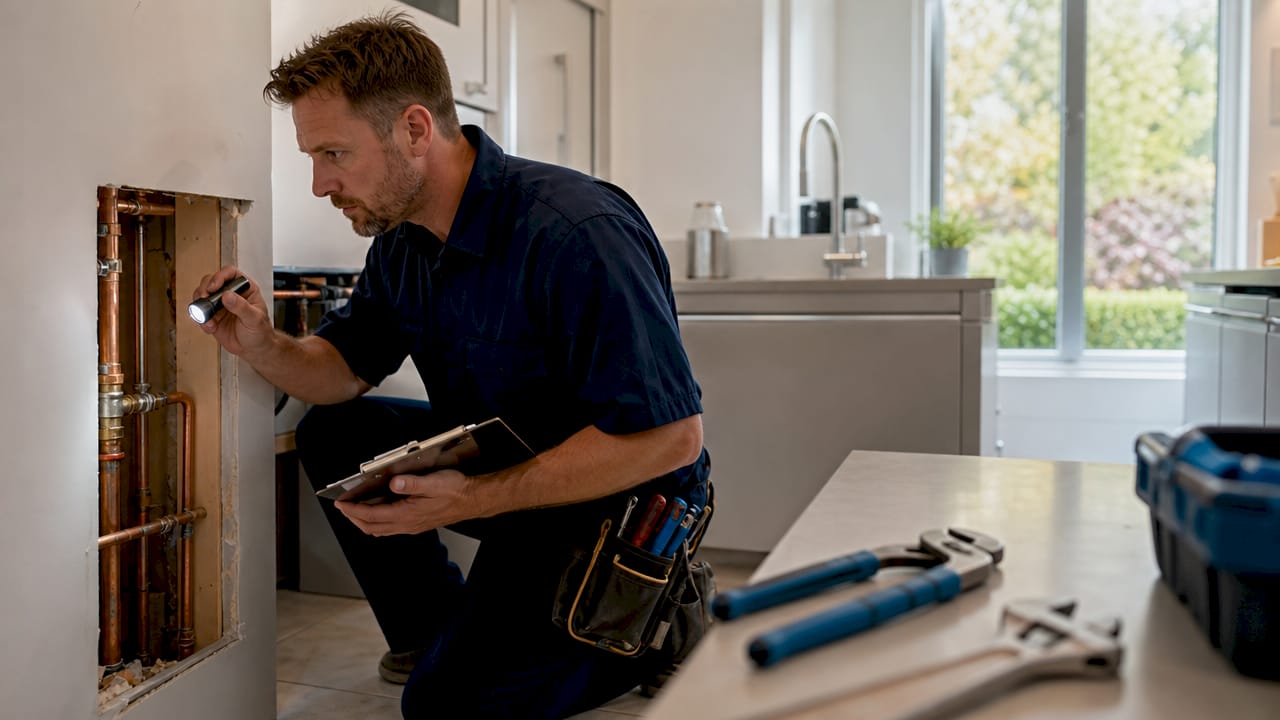
Permits also create a paper trail. A permit record protects future buyers and service crews by providing a verified inspection history. When a plumber or inspector visits your property years from now, they can see exactly what was installed, when, and to what standard. That history has real dollar value at resale.
What types of plumbing upgrades require permits in Santa Maria?
Not every plumbing task triggers a permit requirement. The distinction comes down to scope and risk.
Projects that almost always require permits include:
- Water heater replacement (both traditional tank and tankless systems)
- Fixture relocation, such as moving a sink or toilet to a new position
- Gas line work, including new connections or rerouting existing lines
- Sewer line repair or replacement, including trenchless methods
- New piping runs, whether copper, PEX, or CPVC
- Repiping an entire home or a major section of it
- Any work that opens walls or floors to access existing plumbing
Water heater replacement, fixture relocation, gas line work, and sewer line repairs almost always require permits because they involve systems that directly affect safety and sanitation. A like-for-like faucet swap at the same location, on the other hand, generally does not require a permit. The rule of thumb: if the work changes the location, capacity, or configuration of a plumbing system, a permit is required.
Opening walls for plumbing repairs triggers permit requirements even when the visible leak seems minor. The moment a wall opens, the work becomes subject to inspection. Many homeowners are surprised by this rule, but it exists because hidden plumbing is where the highest-risk failures occur.

Pro Tip: Before starting any kitchen or bathroom remodel in Santa Maria, contact the City of Santa Maria Building and Safety Division to confirm permit requirements. A five-minute call can prevent a five-figure problem.
What are the risks of doing plumbing upgrades without permits?
The financial and legal consequences of skipping permits are severe and often permanent.
Insurance claim denial
Performing plumbing work without a permit risks denial of homeowner insurance claims for related water damage. If a pipe installed without a permit fails and floods your kitchen, your insurer can deny the entire claim on the grounds that the work was not code-compliant. Permit fees run $75–$400. A denied water damage claim can cost tens of thousands of dollars. The math is not close.
For a broader look at how insurance intersects with home system upgrades, the California HVAC insurance guide shows how the same principle applies across home systems.
Fines, stop-work orders, and forced demolition
Municipal fines for unpermitted work can reach $500 or more per day. A building inspector who discovers unpermitted work can issue a stop-work order immediately. In serious cases, the city can require you to demolish finished work so an inspector can verify what is behind the walls. That means tearing out tile, drywall, and cabinetry at your expense.
Real estate transaction problems
68% of home inspectors flag unpermitted plumbing work as a major red flag during real estate transactions. Buyer concessions for unpermitted work range from $3,000 to $15,000, and some buyers walk away entirely. If you are selling a Santa Maria property, unpermitted plumbing can delay closing, reduce your sale price, or kill the deal outright.
Voided warranties and retroactive costs
Water heater permits require inspection of T&P relief valves and seismic strapping. Skipping that inspection voids the manufacturer warranty immediately. Beyond warranties, retroactive permits can require costly reopening of finished walls and floors, creating expenses that dwarf the original permit fee. Skipping a $150 permit to save money is false economy when retroactive compliance costs thousands.
How do permits protect your investment and property value?
Permits protect your investment in three concrete ways: safety assurance, legal documentation, and resale value.
Safety assurance through inspection
A permitted upgrade goes through at least two inspections: a rough-in inspection before walls close and a final inspection after work is complete. Those inspections catch installation errors that even experienced contractors occasionally make. A missed vent connection, an undersized drain, or an improperly strapped water heater are all problems an inspector will catch before they become emergencies. Permits ensure plumbing integrity where work is hidden and high risk.
Legal documentation and inspection chain
Permitting creates an inspection documentary chain critical for future property management and resale clarity. Without permit records, owners must argue from memory when problems arise. With them, you have a government-stamped record showing exactly what was installed and when it passed inspection. That record is valuable to lenders, insurers, and buyers alike.
Understanding how plumbing upgrades affect property value makes the case even clearer. Permitted work is verifiable work, and verifiable work commands a higher price.
Pro Tip: Keep a physical and digital copy of every permit and inspection sign-off for your property. Store them with your deed and title documents. Future buyers and their agents will ask for them.
How to manage plumbing permits for upgrades in Santa Maria
Getting a permit is a straightforward process when you know the steps.
-
Determine if your project requires a permit. Check with the City of Santa Maria Building and Safety Division or ask your licensed plumber. Any project involving new pipe runs, relocated fixtures, gas lines, water heaters, or sewer work will almost certainly require one.
-
Decide who pulls the permit. In California, a licensed plumber can pull the permit on your behalf, which is the most common approach. Homeowners can also pull their own permits for work they perform themselves, but this requires demonstrating knowledge of applicable codes.
-
Submit the permit application. Applications go to the City of Santa Maria Building and Safety Division. You will need a project description, property address, and in some cases a simple diagram of the planned work. Fees typically run $75–$400 depending on project scope.
-
Schedule the rough-in inspection. Before closing walls or covering any new plumbing, call for a rough-in inspection. The inspector verifies pipe placement, venting, and connections meet UPC and local code requirements.
-
Complete the work and schedule the final inspection. Once the inspector approves the rough-in, finish the work and request a final inspection. The inspector confirms everything is complete and issues a sign-off.
-
File your permit documentation. Keep the approved permit and both inspection sign-offs with your property records.
Emergency plumbing repairs can proceed without pre-approval, but require next-business-day notification and permit filing. Failing to file promptly turns emergency work into unpermitted work with penalties. If Drainpointplumbing responds to an emergency at your property, the team handles that notification process as part of the service.
For a full picture of what your plumbing system looks like before any upgrade, a whole-house plumbing inspection is a smart first step. It identifies existing issues that could affect your permit application or project scope.
Key takeaways
Plumbing permits protect Santa Maria homeowners from insurance denial, fines, failed home sales, and voided warranties, making them a non-negotiable part of any upgrade.
| Point | Details |
|---|---|
| Permits enforce safety codes | UPC and local Santa Maria codes require inspection of hidden plumbing before walls close. |
| Skipping permits risks insurance denial | Unpermitted work can void homeowner insurance claims for water damage, costing far more than the permit fee. |
| Real estate impact is significant | 68% of home inspectors flag unpermitted work, and buyer concessions range from $3,000 to $15,000. |
| Water heaters are the most skipped permit | Even like-for-like replacements require inspection of T&P valves and seismic strapping; skipping voids warranties. |
| Permits create lasting documentation | Inspection records protect property value, satisfy lenders, and give future buyers confidence in the work. |
What I have seen after 15 years of permit-related plumbing work
The most common thing I hear from homeowners is: "The contractor said we don't need a permit for this." Sometimes that is true. Often it is not. Contractors who skip permits are usually trying to save time, not money for you. The permit process adds a few days to a project. The consequences of skipping it can last for years.
The cases that stick with me are the real estate ones. A homeowner in Santa Maria spent $12,000 on a bathroom remodel, no permits pulled. When they went to sell three years later, the buyer's inspector flagged the work immediately. The seller had to either pull a retroactive permit, open the walls for inspection, and fix two code violations, or drop the sale price by $10,000. They chose the price reduction. That $12,000 remodel effectively cost them $22,000 when you account for the lost value.
Permits also protect you from your own contractor. When an inspector reviews the rough-in, they are checking the plumber's work independently. That is a layer of quality control you do not get on unpermitted jobs. I have seen inspectors catch improper venting, undersized drain lines, and missing seismic straps that would have caused serious problems within a few years.
My advice to every Santa Maria homeowner: treat the permit fee as part of the project budget, not an optional add-on. The $150 you spend on a permit is the cheapest insurance you can buy for a $5,000 upgrade.
— Kirk
Drainpointplumbing handles permits so you don't have to
Pulling permits, scheduling inspections, and keeping documentation in order adds real complexity to any plumbing upgrade. Drainpointplumbing manages that entire process for Santa Maria homeowners and property managers, from permit application through final inspection sign-off.
With over 15 years of experience in Santa Barbara County, Drainpointplumbing handles residential plumbing repairs and upgrades with full code compliance built into every job. Whether you need a water heater replacement, a bathroom remodel, or a sewer line repair, the team knows exactly which permits apply and how to get them approved without delays. Request a free quote and get a clear picture of what your project requires before work begins.
FAQ
What plumbing work requires a permit in Santa Maria?
Water heater replacement, fixture relocation, gas line work, sewer line repair, and any new pipe runs require permits in Santa Maria. Like-for-like fixture swaps at the same location generally do not.
Can I lose my homeowner insurance for unpermitted plumbing?
Yes. Insurers can deny water damage claims when the source is unpermitted plumbing work. The permit fee is minor compared to the cost of a denied claim.
How much does a plumbing permit cost?
Plumbing permit fees typically run $75–$400 depending on project scope. Retroactive permits cost two to three times more and may require opening finished walls for inspection.
Does a licensed plumber pull the permit or do I?
In California, a licensed plumber can pull the permit on your behalf, which is the standard approach. Homeowners can pull their own permits for self-performed work but must meet code knowledge requirements.
What happens if I sell a home with unpermitted plumbing?
Home inspectors flag unpermitted plumbing in 68% of real estate transactions. Buyers typically request concessions of $3,000 to $15,000, or they may cancel the purchase entirely.