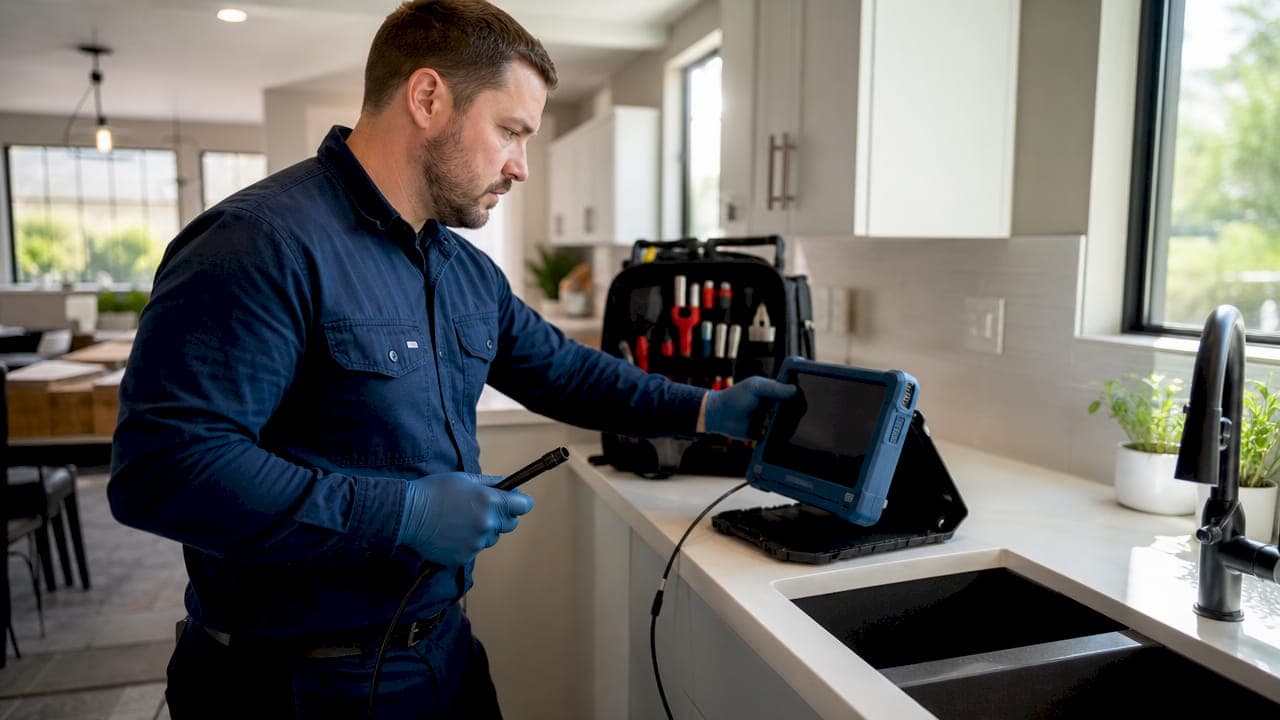
A plumbing diagnostic inspection is a targeted, non-invasive evaluation that uses specialized tools to identify the root cause of a specific plumbing problem within your home's system. Unlike a general walkthrough, this process relies on technology like video camera inspections, pressure gauges, electronic leak detectors, and thermal imaging to find exactly what is wrong and where. For homeowners and property managers in Santa Maria, understanding what a plumbing diagnostic inspection involves is the difference between a lasting fix and a costly repeat repair.
What does a plumbing diagnostic inspection involve?
A plumbing diagnostic inspection goes well beyond what a plumber can see with their eyes. The goal is root cause identification, not symptom treatment. Plumbers use a set of specialized, non-invasive tools to map what is happening inside your pipes, walls, and under your slab.
The four core tools used in a professional diagnostic are:
- Video camera inspection: A flexible camera is fed through your pipes to deliver a live view of pipe interiors, revealing blockages, root intrusion, fractures, pipe collapses, and grease buildup with precision no visual check can match.
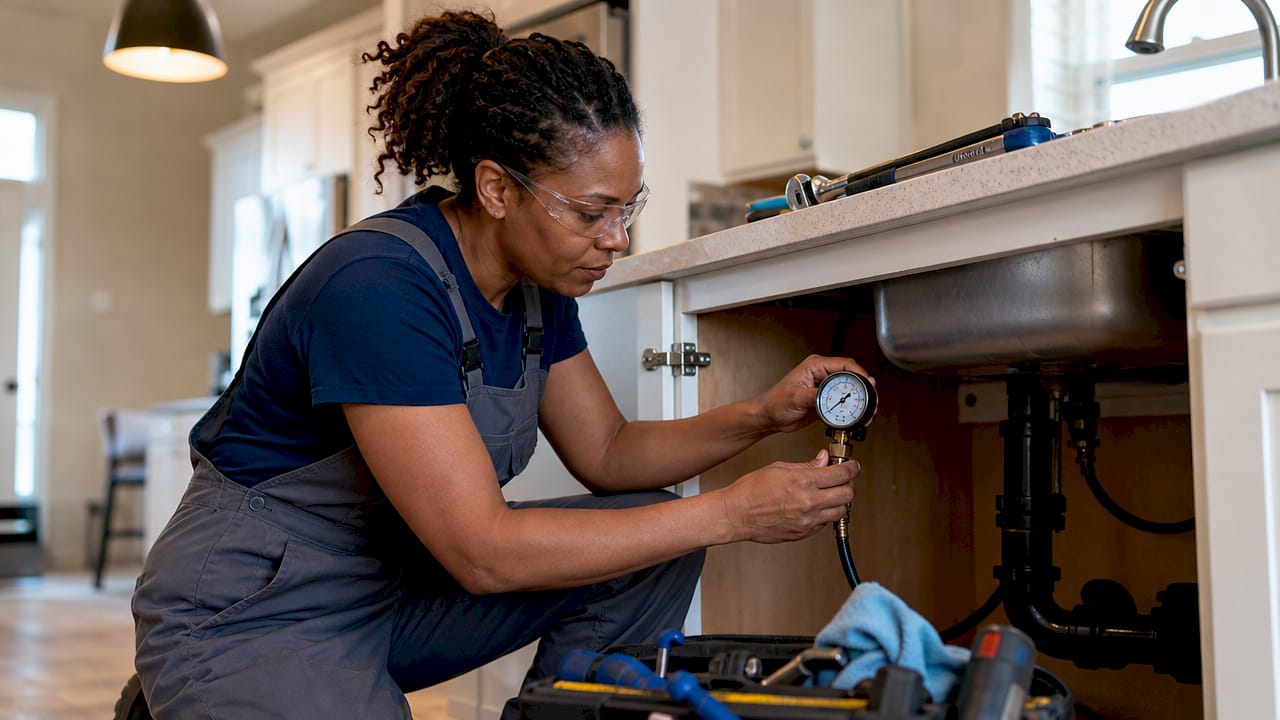
- Pressure testing: Water supply lines are subjected to specific pressure thresholds. If pressure drops, the plumber pinpoints where a leak or structural weakness exists, all without opening a single wall.
- Electronic leak detection: Listening devices and sensors detect escaping water in concealed pipes or under slabs, giving pinpoint accuracy with minimal disruption.
- Thermal imaging: Infrared scanners read temperature variations to highlight hidden moisture and hot water leaks that no visible symptom would reveal.
A professional diagnostic inspection typically takes 2 to 4 hours to complete, depending on system complexity and property size. That timeframe is longer than most homeowners expect, but it reflects the thoroughness required to reach a reliable conclusion.
The inspection process is not passive. Your plumber will run water through fixtures, check water pressure at multiple points, and insert cameras into drain lines and sewer connections. Every tool generates data. Together, that data builds a complete picture of your system's condition.
Pro Tip: Before the plumber arrives, write down every symptom you have noticed, including unusual smells, gurgling drains, slow fixtures, or water stains. Homeowner observations significantly improve diagnostic accuracy by linking real system behavior to the data collected during the inspection.
How is a plumbing diagnostic inspection different from a standard plumbing inspection?
The terms "diagnostic inspection" and "standard plumbing inspection" are often used interchangeably, but they serve very different purposes. Knowing the difference helps you ask for the right service.
A diagnostic inspection targets a specific complaint. You have a slow drain, a mysterious wet spot, or a spike in your water bill. The plumber focuses all tools and attention on finding the cause of that problem. A targeted diagnostic inspection is often more efficient and cost-effective than a whole-house review when you are solving a specific issue.
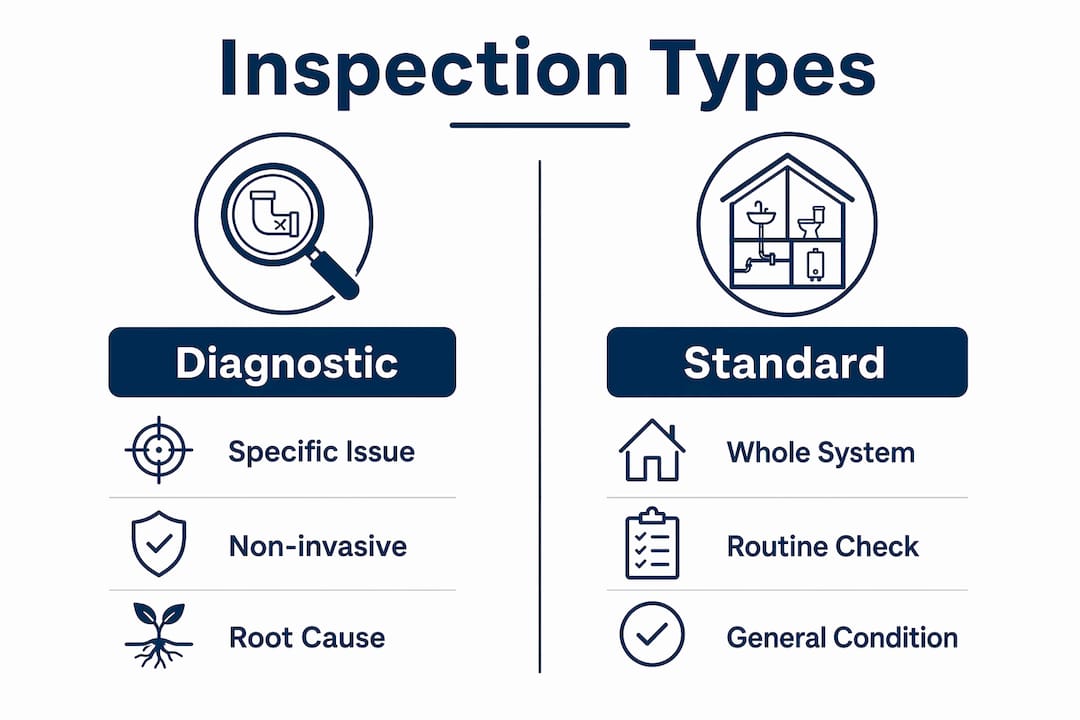
A standard plumbing inspection, by contrast, assesses the overall condition of your entire system. It is used for home purchases, insurance reviews, or routine maintenance. You can review a full whole-house plumbing inspection checklist to understand what that broader process covers.
Code inspections are a third, separate category. Rough-in, above-ground, and final code inspections verify legal compliance during new construction. They are not designed to diagnose repair problems.
| Feature | Diagnostic inspection | Standard plumbing inspection |
|---|---|---|
| Purpose | Find root cause of a specific problem | Assess overall system condition |
| Scope | Targeted to complaint area | Whole-house review |
| Tools used | Cameras, sensors, thermal imaging | Visual check, basic pressure test |
| Outcome | Repair recommendation for identified issue | Condition report for full system |
| When to use | Persistent symptom or suspected failure | Home purchase, maintenance, compliance |
Why plumbing diagnostics matter for Santa Maria homeowners
Early detection is the primary financial argument for plumbing diagnostics. Regular diagnostic evaluations allow plumbers to catch minor wear like pipe corrosion before it becomes an emergency repair or a full repiping project. That difference in cost is significant.
Santa Maria homeowners face specific local conditions that raise the stakes. Hard water from the Central Coast's water supply accelerates mineral buildup inside pipes and at fixture connections. Older residential neighborhoods in Santa Maria also carry aging plumbing infrastructure, where galvanized steel and cast iron lines are still common. Both factors increase the likelihood of hidden corrosion and slow leaks that only a diagnostic inspection will catch.
For property managers overseeing rental units or commercial buildings, the case is even stronger. Undetected leaks cause structural water damage, mold growth, and tenant complaints. Routine sewer line diagnostic benefits for property managers include reduced liability and lower long-term maintenance costs.
Schedule a diagnostic inspection when you notice any of these signs:
- Unexplained increases in your water bill
- Persistent slow drains that do not respond to standard clearing
- Gurgling sounds from toilets or drains
- Damp spots on walls, ceilings, or floors with no obvious source
- Low water pressure at one or more fixtures
- Sulfur or sewage odors inside the home
Pro Tip: Build a plumbing diagnostic into your annual property maintenance routine. Pairing it with a reliable plumbing service contract locks in priority scheduling and often reduces per-visit costs.
What to expect before, during, and after a plumbing diagnostic inspection
Preparation makes the inspection faster and more accurate. Before the plumber arrives, gather any records you have: previous repair invoices, water bills from the past six months, and notes on when symptoms first appeared. Share all of it. Homeowner input improves diagnostic accuracy by connecting observed behavior to the technical data the plumber collects.
During the inspection, expect the following sequence:
- Initial walkthrough: The plumber reviews your concerns, inspects accessible fixtures, and identifies where to focus the diagnostic tools.
- Camera insertion: A video linescope enters drain lines or the sewer connection to document interior pipe conditions in real time.
- Pressure and leak testing: Supply lines are pressurized and monitored. Electronic sensors scan for moisture in walls, floors, and under the slab.
- Thermal imaging scan: If a hot water leak or hidden moisture is suspected, infrared scanning covers the affected area.
- Findings review: The plumber walks you through what the tools found, often showing you the camera footage directly.
After the inspection, you receive a clear diagnosis and a repair recommendation. Ask your plumber these questions before they leave:
- What is the exact location of the problem?
- Is this a repair or a replacement situation?
- Will the repair require opening walls or floors?
- What happens if this issue is left unaddressed?
- Do you have video documentation I can keep for my records?
One critical point: advanced diagnostics are designed to be non-invasive. A plumber who recommends tearing into walls before using a camera or sensor is a red flag. The technology exists precisely to avoid destructive guesswork. If a plumber skips the diagnostic tools and goes straight to demolition, get a second opinion.
Key Takeaways
A plumbing diagnostic inspection is the most reliable way to identify hidden plumbing problems without destructive guesswork, and Santa Maria homeowners who schedule them proactively avoid the highest repair costs.
| Point | Details |
|---|---|
| Definition and purpose | A diagnostic inspection finds the root cause of a specific plumbing problem using non-invasive technology. |
| Core tools used | Video cameras, pressure gauges, electronic leak detectors, and thermal imaging are the standard toolkit. |
| Time required | Expect 2 to 4 hours for a thorough diagnostic, longer than a standard visual inspection. |
| Diagnostic vs. standard inspection | Diagnostic inspections target specific symptoms; standard inspections assess overall system condition. |
| When to schedule one | Unexplained water bills, slow drains, damp spots, low pressure, or sewage odors all warrant a diagnostic. |
Why I always recommend diagnostics before any repair
After more than 15 years working on plumbing systems across Santa Barbara County, the most expensive calls I see are not the ones with big problems. They are the ones where someone already paid for the wrong repair. A homeowner replaces a toilet because it runs constantly, only to find out three months later that the real issue was a pressure regulator failure affecting the whole house. That first repair did nothing. The diagnostic would have cost less.
The non-invasive tools available today make guesswork repairs inexcusable. A video camera inspection shows you exactly what is inside the pipe. Thermal imaging finds the leak without touching a wall. Electronic sensors locate the moisture under the slab before a single tile is lifted. There is no reason to cut into a home before using these tools first.
The other misconception I hear often is that diagnostics are only for serious problems. That is wrong. Catching minor pipe corrosion or a slow root intrusion early costs a fraction of what it costs after the pipe fails. Routine diagnostics are not a luxury. For older Santa Maria homes and rental properties, they are the most cost-effective maintenance decision you can make.
— Kirk
Drainpointplumbing's diagnostic inspection services in Santa Maria
Drainpointplumbing has served Santa Maria and Santa Barbara County for over 15 years, and plumbing diagnostics are a core part of what the team does every day. The technicians use video camera inspections, electronic leak detection, and pressure testing to find problems accurately before any repair work begins.
Whether you are a homeowner dealing with a persistent slow drain or a property manager tracking down an unexplained water bill spike, Drainpointplumbing delivers a clear diagnosis backed by real evidence. The team offers residential plumbing repairs and full diagnostic services across Santa Maria, with 24/7 availability for urgent situations. Request a free quote and get a straight answer about what your plumbing system actually needs.
FAQ
What is included in a plumbing diagnostic inspection?
A plumbing diagnostic inspection includes video camera inspection of drain and sewer lines, pressure testing of water supply lines, electronic leak detection, and thermal imaging to locate hidden moisture. The plumber delivers a findings report with a specific repair recommendation.
How long does a plumbing diagnostic inspection take?
A professional plumbing diagnostic inspection takes 2 to 4 hours, depending on the size of the property and the complexity of the suspected problem.
How is a diagnostic inspection different from a home inspection?
A home inspection covers the entire property at a surface level. A plumbing diagnostic inspection uses specialized tools to find the root cause of a specific plumbing problem, going far deeper than any general home inspection.
When should a Santa Maria homeowner schedule a plumbing diagnostic?
Schedule a diagnostic inspection when you notice unexplained water bill increases, persistent slow drains, low water pressure, damp spots, or sewage odors. These signs of plumbing problems rarely resolve on their own and worsen without a proper diagnosis.
Is a plumbing diagnostic inspection non-invasive?
Yes. Professional plumbing diagnostics use cameras, sensors, and infrared scanning to identify problems without opening walls or floors. Any plumber who recommends destructive work before completing a full diagnostic evaluation should be questioned.