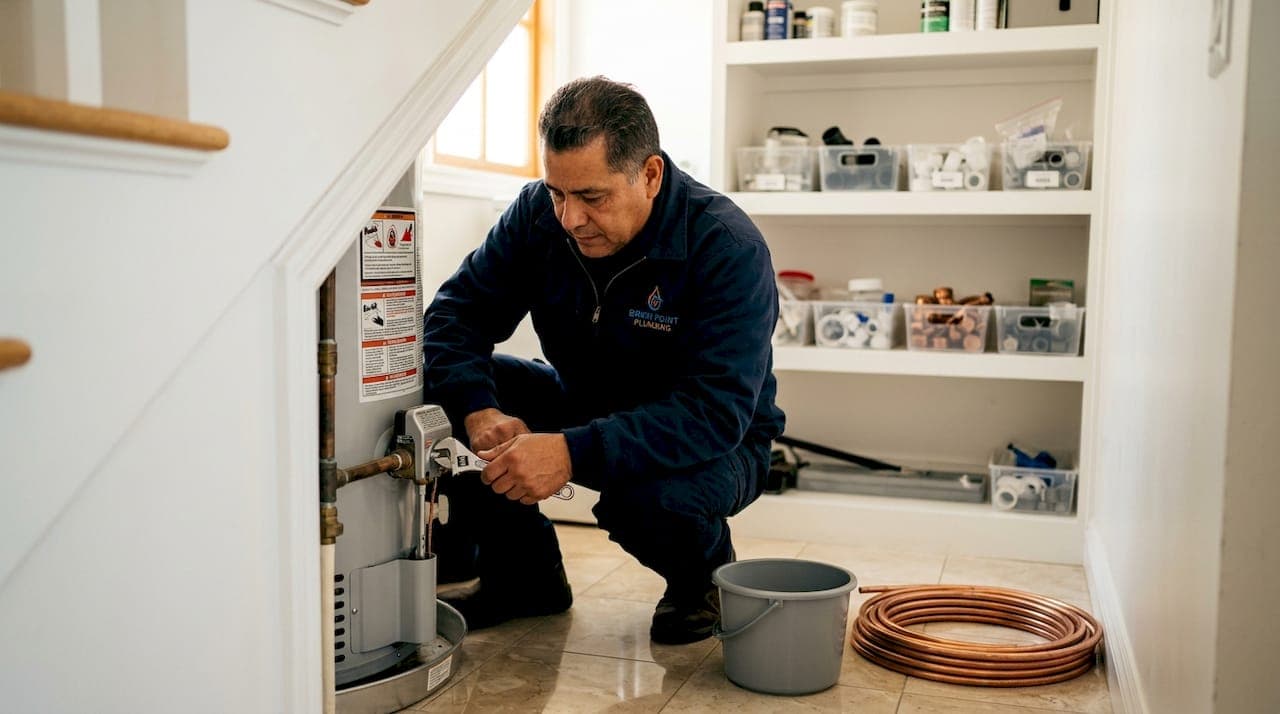
A water heater pressure relief valve, known in the industry as a T&P (temperature and pressure) valve, fails when excessive water pressure, thermal expansion, or mineral buildup impairs its ability to function as a safety device. Understanding why water heater pressure valve fails is not just useful knowledge. It is the difference between a minor repair and a catastrophic tank rupture. Three root causes account for the vast majority of T&P valve failures in residential homes: pressure above 80 PSI, unchecked thermal expansion in closed plumbing systems, and hard water minerals that cement valve components shut. Each cause is preventable with the right maintenance approach.
Why does water heater pressure valve fail from high water pressure?
High water pressure is the leading cause of premature T&P valve failure in American homes. Optimal home water pressure sits between 40 and 60 PSI. When pressure consistently exceeds 80 PSI, the valve discharges repeatedly to relieve the stress, and each discharge cycle degrades the valve seat a little more.
Think of the T&P valve like a pressure cooker's safety release. If the cooker runs too hot too often, the release wears out fast. The same physics apply to your water heater. Every time the valve opens under excessive pressure, the rubber seat takes a hit. Over time, the seat can no longer form a watertight seal, and the valve begins to drip even when pressure is normal.
Signs that high pressure is stressing your valve include:
- Water dripping from the discharge pipe when the heater is not actively heating
- Banging or hammering sounds in your pipes (water hammer)
- Fixtures wearing out faster than expected
- Frequent valve discharge that soaks the floor near the heater
Pressures above 80 PSI frequently damage valves and fixtures throughout the home. The fix is not a new valve. It is a pressure reducing valve (PRV) installed on the main supply line, combined with a thermal expansion tank to absorb pressure spikes.
Pro Tip: Buy a simple pressure gauge at any hardware store and screw it onto a hose bib. Check your home pressure first thing in the morning before any water runs. A reading above 80 PSI means your PRV needs adjustment or replacement before you touch the T&P valve.
How does thermal expansion damage the T&P valve?
Water expands as it heats. In a closed plumbing system, that expansion has nowhere to go, so pressure builds inside the tank. This is called thermal expansion, and it is one of the most overlooked causes of valve failure in homes with backflow preventers or check valves on the supply line.
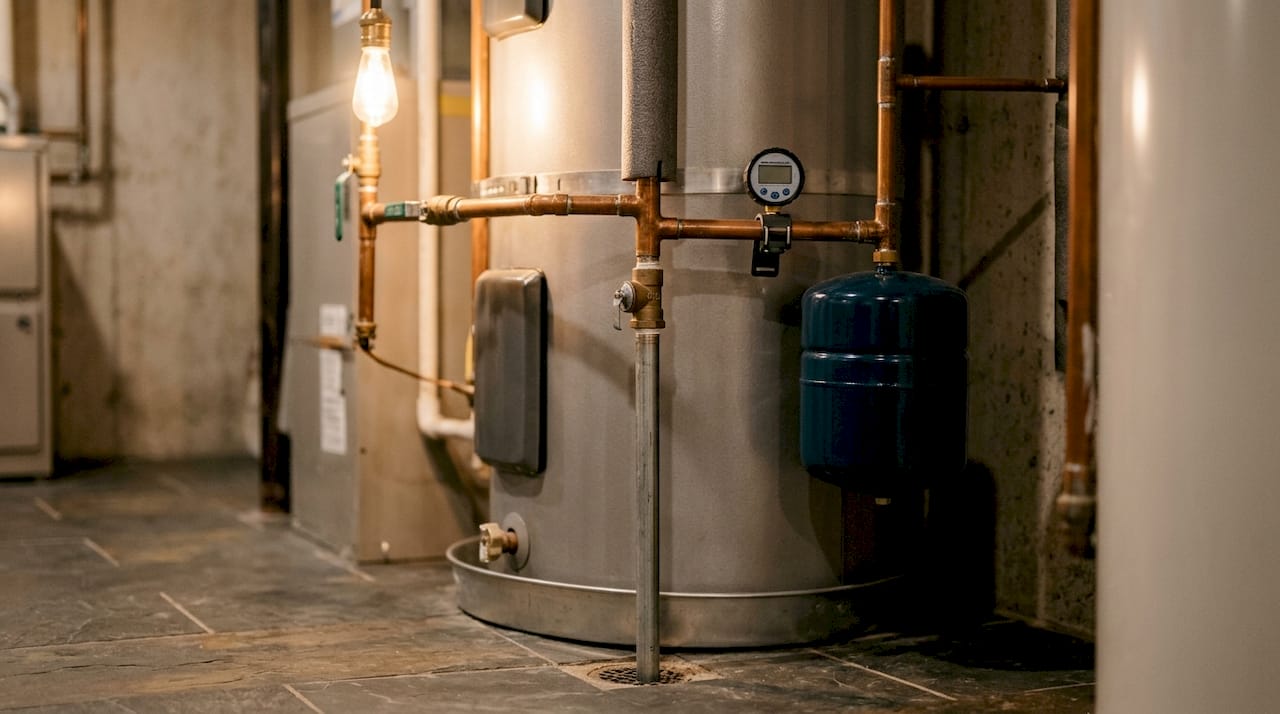
When a water heater raises the temperature of 50 gallons of water, the volume increase is measurable and significant. Without an expansion tank to absorb that extra volume, the pressure spike goes straight to the T&P valve. The valve opens, releases water, and closes again. Repeat that cycle daily, and the valve wears out in a fraction of its expected lifespan.
The following conditions accelerate thermal expansion damage:
- Thermostat set above 120°F (the standard safe setting recommended by most manufacturers)
- No expansion tank installed on a closed system
- A faulty thermostat that allows the heater to overheat
- A corroded or malfunctioning anode rod that contributes to overheating
A T&P valve is rated to open at 150 PSI or 210°F, whichever comes first. If your system regularly pushes those limits due to thermal expansion, the valve is doing its job. The problem is not the valve. The problem is the system design. Installing a properly sized expansion tank eliminates the pressure spikes that wear the valve prematurely.
Mineral buildup and corrosion as silent killers of pressure relief valves
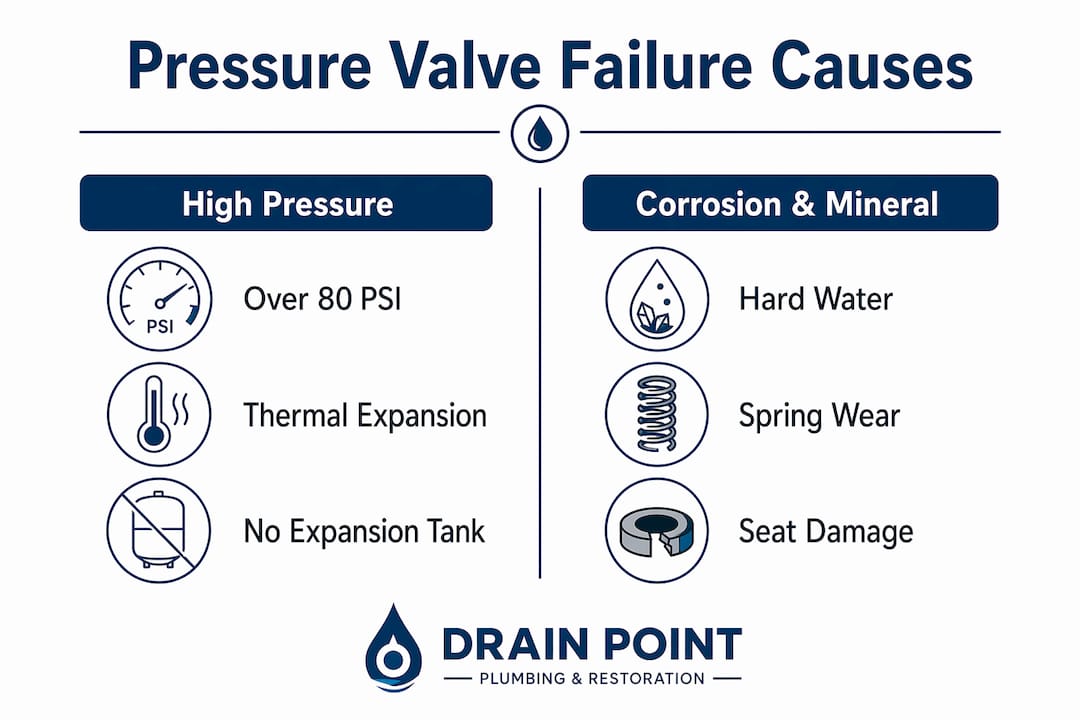
Hard water is the most underestimated threat to T&P valve longevity. Hard water at 7–10 grains per gallon accelerates scale formation inside the valve body, around the spring, and on the seat. The minerals, primarily calcium and magnesium, deposit as white, chalky scale every time hot water contacts metal surfaces.
Over time, that scale acts like cement. The spring loses its tension. The seat cannot seal cleanly. In the worst cases, the valve seizes completely in the open or closed position. A valve stuck open wastes water and energy. A valve stuck shut is genuinely dangerous. It cannot release pressure when the tank needs it most.
| Failure mode | Cause | Risk level |
|---|---|---|
| Valve dripping constantly | Worn seat from pressure cycling | Moderate |
| Valve stuck open | Scale buildup around seat | Moderate |
| Valve stuck shut | Mineral cementation of spring | Severe |
| Valve corroded externally | High humidity or chemical exposure | Moderate |
Valve seat damage from scaling requires full replacement. Cleaning is not a safe fix because you cannot verify the seat integrity after mineral damage. Santa Barbara County water tends toward moderate hardness, which means homeowners in the area face real mineral accumulation risk over time.
Pro Tip: Flush your water heater tank every 6 to 12 months by connecting a hose to the drain valve and running water until it runs clear. This removes sediment before it migrates into the T&P valve. Pair flushing with a water softener or filtration system if your water hardness exceeds 7 grains per gallon.
How to diagnose and safely test your pressure relief valve
Testing the T&P valve every 6 months is the single most effective maintenance step a homeowner can take. Industry standards recommend lifting the test lever halfway for about one second, then releasing it. A healthy valve produces a strong burst of water and then snaps shut completely.
Follow these steps for a safe test:
- Turn off power to the heater (or set gas to "pilot") before testing.
- Place a bucket under the discharge pipe to catch hot water.
- Lift the test lever halfway for one second, then release it.
- Watch for a strong water burst followed by a complete stop.
- If water continues to drip after the lever drops, the valve has failed and needs replacement.
- If no water discharges at all, the valve is likely seized and must be replaced immediately.
Homeowners who wait for leaks before checking their valves risk silent seizure failures that offer no warning before a tank rupture. Never cap the discharge pipe to stop a drip. That pipe is a safety outlet, not a nuisance. Capping it turns a leaking valve into a pressure bomb.
Pro Tip: Set a calendar reminder every april and october to test your T&P valve. Pairing it with a seasonal task makes it easy to remember. If the valve is more than 5 years old and has never been tested, call a licensed plumber rather than testing it yourself. An aged, untested valve can break off during the test.
When the valve fails the test, schedule a professional water heater inspection before simply swapping in a new valve. The replacement valve will fail again if the root cause goes unaddressed.
Why replacing the valve alone rarely solves the problem
Replacing a leaking T&P valve without fixing the underlying system issue is the most common and costly mistake homeowners make. A leaking valve often signals high supply pressure or thermal expansion, not a defective valve. Install a new valve into the same conditions, and it will fail just as fast.
The real fix requires a system-level assessment. That means checking:
- Home water pressure with a gauge (target: 40–60 PSI)
- Whether a pressure reducing valve is installed and functioning
- Whether a thermal expansion tank is present and properly sized
- Water hardness levels and whether a softener is needed
- The heater's thermostat setting and anode rod condition
Replacing the valve without addressing high pressure or the absence of an expansion tank leads directly to repeated premature failure. Valve failures are rarely manufacturing defects. They result from environmental and operational stresses that a new valve alone cannot fix. A licensed plumber can assess the full system in one visit and identify every contributing factor, which saves you from buying a third or fourth replacement valve in as many years.
Key Takeaways
A water heater T&P valve fails because of system-level problems, not just valve defects, and fixing only the valve without addressing pressure, thermal expansion, or mineral buildup guarantees repeated failure.
| Point | Details |
|---|---|
| High pressure wears valves fast | Keep home water pressure between 40 and 60 PSI; install a PRV if it exceeds 80 PSI. |
| Thermal expansion needs a tank | A closed system without an expansion tank pushes pressure spikes directly to the T&P valve. |
| Mineral buildup seizes valves | Hard water above 7 grains per gallon cements valve springs shut; flush the tank every 6–12 months. |
| Test the valve every 6 months | Lift the lever halfway for one second; replace the valve immediately if it drips or fails to discharge. |
| Replace the system, not just the valve | Repeated valve failure means a root cause, such as high pressure or no expansion tank, still needs fixing. |
What 15 years of valve calls taught me about homeowner mistakes
Kirk here. After more than 15 years of water heater calls across Santa Barbara County, the pattern I see most often is not a bad valve. It is a homeowner who replaced the valve twice, still has a drip, and now thinks the water heater itself is defective.
The valve is almost never the villain. I have pulled T&P valves from tanks where the home pressure was running at 95 PSI with no PRV and no expansion tank. The new valve was doing exactly what it was designed to do: venting excess pressure. Replacing it was like changing a smoke detector battery instead of putting out the fire.
The other mistake I see constantly is ignoring a slow drip from the discharge pipe. Homeowners assume it is minor. Sometimes they wrap a rag around it. A dripping valve is telling you something is wrong with the system. Listen to it. The emergency water heater failure signs that precede a tank rupture are almost always there weeks before the event. People just do not know what to look for.
My honest advice: test your valve twice a year, check your home pressure once, and get a plumber to assess the full system if the valve has failed more than once. That one visit will cost less than a second valve replacement, and far less than water damage restoration.
— Kirk
Water heater valve problems? Drainpointplumbing can help
Drainpointplumbing has served Santa Maria and Santa Barbara County homeowners for over 15 years, handling everything from T&P valve replacements to full system pressure assessments. When a valve keeps failing, the team goes beyond the valve itself to find the real cause, whether that is a failing PRV, a missing expansion tank, or hard water damage.
Drainpointplumbing offers water heater repair and replacement for both traditional tank and tankless systems, along with residential plumbing repairs that address the root causes of valve failure. The team is available 24/7 for emergencies and offers free quotes. Senior and military discounts apply. If your T&P valve is dripping, seized, or has failed its test, schedule a plumbing inspection with a licensed professional before the problem escalates.
FAQ
What causes a water heater pressure relief valve to keep leaking?
Repeated leaking usually means home water pressure exceeds 80 PSI or thermal expansion is spiking pressure in a closed system. Replacing the valve without fixing these root causes leads to the same failure again.
How often should I test my T&P valve?
Test the T&P valve every 6 months by lifting the lever halfway for one second and releasing it. A healthy valve discharges water strongly and then stops completely when released.
Can mineral buildup cause a pressure relief valve to fail?
Yes. Hard water minerals, primarily calcium and magnesium, build up inside the valve and can cement the spring or seat in place. Valve seizure from mineral buildup is the most dangerous failure mode because the valve cannot release pressure when the tank needs it.
Is it safe to cap the discharge pipe on a leaking T&P valve?
No. Capping the discharge pipe removes the only pressure safety outlet on the tank. If the valve is leaking, the correct response is to identify the root cause and replace the valve, not block the pipe.
When should I call a plumber instead of replacing the valve myself?
Call a plumber if the valve has failed more than once, if the valve is older than 5 years and has never been tested, or if you cannot identify why the valve is leaking. A licensed plumber can assess the full water heater system and fix the root cause in a single visit.