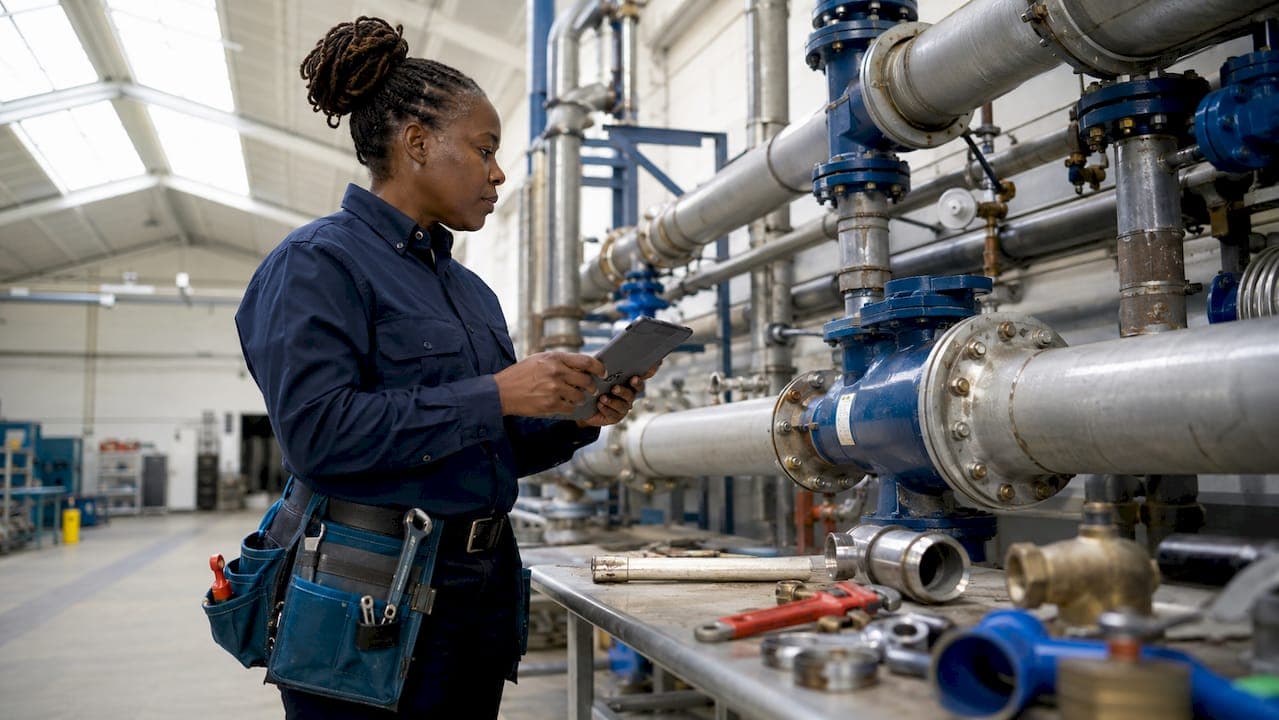
A commercial plumbing system is the network of pipes, fixtures, valves, and equipment that manages water supply and waste removal in business facilities, engineered for high-volume use and strict safety compliance. Unlike residential plumbing, which serves a single household, commercial systems support restaurants, office buildings, hospitals, retail centers, and multi-unit properties where dozens or hundreds of people rely on the infrastructure daily. Property owners and managers who understand what a commercial plumbing system includes are better positioned to prevent costly failures, pass inspections, and plan smart upgrades. This guide breaks down the components, maintenance obligations, and practical improvements that matter most for your facility.
What is a commercial plumbing system and how does it work?
A commercial plumbing system is a purpose-built infrastructure designed to deliver clean water, remove waste, and maintain safe pressure across high-demand environments. The industry term is "commercial plumbing," and it covers everything from the water main connection at the street to the last fixture on the top floor of your building. Commercial systems handle significantly higher user volumes than residential ones, requiring larger pipes and greater pressure tolerance. That scale means a single design flaw or neglected component can affect an entire floor or building zone.
The system works in two directions simultaneously. The supply side brings pressurized fresh water in. The drainage side carries wastewater out through a gravity-fed network that connects to the municipal sewer or a private septic system. Both sides must function together without interruption. When one fails, the other is usually affected too.
What are the main components of commercial plumbing systems?
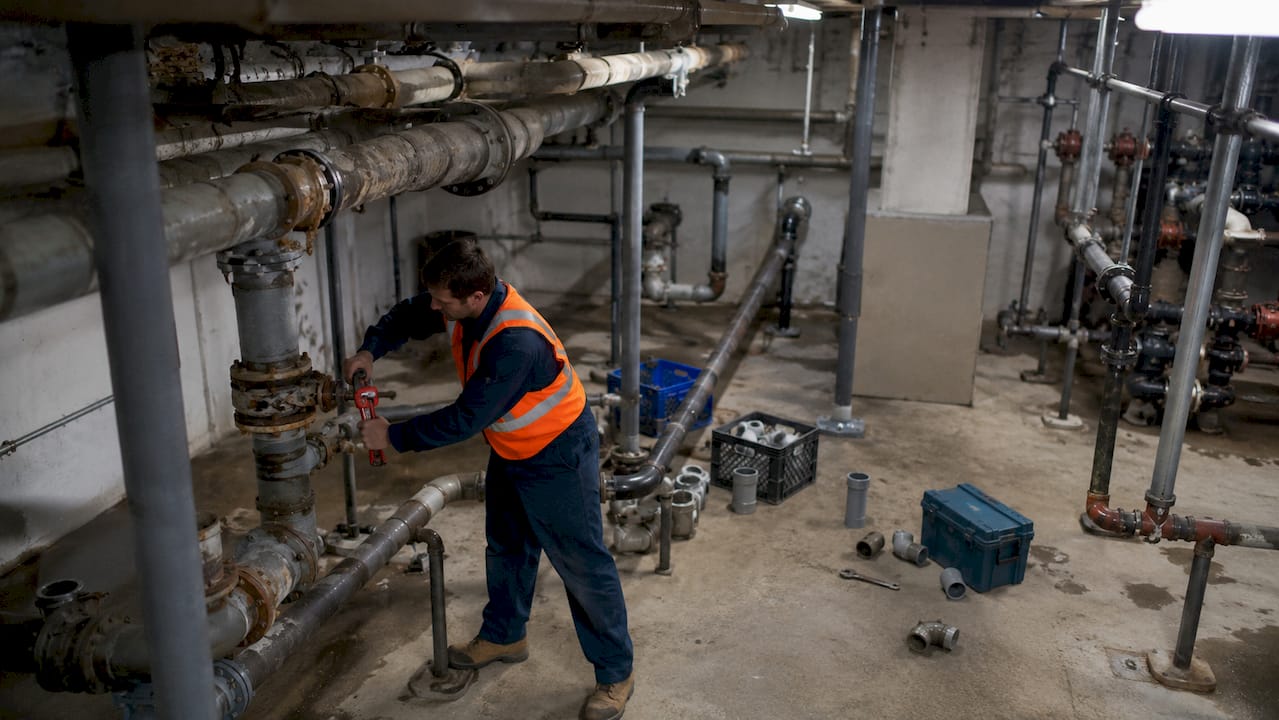
Commercial plumbing infrastructure is built around four core subsystems, each with specialized equipment not found in typical homes.
Water supply network
The supply network starts at the water meter and branches through the building using larger-diameter pipes than residential systems use. Pipe sizing in commercial buildings accounts for simultaneous peak demand, meaning every sink, toilet, and appliance running at once during a busy shift. Booster pumps maintain consistent water pressure across multiple floors, a complexity absent in single-family homes. Without them, upper floors would experience weak flow during high-demand periods.
Drainage, waste, and vent (DWV) system
The DWV system removes wastewater and controls sewer gases. Vent stacks run vertically through the building to equalize pressure and prevent toxic gases from entering occupied spaces. Cleanout access points are built into the drain lines at regular intervals so plumbers can clear blockages without tearing into walls. These access points are a standard feature in commercial design and a critical maintenance asset.
Specialized equipment
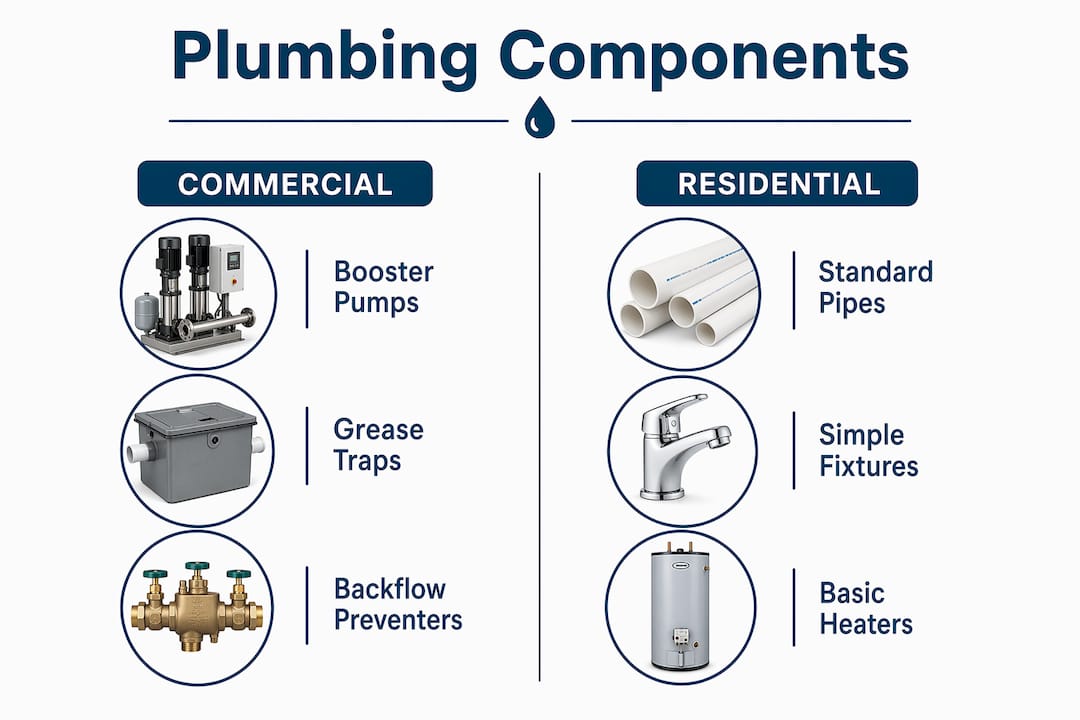
Commercial plumbing includes grease traps, backflow preventers, and industrial water heaters that residential systems simply do not require. Grease interceptors capture fats and oils before they enter the sewer line, which is a legal requirement for food service facilities in most jurisdictions. Backflow preventers protect the public water supply from contamination when pressure drops. Industrial water heaters, including large-capacity tank units and commercial tankless systems, supply hot water at the volume and temperature commercial operations demand.
Pro Tip: If your facility includes a commercial kitchen or laboratory, ask your plumber about facility-specific needs like chemical-resistant piping or high-capacity grease interceptors. Skipping this step during construction leads to expensive retrofits later.
Here is a quick reference for the core components:
| Component | Primary function | Found in residential? |
|---|---|---|
| Booster pump | Maintains pressure on upper floors | Rarely |
| Grease interceptor | Captures fats before sewer entry | No |
| Backflow preventer | Protects public water supply | Sometimes |
| Industrial water heater | High-volume hot water supply | No |
| Cleanout access points | Simplifies drain maintenance | Occasionally |
How do commercial plumbing systems differ from residential ones?
The differences between commercial and residential plumbing go well beyond pipe size. They involve design complexity, regulatory requirements, and the consequences of failure.
Scale and pressure demands
A commercial building might serve 200 people during a single lunch hour. A home serves four. Commercial systems are designed for multi-floor, high-traffic use with pressure tolerances and flow rates that residential systems cannot match. Pressure regulators, zone valves, and dedicated shut-off points are standard in commercial design to allow isolated repairs without shutting down the entire building.
Regulatory and code requirements
Commercial plumbing must comply with stringent building codes and ADA accessibility standards to avoid legal liability and operational risk. ADA requirements govern fixture heights, clearances, and grab bar placements in restrooms. Understanding how plumbing affects ADA compliance in commercial buildings is not optional for property managers. Violations can result in fines, failed inspections, and lawsuits.
Materials and maintenance cycles
Commercial systems use materials rated for higher pressure and longer service cycles, including copper, CPVC, and in some cases stainless steel for specialty applications. Maintenance schedules are more frequent and more formalized than in residential settings. Commercial plumbers require advanced skills to manage large-scale networks and complex regulations that residential plumbers are not trained to handle.
Pro Tip: When hiring a plumber for your commercial property, ask specifically for verified commercial experience. A plumber skilled in residential work may not understand zone isolation, backflow certification, or commercial code requirements.
| Factor | Commercial plumbing | Residential plumbing |
|---|---|---|
| User volume | Dozens to hundreds daily | Typically 2–6 people |
| Pipe diameter | Larger, pressure-rated | Standard residential sizing |
| Code requirements | ADA, local, state, federal | Local building codes |
| Specialized equipment | Grease traps, backflow devices | Rarely required |
| Maintenance frequency | Scheduled, often quarterly | As-needed basis |
What maintenance practices are essential for commercial plumbing?
Reactive maintenance is the most expensive approach a property manager can take. Property managers often treat commercial plumbing maintenance reactively instead of as a critical investment, and that mindset leads directly to unplanned downtime and emergency repair bills.
A structured maintenance program covers these priorities:
- Annual backflow testing. Backflow prevention devices require mandatory annual inspections and certifications in many jurisdictions. Skipping this is one of the most common causes of regulatory fines and insurance audit failures for commercial property owners.
- Hydro jetting drain lines. High-pressure water jetting clears grease, scale, and debris from drain lines before blockages form. Routine hydro jetting prevents disruptive system failures and the costly downtime that follows. Learn how commercial drain maintenance prevents clogs and why scheduling it annually pays off.
- Sewer line camera inspections. A camera inspection identifies cracks, root intrusion, and buildup before they become full failures. Sewer line inspections are vital to avoiding costly business disruptions and are especially important for older buildings.
- Water heater servicing. Sediment buildup reduces efficiency and shortens heater lifespan. Flushing tanks and inspecting anode rods annually extends service life significantly.
- Fixture and valve checks. Leaking faucets, running toilets, and corroded shut-off valves waste water and signal deeper pressure or seal issues. A quarterly walkthrough catches these before they escalate.
"Commercial plumbing is the circulatory system of a business facility. A plumbing failure often halts operations entirely, which is why integrated facility management and proactive maintenance are non-negotiable." — Oplus Plumbing
Tracking your maintenance schedule is as important as performing the work. A tool like maintenance schedule tracking helps service businesses document inspections, set renewal reminders, and demonstrate compliance during audits.
What upgrade options optimize a commercial plumbing system?
Upgrading your commercial plumbing system is not just about fixing what is broken. The right improvements reduce operating costs, improve compliance, and extend the life of your infrastructure.
- Commercial water heater upgrades. Switching from aging tank-style heaters to high-efficiency commercial tankless units cuts energy consumption and eliminates the risk of tank failure. Review the latest commercial water heater options for 2026 to find the right fit for your building's demand profile.
- Advanced water filtration systems. Installing commercial-grade filtration protects fixtures and equipment from scale buildup, extends pipe lifespan, and meets water quality standards for food service or healthcare facilities. Water filtration installation is a straightforward upgrade with measurable long-term returns.
- Energy-efficient fixture retrofits. Low-flow toilets, sensor-activated faucets, and pressure-compensating showerheads reduce water consumption without sacrificing performance. Many California municipalities offer rebates for commercial fixture upgrades, making the upfront cost lower than most property managers expect.
- Leak detection technology. Smart water sensors and flow monitors identify abnormal usage patterns in real time. Catching a slow leak early prevents the kind of water damage that triggers restoration work and insurance claims.
- Pipe lining and repiping. Older buildings with corroded or undersized pipes benefit from trenchless pipe lining or full repiping. Both options restore flow capacity and pressure without the disruption of tearing out walls.
Key Takeaways
A commercial plumbing system requires specialized components, stricter compliance, and proactive maintenance that residential systems simply do not demand.
| Point | Details |
|---|---|
| Core definition | A commercial plumbing system manages water supply and waste removal in high-demand business facilities. |
| Specialized components | Grease interceptors, backflow preventers, and booster pumps are standard in commercial systems and absent in residential ones. |
| Compliance obligations | ADA standards and backflow certification requirements make regulatory compliance a legal necessity, not a best practice. |
| Maintenance priority | Annual backflow testing, hydro jetting, and camera inspections prevent costly failures and regulatory fines. |
| Upgrade value | Water heater replacements, filtration systems, and leak detection technology reduce long-term operating costs. |
Why commercial plumbing deserves more respect from property managers
I have worked on commercial plumbing systems across Santa Barbara County for over 15 years, and the pattern I see most often is this: property managers treat plumbing as background infrastructure until something goes wrong. Then it becomes a crisis.
The uncomfortable truth is that most commercial plumbing failures are predictable. A grease trap that has not been serviced in two years will back up. A backflow device that missed its annual certification will fail an insurance audit. A water heater running past its service life will fail on the coldest morning of the year. None of these are surprises to a plumber who knows the system. They are all surprises to property managers who do not.
Commercial plumbers integrate closely with facility management teams to align plumbing reliability with operational uptime goals. That relationship only works when the property manager treats plumbing as a managed asset, not a background utility. I have seen a single undetected slab leak cause more damage than five years of maintenance contracts would have cost.
My advice: get a full system assessment done on any commercial property you manage, especially if you inherited the building. You need to know what you have before you can manage it properly. Hiring plumbers with verified commercial experience is not optional for this work. The skill set is genuinely different, and the stakes are higher.
— Kirk
How Drainpointplumbing supports commercial property owners in Santa Maria
Drainpointplumbing has served commercial property owners and managers across Santa Barbara County for over 15 years, handling everything from routine maintenance contracts to emergency repairs and full system upgrades.
Whether you need a backflow inspection, hydro jetting service, a commercial water heater replacement, or a 24/7 emergency plumbing response for an unexpected failure, Drainpointplumbing delivers fast, code-compliant work backed by real commercial experience. The team also handles sewer camera inspections and drain cleaning to keep your drainage system running without interruption. Scheduled maintenance contracts are available for property managers who want predictable costs and documented compliance records. Request a free plumbing quote today and get a clear picture of your system's current condition.
FAQ
What is the difference between commercial and residential plumbing?
Commercial plumbing serves high-traffic, multi-user facilities with larger pipes, higher pressure requirements, and specialized equipment like grease interceptors and backflow preventers. Residential plumbing is designed for single-family use with simpler layouts and fewer regulatory requirements.
How often should a commercial plumbing system be inspected?
Most commercial systems require quarterly fixture checks and annual inspections for backflow devices, water heaters, and drain lines. Backflow prevention devices require certified annual testing in most jurisdictions to maintain compliance.
What are the signs that a commercial plumbing system needs repairs?
Slow drains, inconsistent water pressure, discolored water, unexplained spikes in water bills, and visible corrosion on pipes or fixtures all indicate a system that needs professional attention.
What does a commercial plumber do that a residential plumber cannot?
A commercial plumber handles large-scale pipe networks, zone isolation, ADA compliance requirements, and specialized equipment like industrial water heaters and grease traps. These tasks require advanced training and tools beyond standard residential plumbing work.
How much does commercial plumbing maintenance cost?
Costs vary by building size, system age, and service frequency, but scheduled maintenance contracts typically cost far less than emergency repairs or regulatory fines from missed compliance deadlines.